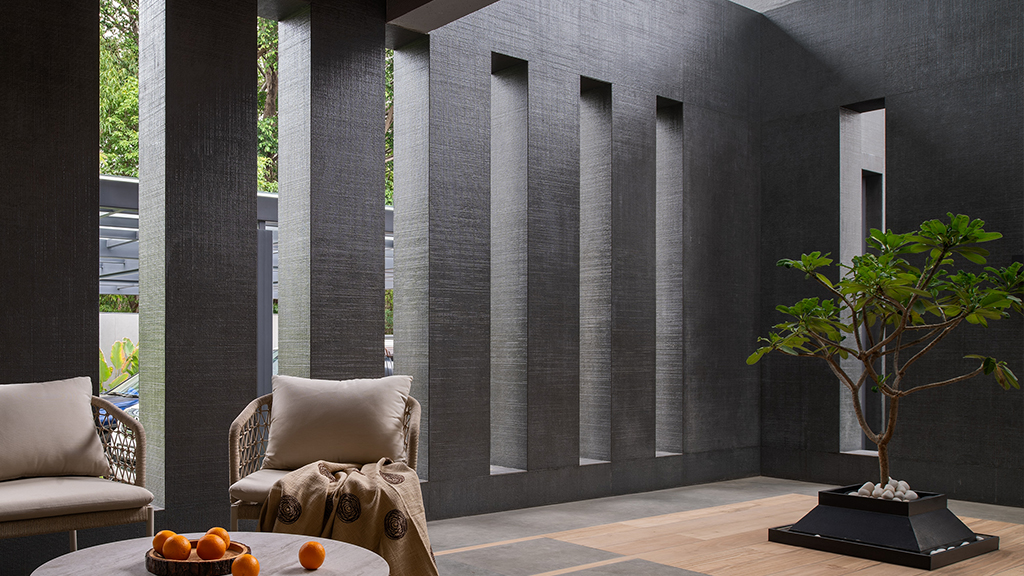
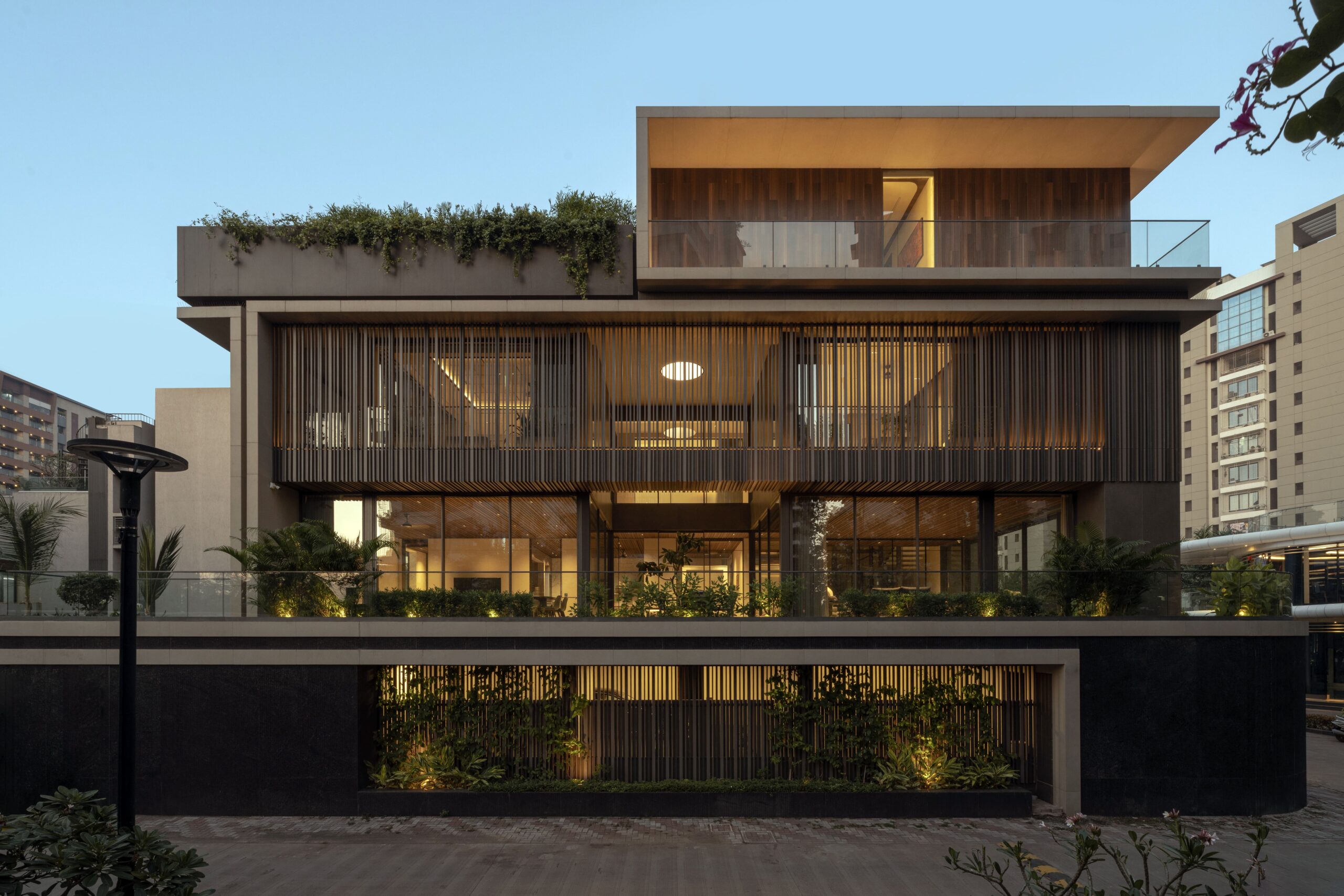
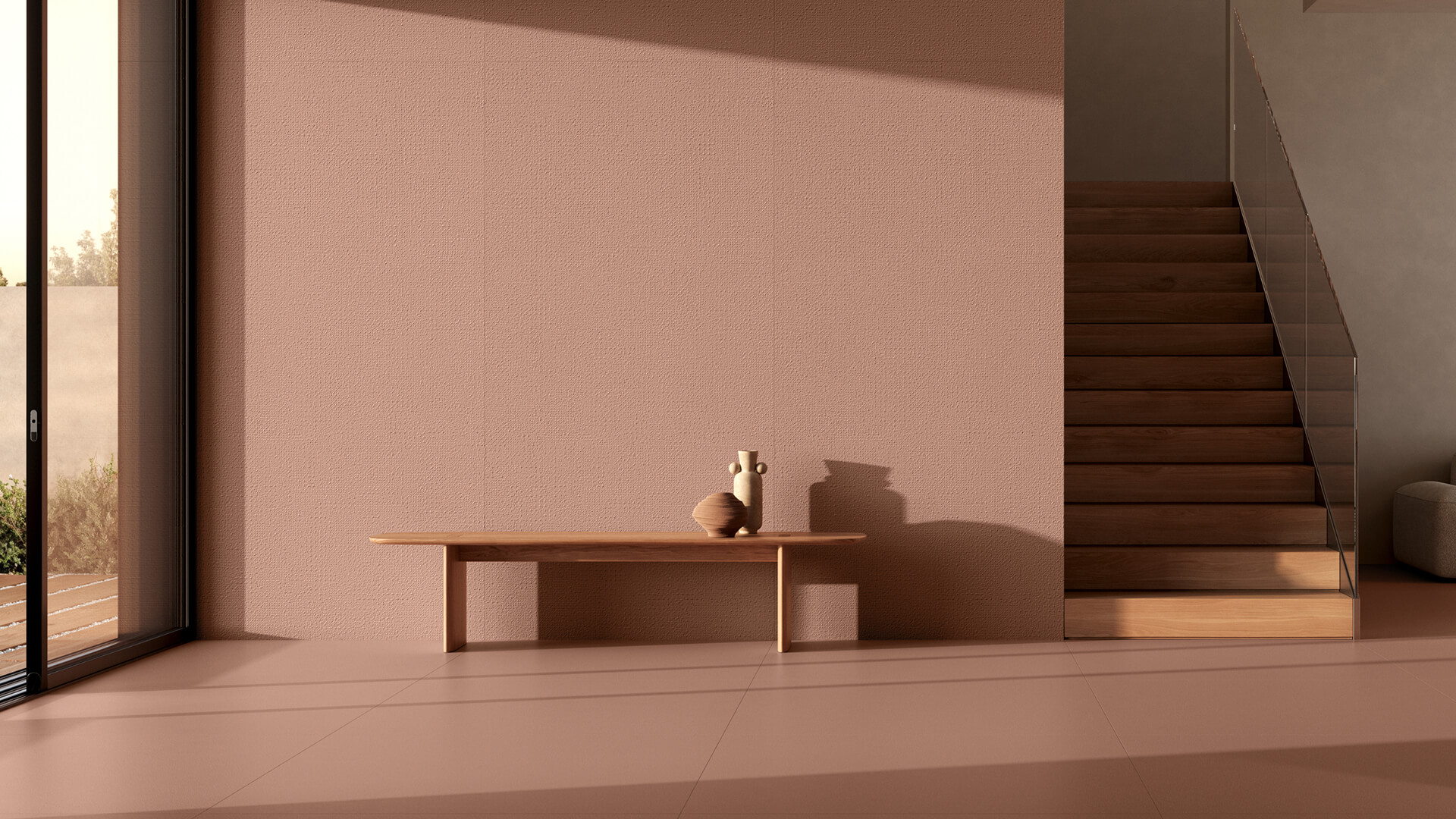
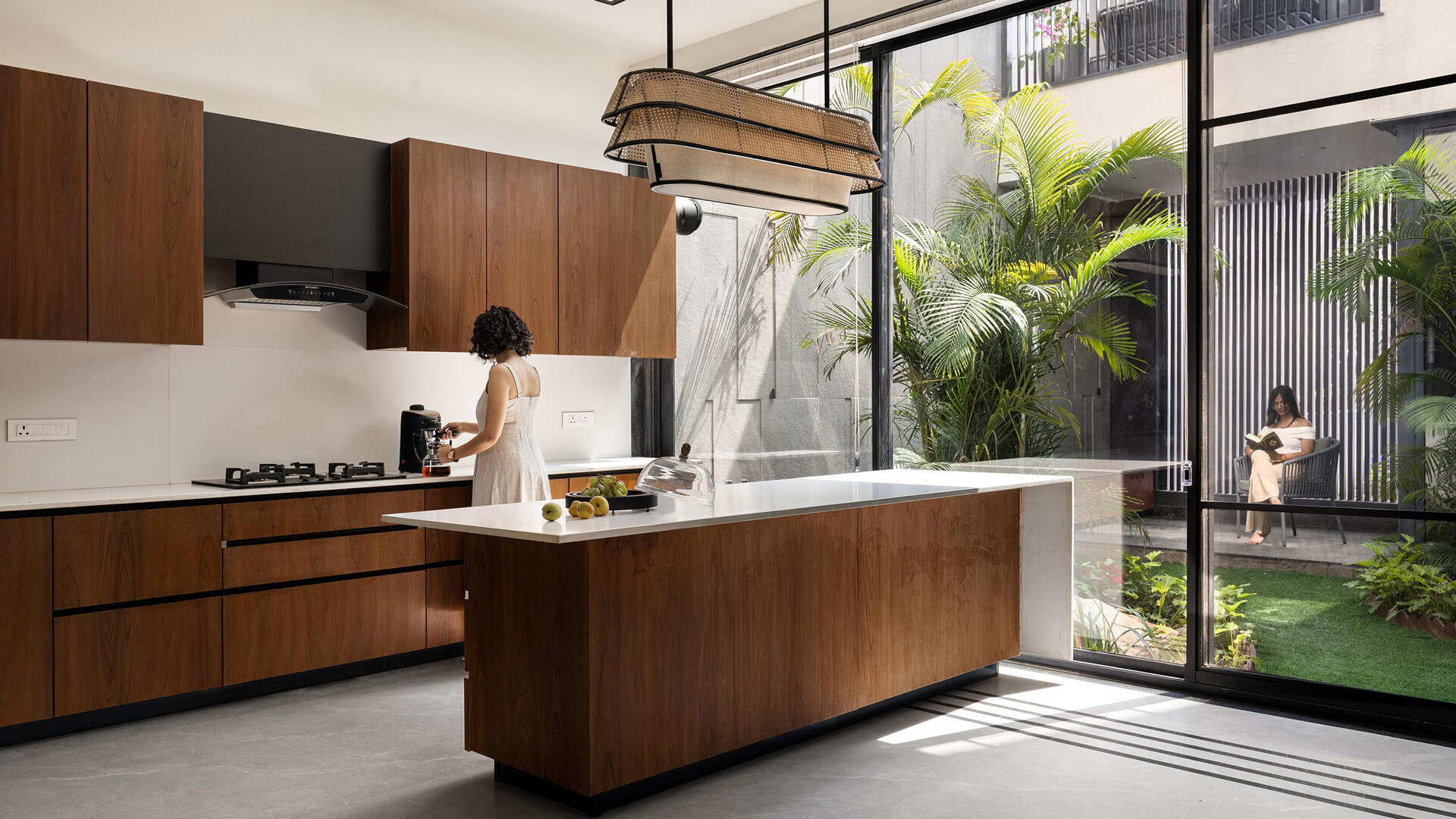
At India Design ID Mumbai 2026, Nexion transformed ceramic surfaces into an immersive architectural experience. The installation explored the relationship between surface, rhythm, light and perception, inviting visitors to move through a space where geometry defines the way architecture is experienced. At the centre of the installation, a new collection was presented in preview: Velata, a reinterpretation of slate’s layered identity through lightness and mineral depth.
The art of paradoxical geometry
The installation drew inspiration from the work of Dutch graphic artist M.C. Escher, a master of visual paradox whose woodcuts and lithographs explored the tension between geometric order and perceptual illusion. Escher’s ability to construct spaces that appear structurally possible while being mathematically impossible became the creative starting point for the Nexion booth.
In Escher’s logic, repetition generates movement, perspective shifts with every step and structure defies expectation. This principle was brought into an architectural language, a space designed to make visitors question what they see, rethink orientation and experience surfaces as active participants in shaping perception.
Walking the installation
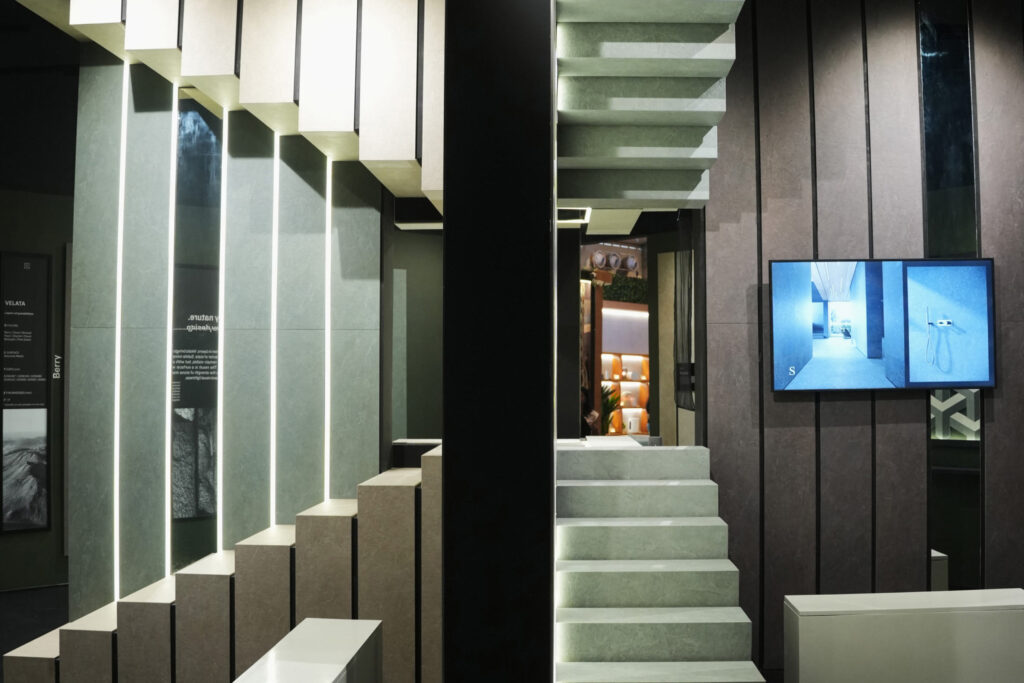
The visitor’s path through the booth was itself part of the experience. Each of the four entrances offered a different perspective, a different encounter with geometry, light, and material. What initially appeared to be a sequence of architectural elements gradually became a spatial composition, where orientation and perspective were constantly reinterpreted.
Surfaces invited touch, light shifted with movement, reflections multiplied space. The installation engaged the body as much as the eye. Every step through the booth was a reminder that surfaces carry the power to define the atmosphere and transform the way we inhabit architecture.
Geometry in motion: designing the experience
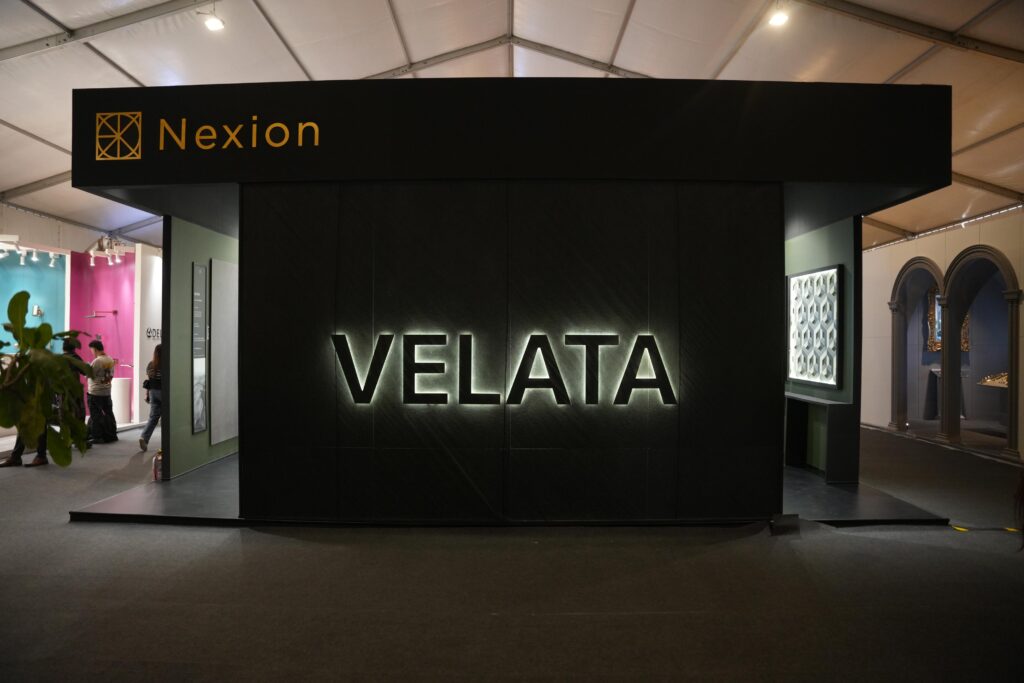
The booth took the form of an island installation with four elevations and four entrances, wrapped entirely in Velata’s Midnight tone: a deep, enveloping surface that anchored the identity of the stand and established its material presence from every angle.
Geometric elements extended across floors, walls and ceilings, creating a continuous visual identity. Vertical structures and repeated modules generated a sense of movement and continuity throughout the space. Different surfaces came together in a single spatial composition, shifting the way visitors experienced orientation and perspective as they moved through the installation.
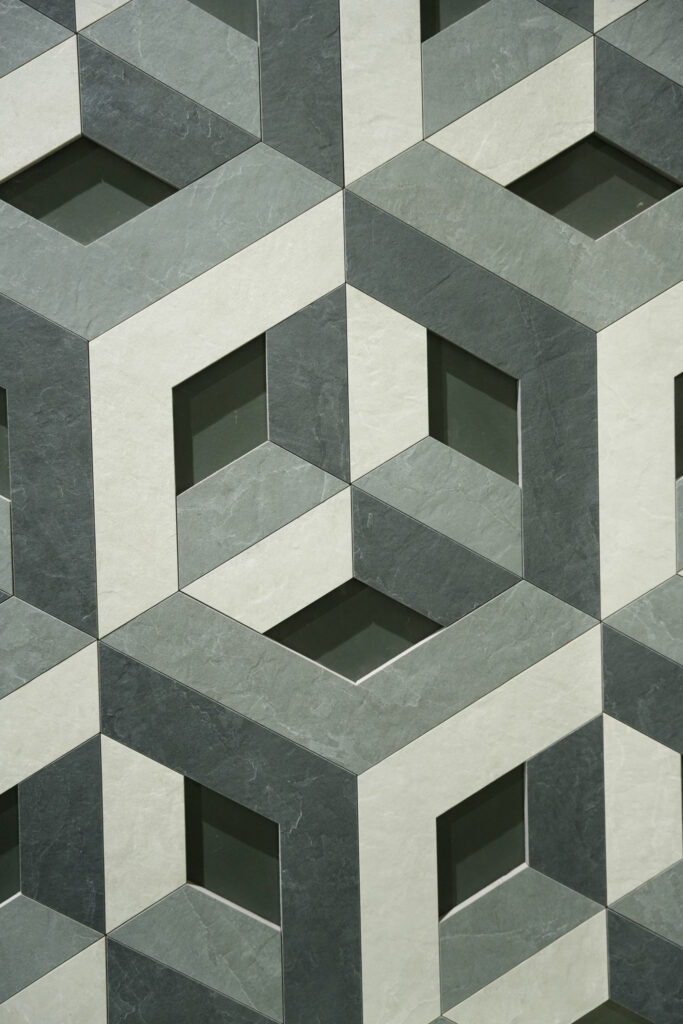
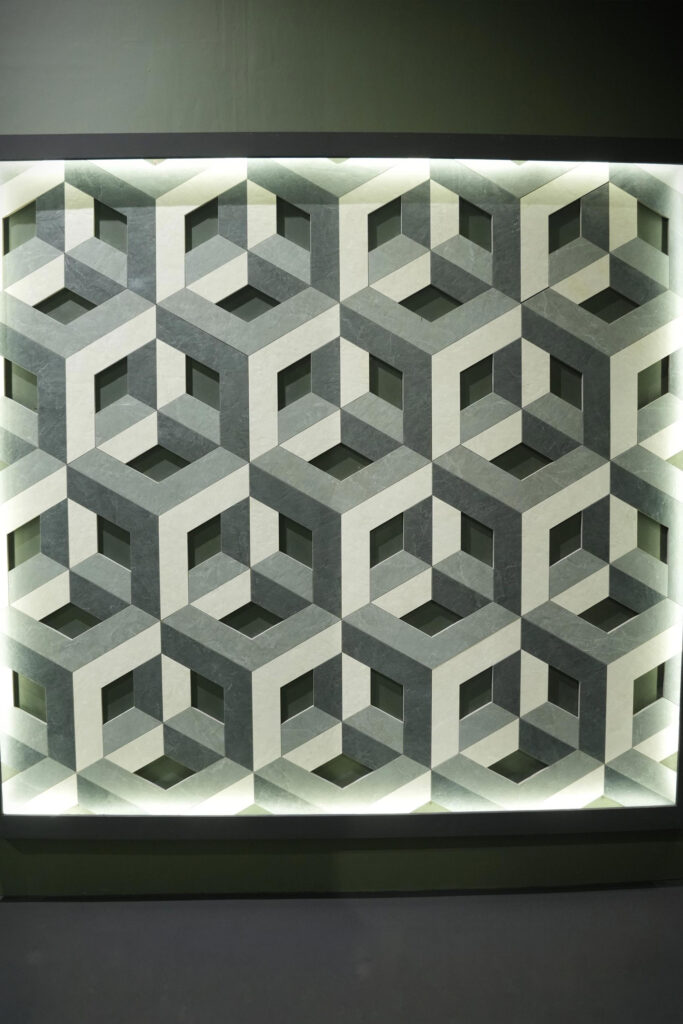
Mirrors and carefully positioned lighting multiplied depth and altered the perception of boundaries. Reflections extended the physical dimensions of the stand, creating an environment where reality and its perception were in constant dialogue.
Repetition was the defining principle. Lines, steps and light created a visual rhythm that evolved with the visitor’s movement, demonstrating how simple architectural elements can generate entirely new perceptions through composition and spatial arrangement.
The Penrose Triangle: material meets illusion
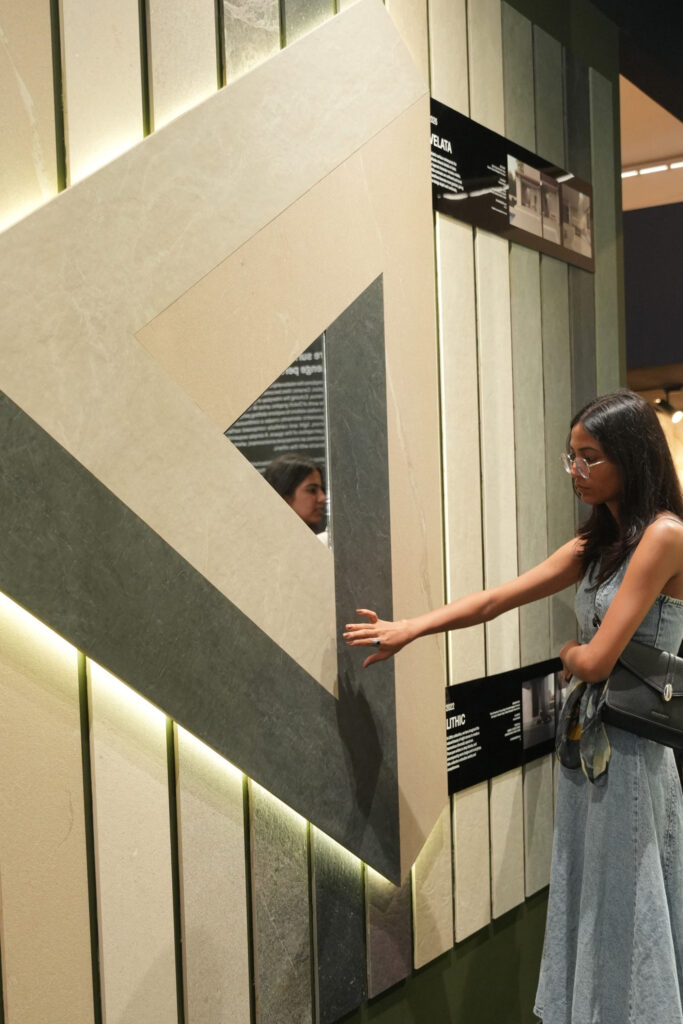
At the heart of the installation stood a Penrose Triangle: a form that appears structurally possible while being mathematically impossible. Created using surfaces from the Stone Gallery (including Runa, Lithic and Velata), the triangle demonstrated how material and geometry can work together to challenge perception.
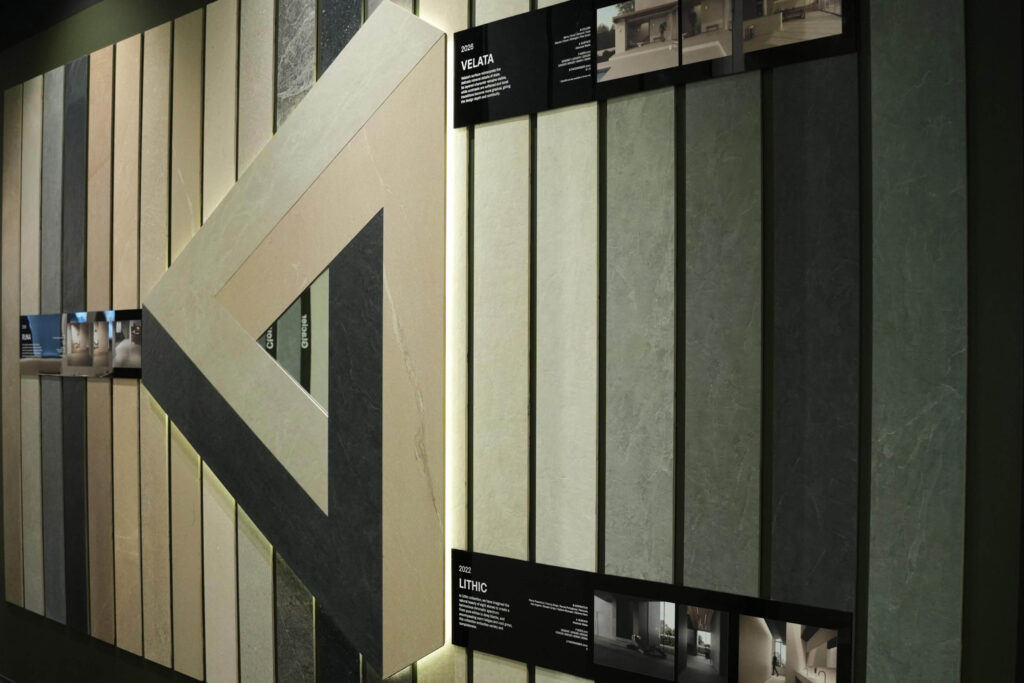
The piece embodied the concept of the entire stand in a single object: surfaces are active architectural elements capable of constructing spatial narratives that shift depending on the viewer’s position.
Unveiling Velata, layered into lightness
The event offered an exclusive preview of Velata, Nexion’s new sintered stone collection. Slate is a story written in layers and Velata brings a new softness to its natural character, reimagining the mineral depth of stone through lightness and tonal refinement.
A veil is light by nature, yet it gains presence as it builds layer upon layer. Transparency becomes depth and every overlap reveals a new shade. This principle shaped both the collection’s design philosophy and its physical presentation at the booth: two of the four elevations featured veils that subtly unveiled the surface beneath, creating a moment of visual discovery. The other two invited a tactile journey: to touch, feel and discover the character of Velata firsthand.
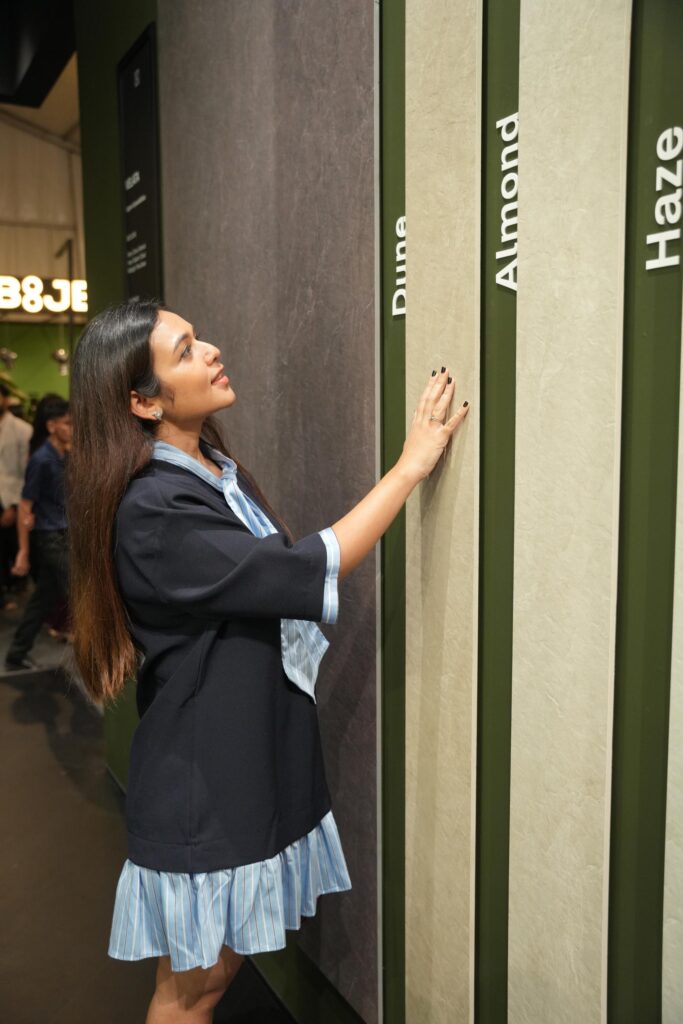
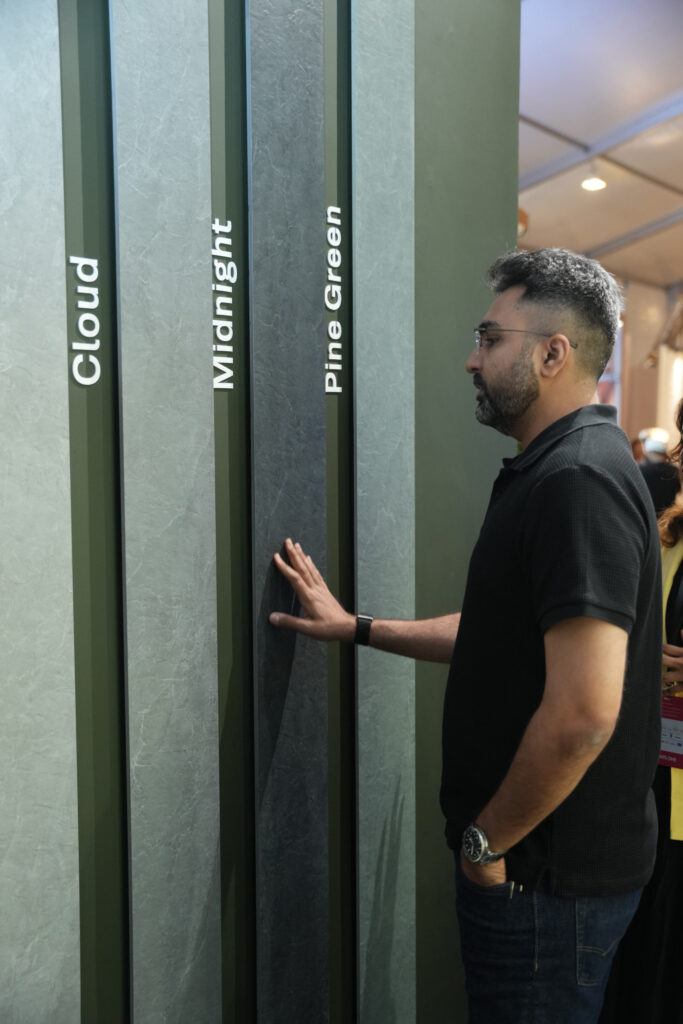
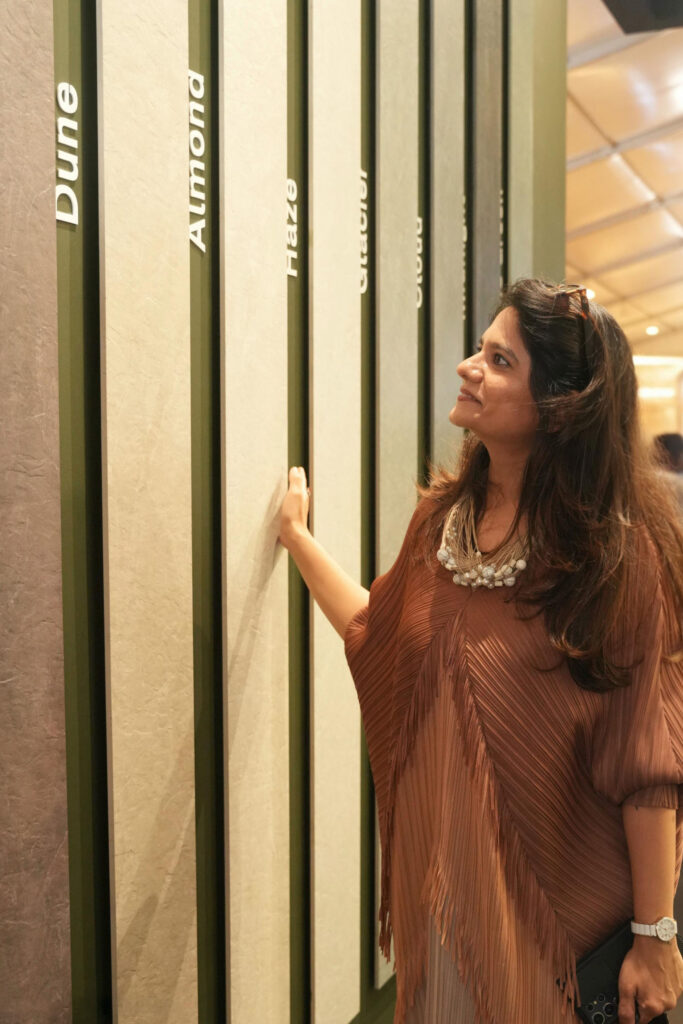
The collection is available in eight colours: Berry, Dune, Almond, Haze, Glacier, Cloud, Pine Green and Midnight. The range of sizes, from the monumental 120×280 cm slab to the versatile 30×60 cm format, is conceived to offer architects and designers the breadth needed to bring Velata’s layered expression into any spatial context.
Surfaces as active architecture
Ceramic becomes an active architectural element: a tool for defining spaces, creating atmospheres and transforming the way people experience them.
The installation made this idea tangible. Surfaces from the Stone Gallery worked together as building blocks of a spatial experience, each material contributing its own texture, tone and character to a unified architectural composition. Geometry created rhythm, light created perception, material gave it form and architecture brought it together.
Rooted in Indian craftsmanship and enriched by Italian creativity and design thinking, the booth expressed the architectural potential of Nexion surfaces, where materials, colour, and light converge to challenge perception and redefine space.
Architects and designers who explored the installation experienced this vision firsthand.
As architect Jehan Ara puts it, the Velata range of colours are already finding their way into new projects: “The Berry tones is something we’ll be using immediately.”
Architect Poonam Mehta highlights the innovation behind the booth: “The range of colors is so diverse and the installation is something you want to get into and explore.”
Architect Rajiv Parekh was drawn to Velata’s boldness: “It’s nice to see something which is not beige. The Berry shade – a sort of burgundy, maroonish tone. Look forward to using it.”
Designing what comes next
At India Design ID Mumbai 2026, geometry became the vision through which surfaces, light and perception came together to redefine architectural space. The booth expressed a single conviction: surfaces define space.
Stay inspired and bring your vision to life.
FAQs
What was the concept behind the Nexion booth at India Design ID Mumbai 2026?
The concept, titled “Where Surfaces Challenge Perception,” explored how geometry, light, mirrors and material repetition can alter the perception of architectural space. The installation was inspired by the visual logic of M.C. Escher, translating the interplay of geometry and illusion into an immersive spatial experience built with Nexion sintered surfaces.
What is the Velata collection?
Velata is Nexion’s new sintered stone collection that reinterprets the layered identity of natural slate through lightness and mineral depth. It is available in eight colours (Berry, Dune, Almond, Haze, Glacier, Cloud, Pine Green, and Midnight) and seven sizes ranging from 120×280 cm to 30×60 cm.
What does “Layered into Lightness” mean?
“Layered into Lightness” is the guiding concept of the Velata collection. It refers to the way the collection translates the natural stratification of slate, a stone defined by its layers, into a contemporary surface expression characterised by softness, tonal depth and visual lightness.