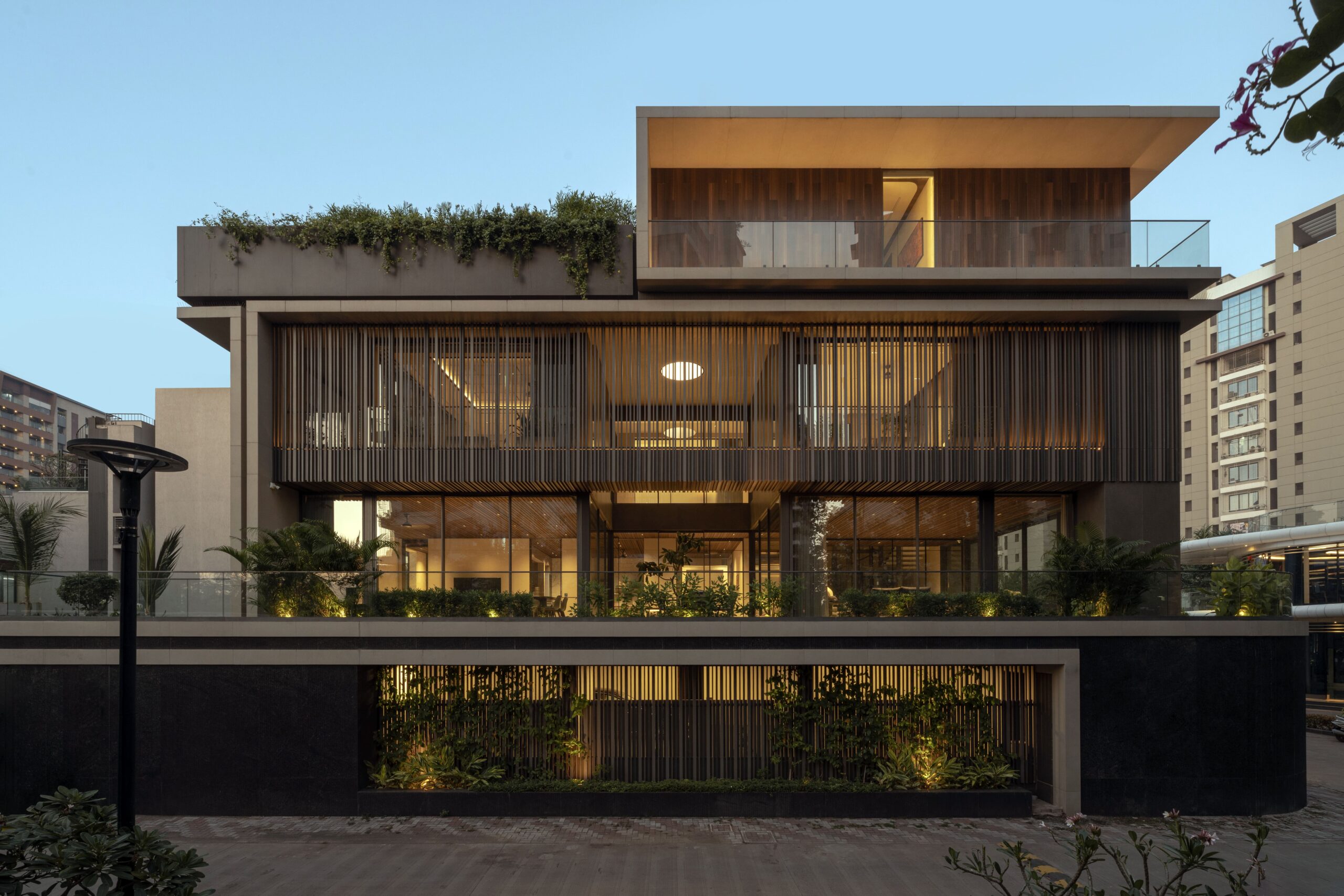
As design is increasingly shaped by optimisation and repeatability, designers are rediscovering the value of surfaces that feel individual, tactile and deliberately imperfect. Character comes from what makes a material distinctive: texture, variation, tactility and the visible intelligence of how it has been made.
Raw textures in interior design are surfaces that preserve or intentionally recreate the visual and tactile qualities of natural, minimally processed materials: irregularities, reliefs, grain, pores and subtle tonal shifts that give interiors a sense of depth, authenticity and material honesty.
This is not a passing aesthetic preference. The iF Design Trend Report 2026, drawing on more than 10,000 design submissions from 62 countries, identifies intentional imperfection as a defining cultural counter-trend: a conscious departure from the visual sameness that characterises algorithmically optimised design.
Nexion’s sintered surface collections leverage this approach, placing raw textures, handmade research and material depth at the core of every design. What follows is a guide to the materials, principles and applications driving the raw aesthetic in contemporary interiors.
What are raw textures in interior design?
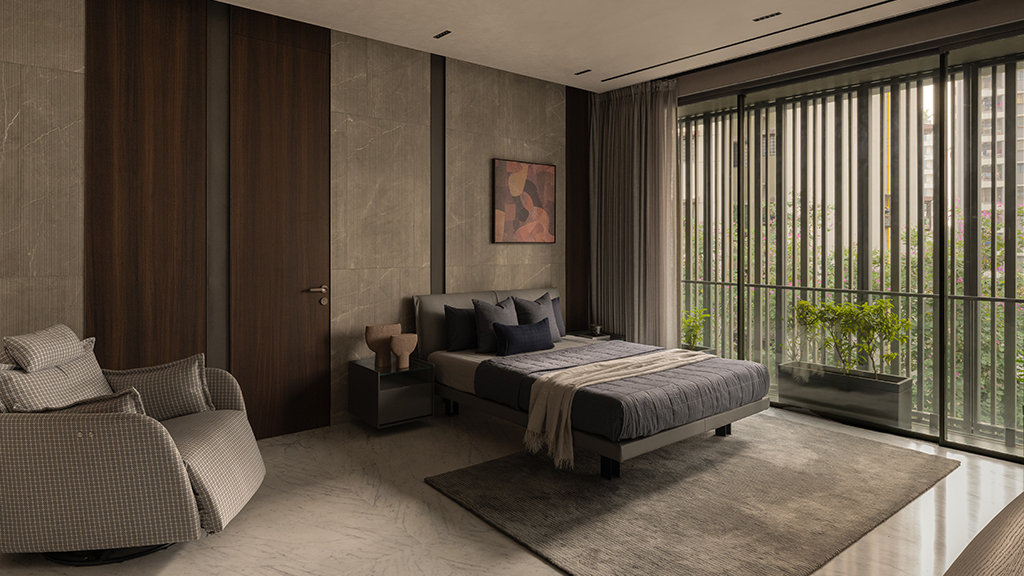
Raw textures are surfaces whose appearance retains the visual and tactile register of natural or minimally processed materials. Irregularities, surface relief, grain, mineral variation and subtle tonal shifts become part of the architectural narrative. Stone, concrete, travertine, terracotta, wood and handcrafted ceramics are among the materials most closely associated with this approach in contemporary interiors and Nexion’s sintered ceramic surfaces faithfully reinterpret these raw qualities with architectural-grade performance.
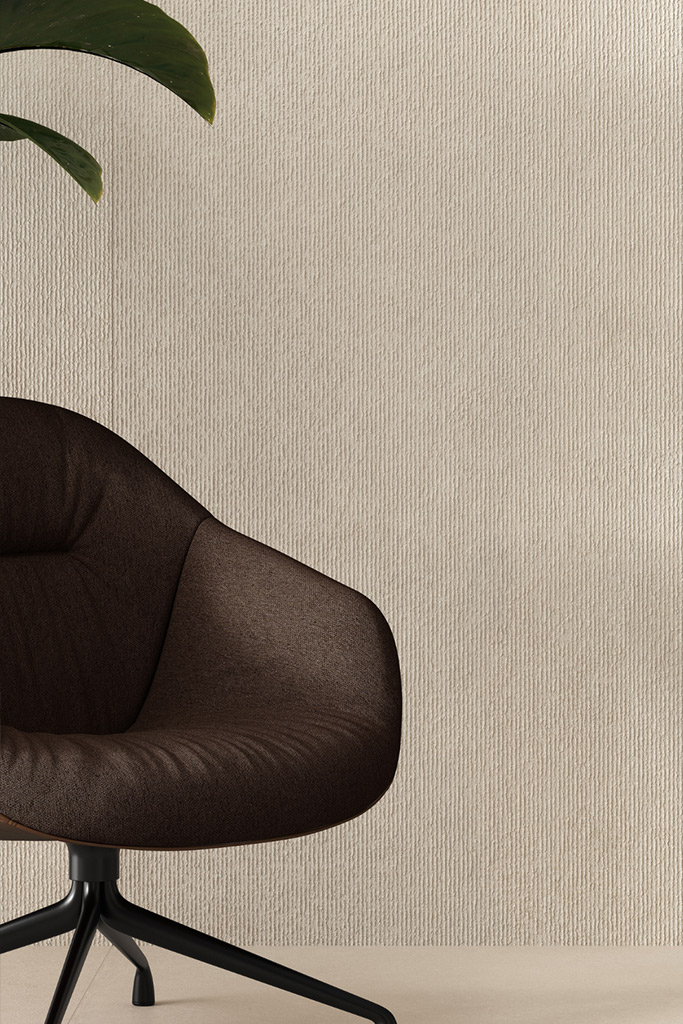
The key characteristics of raw textures are material honesty, tactile depth, irregularity and visible variation. Unlike polished or digitally homogenised finishes, raw surfaces engage more than one sense: they invite touch, modulate light across a wall or floor and change appearance with the time of day and the angle of view.
In contemporary interior design, raw texture is often highly intentional: the surface may be technically sophisticated while visually preserving the irregularity, depth and variation associated with natural materials. This distinction is central for architects and designers specifying surfaces that must perform as engineered products while communicating the warmth and authenticity of handmade aesthetic interiors.We explored the broader role of texture and pattern in spatial perception and delved into what makes a surface feel specifically raw in this article.
Why raw textures are redefining interior design trends
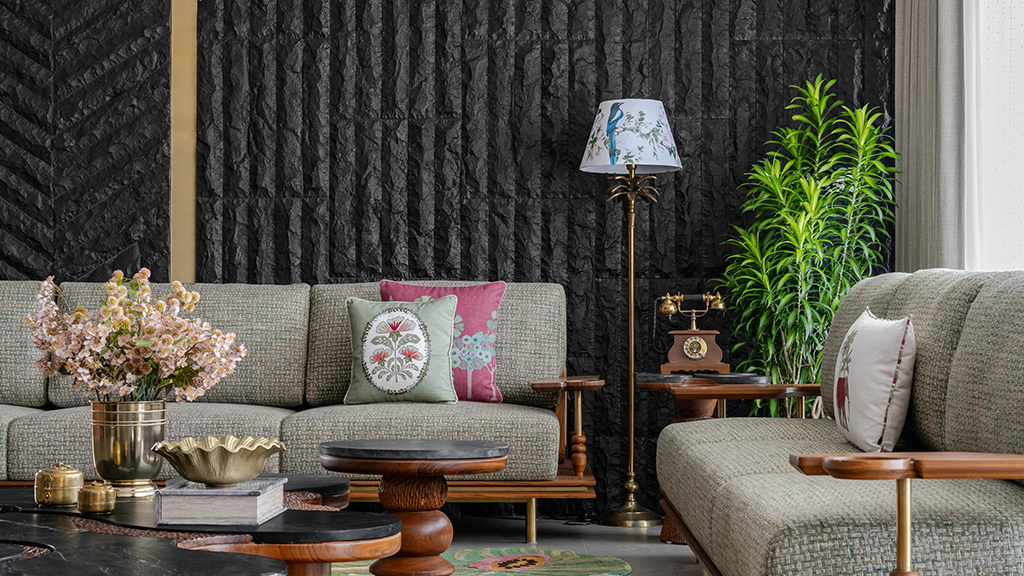
The renewed interest in raw textures is not simply an aesthetic cycle, but reflects a deeper shift in how designers, architects and inhabitants relate to the surfaces around them: a growing desire for spaces that feel specific, tactile and materially honest.
The iF Design Trend Report 2026 frames this shift through a concept it calls Recoupling Design: the conscious reintegration of craft, material knowledge and cultural specificity into the design process. After years of increasingly polished, visually uniform interiors, the counter-movement is a return to materiality: to surfaces that deliver the trace of how they were made, the variation inherent in natural materials, and the kind of sensory richness that standardised finishes cannot provide.
Imperfection is an expression of authenticity: irregularities, traces and visible material structure become emotional triggers that create resonance, personality and cultural depth. When a surface carries the evidence of its origin – the grain of stone, the pores of travertine, the chromatic shifts of fired earth – it communicates something that a perfectly calibrated finish cannot: a sense of place, time and human intention.
For interior design trends in 2026, this means that the specification conversation is evolving. Architects and designers are increasingly choosing surfaces for how they perform in space over time: how light moves across them, how they feel under the hand, how they age. Natural materials in interior design are valued precisely because they resist visual uniformity and each piece is distinct, telling something about its origin.
This is not nostalgia for a pre-industrial past, while it is a practical, sensory-driven response to interiors that have become visually saturated and materially thin and a recognition that the surfaces we live with shape how we experience a space long after the render is forgotten.
What makes a surface feel raw
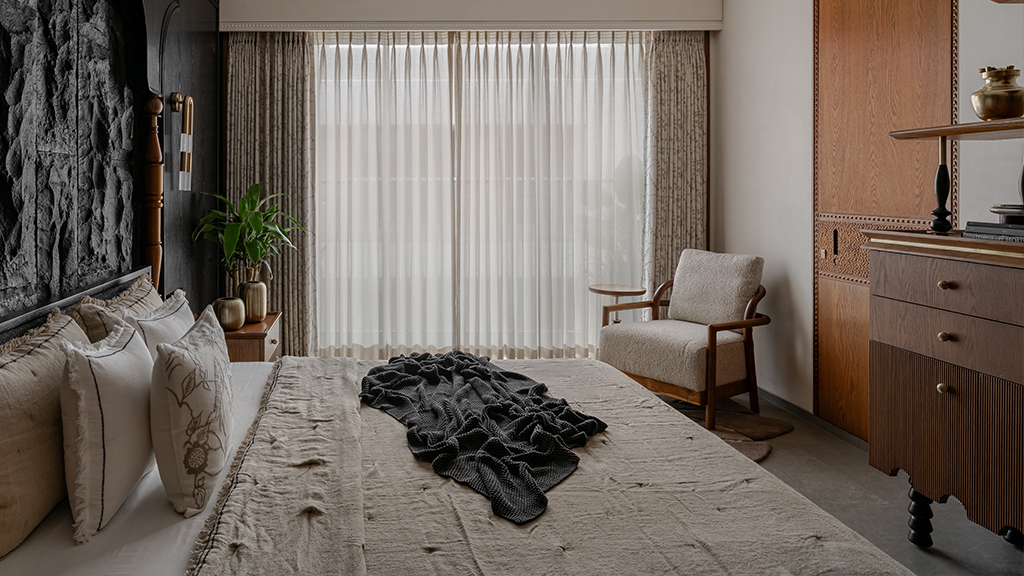
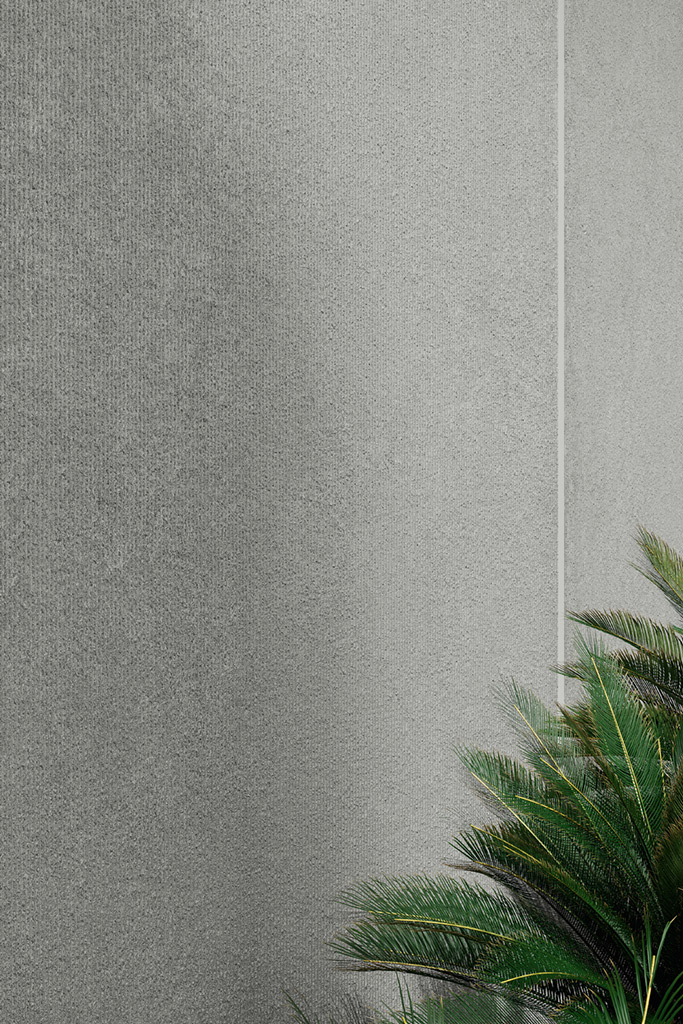
The raw aesthetic in interior design is defined by a specific set of visual and tactile qualities that, together, communicate material authenticity and crafted character.
Irregularity
Surfaces that avoid perfect repetition. Variation in relief, pattern or pigmentation signals that the material, or the process that created it, has a history. In handmade aesthetic interiors, irregularity is the visual evidence of human involvement.
Tactile relief
A surface you want to touch. Depth, grain, ridges, pores: physical qualities that engage the hand and change the way light falls across a wall or floor. Three-dimensional tile textures and structured wall surfaces create meaningful friction: sensory depth that rewards attention.
Tonal variation
Subtle, unforced shifts in colour and tone across the surface. Not a uniform field, but a material landscape with its own internal movement: the cloudy variation of concrete, the warm chromatic shifts of terracotta, the layered stratification of travertine.
Visible material structure
Veining, mineral deposits, pores, aggregates, fibre direction: the internal architecture of the material made visible on the surface. This structure distinguishes a raw finish from a merely matte one.
Matte and low-reflective character
Raw surfaces absorb light rather than bouncing it back. This creates a sense of warmth and physical presence that high-gloss finishes cannot replicate; a quality that grounds interior spaces and makes them feel inhabited.
Interaction with light
A raw surface changes throughout the day. Morning light reveals one set of shadows; afternoon light, another. Artificial light at night transforms the surface again. This temporal quality is what makes raw textures feel alive and it is nearly impossible to reproduce in a flat render.
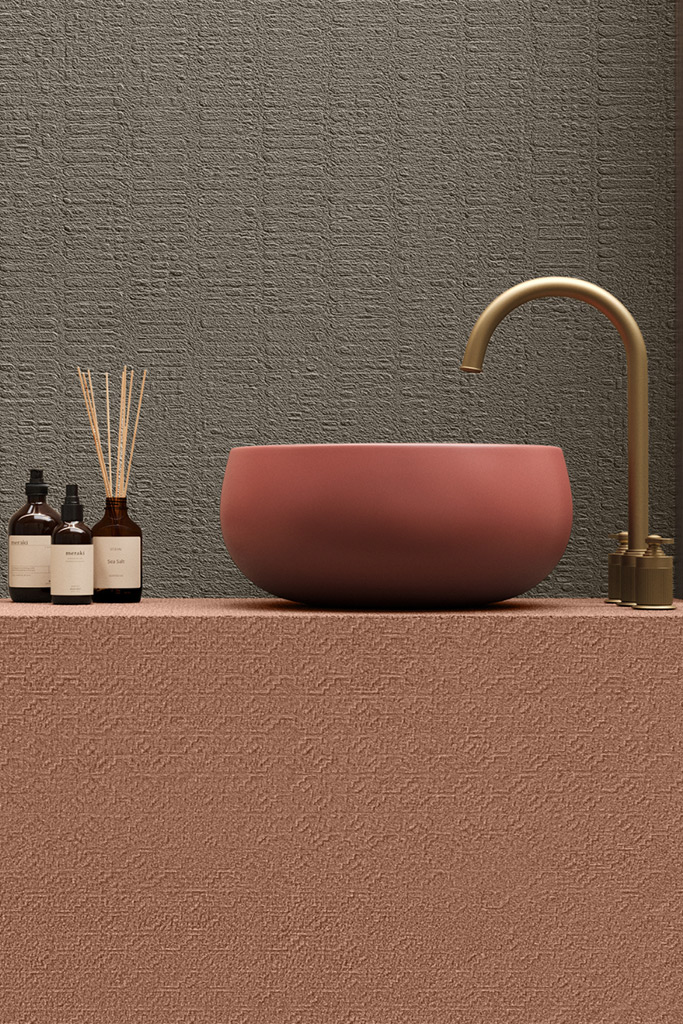
Sintered surfaces and natural materials shaping the raw aesthetic
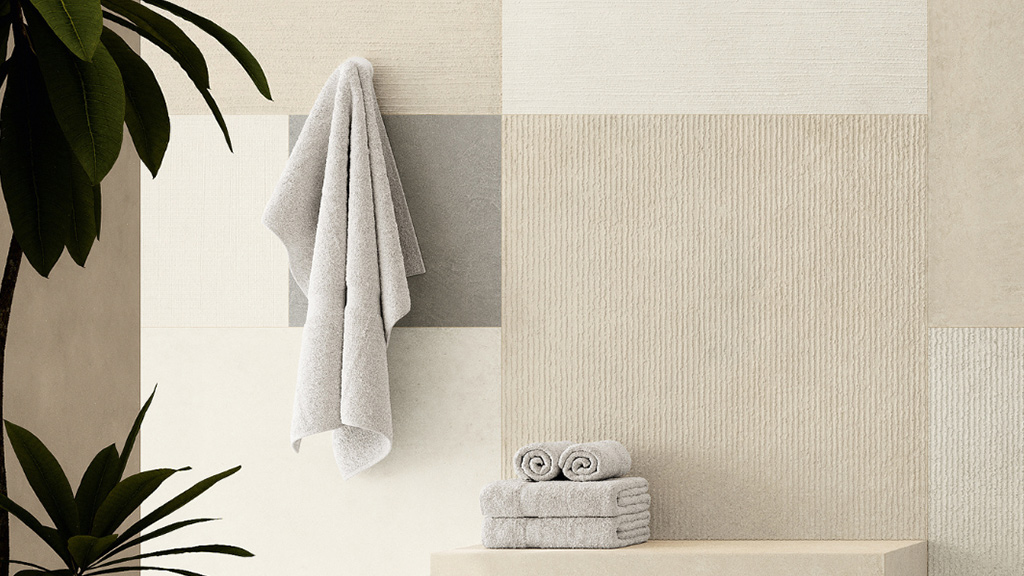
The most common raw textures in interiors are inspired by stone, concrete, travertine, terracotta, plaster and unfinished wood. Textured ceramics faithfully reinterpret these materials, reproducing their visual and tactile qualities while adding architectural-grade performance. Each carries a distinct character that defines its role in the raw aesthetic.
Textured ceramics
Sintered surfaces achieve the visual and tactile qualities of raw materials, relief, grain, tonal variation, interaction with light, while delivering the dimensional consistency, durability and low maintenance that architectural applications demand. When the surface originates from handmade moulds or physical material experimentation, the result combines crafted character with industrial-grade performance: a controlled imperfection that reads as authentic across large walls, floors and façades. Nexion sintered surfaces are among the most recognised examples of this approach, with collections that reinterpret marble, stone and concrete variation at architectural scale.
Natural stone
Veining, fissures, mineral variation and layered geological structures make every stone surface unique. The irregularity is a record of geological time. In interiors, natural stone communicates permanence and a deep connection to place. Its surface resists visual repetition: no two slabs are alike and the variation across a wall or floor creates a material landscape.
Travertine
Characterised by open pores, horizontal stratification and warm tonal movement, travertine has become one of the defining natural materials in interior design for 2026. Its surface alternates between solid and void, filled and unfilled, smooth and pitted, creating a rhythm that is at once ancient and contemporary. The warmth of its palette and the depth of its natural texture make it particularly effective on large surfaces where visual richness needs to coexist with compositional restraint.
Concrete
Grain, aggregates, cloudy tonal variation and subtle surface inconsistencies give concrete its distinctive raw character. In contemporary interiors, cement tiles communicate architectural honesty and monolithic strength. The material’s appeal lies in its apparent simplicity: what looks plain at a distance reveals layered complexity up close, a quality that aligns closely with the principle of meaningful friction.
Terracotta
Earthy pigmentation, subtle chromatic variation and a warmth that comes from the firing process itself. Terracotta brings an unmistakable crafted character, the sense that human hands and natural heat forged the surface. In interior applications, it introduces colour and warmth without artifice, grounding spaces in a material tradition that spans millennia.
Wood and plaster
Wood grain, knots and natural ageing patterns complement stone and ceramic textures. Lime plaster, with its chalky depth and slight surface undulation, provides a softer counterpoint that enhances the tactile contrast within a material palette. Both serve as contextual partners to the primary raw materials, enriching the sensory range of a space.
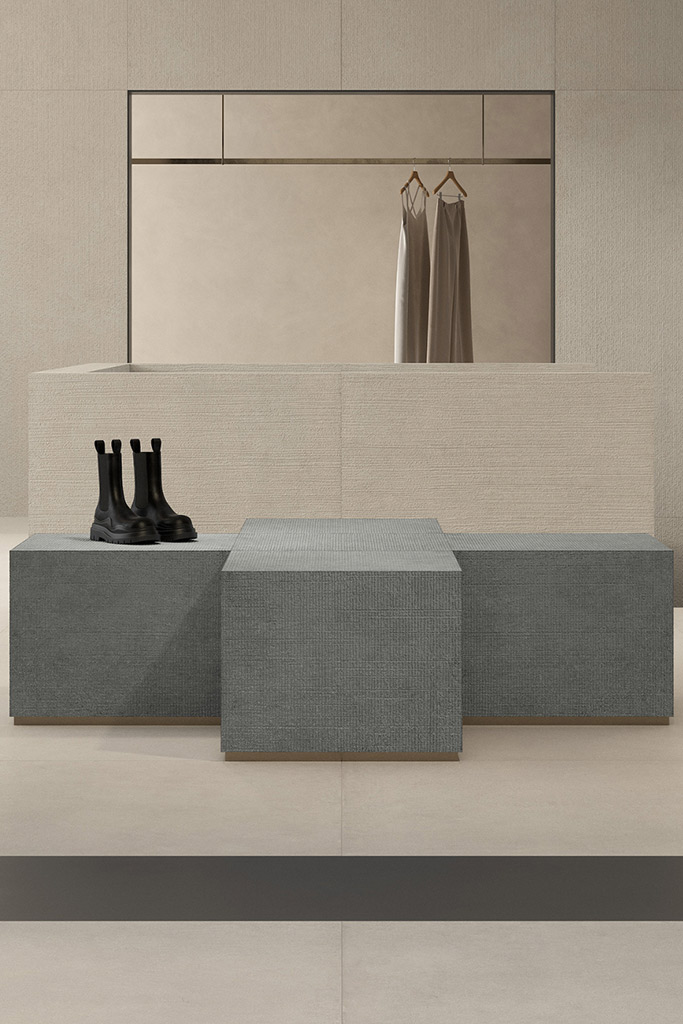
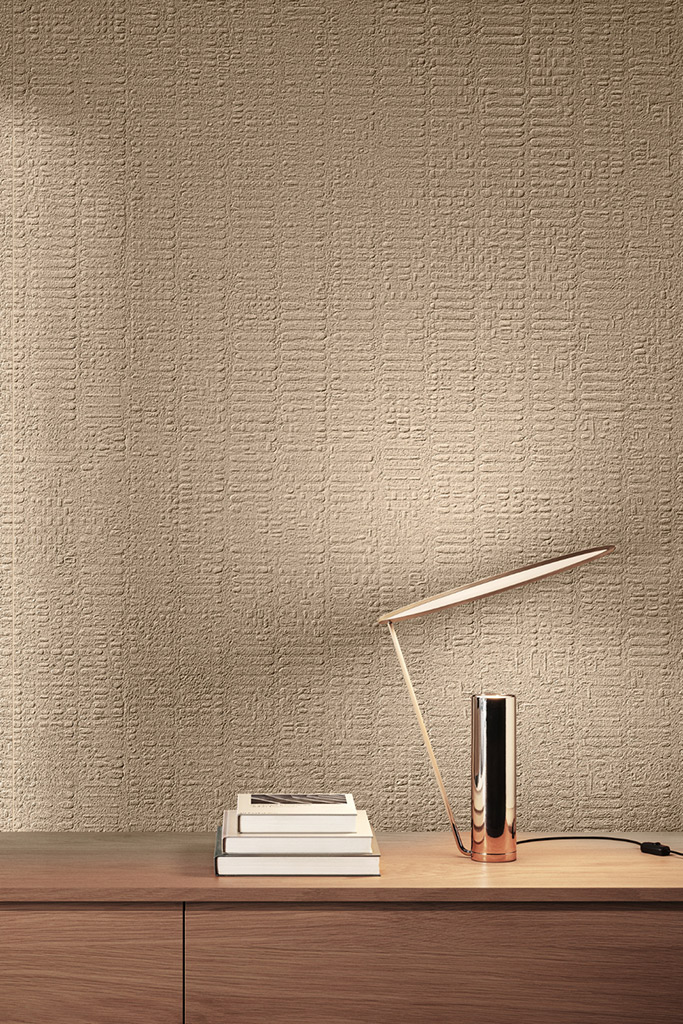
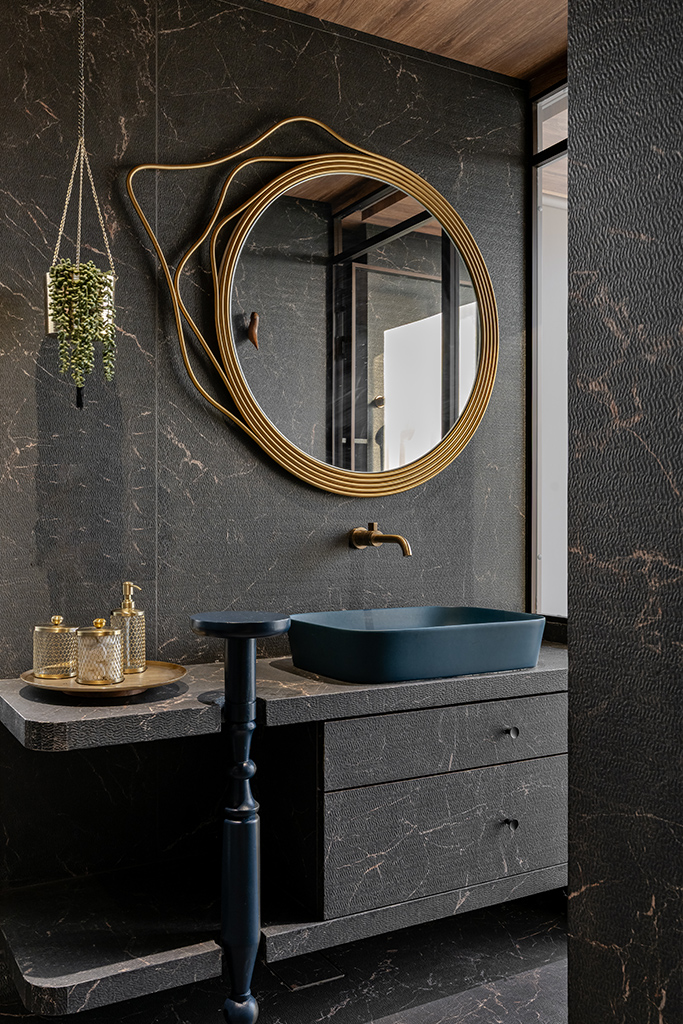
The following reference maps the visual characteristics and spatial effects of each material:
| Raw texture | Visual characteristics | Interior effect |
|---|---|---|
| Textured ceramics | Relief, controlled variation, material effects | Tactile depth with architectural performance |
| Natural stone | Veining, fissures, mineral variation | Uniqueness and permanence |
| Travertine | Pores, stratification, tonal movement | Warmth and natural depth |
| Concrete | Grain, cloudy variation, matte finish | Architectural, monolithic character |
| Terracotta | Earthy tones, subtle irregularity | Warmth and handcrafted character |
How to use raw textures in interiors
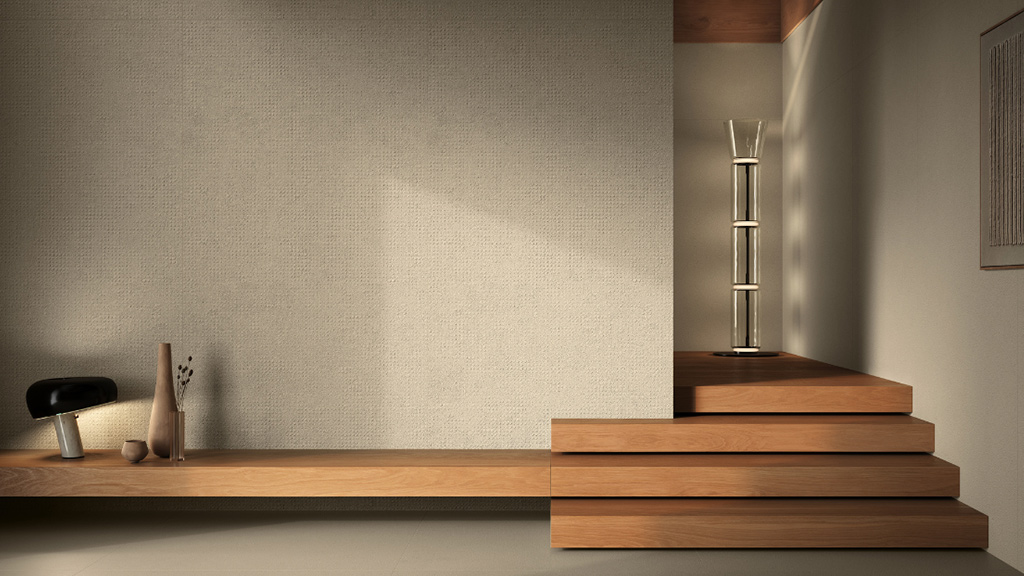
Raw textures are commonly used on walls, floors, countertops, furniture surfaces and architectural features. The versatility of the raw aesthetic makes it applicable across residential, hospitality and commercial projects, but each application demands a specific approach.
Walls
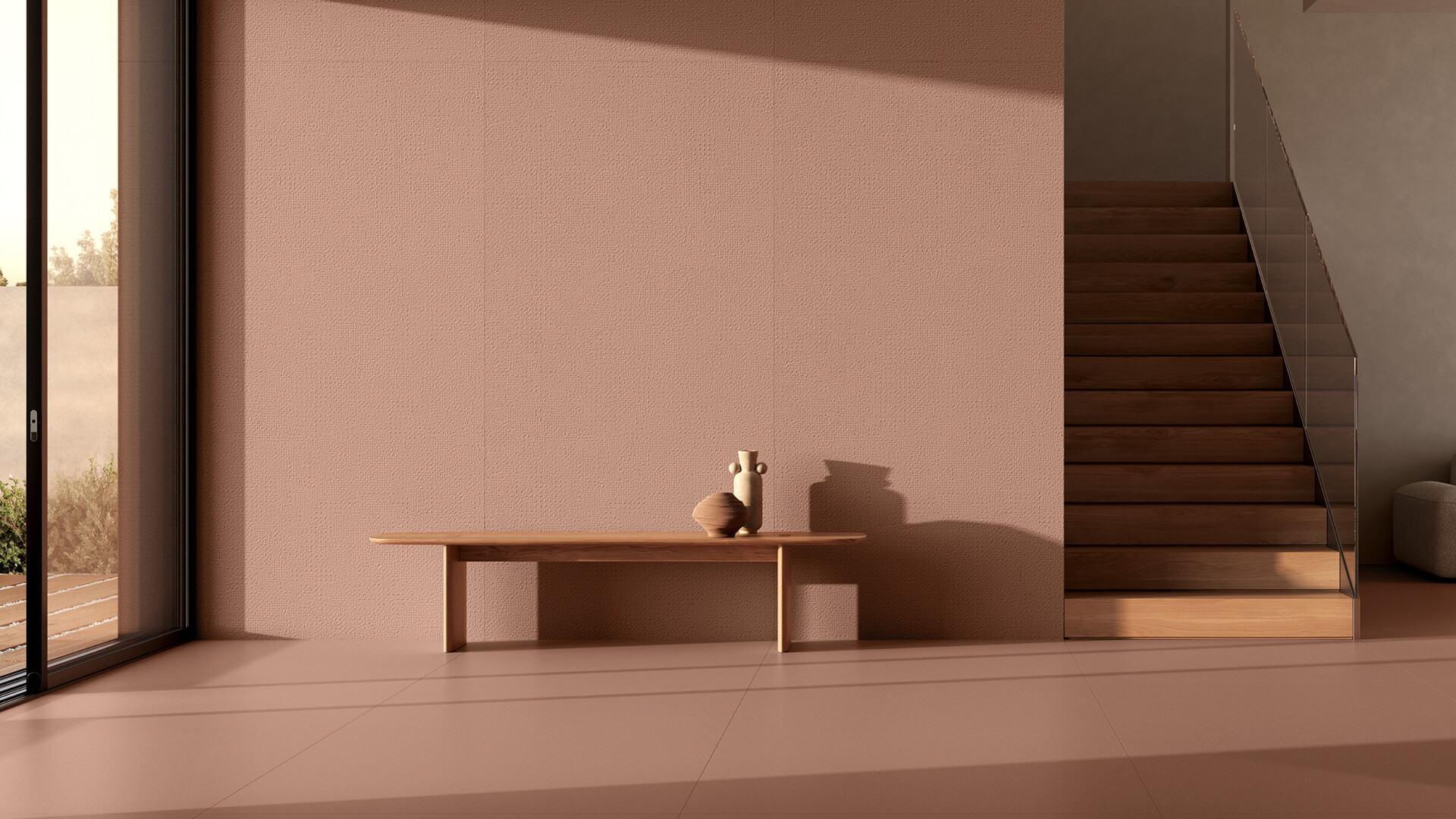
In vertical surfaces raw textures have the most immediate visual impact. 3D wall tiles, structured stone-effect panels and rustic design finishes create depth, shadow play and tactile interest on feature walls, corridors and reception areas. Interior wall design with textured surfaces transforms a flat plane into an architectural element, particularly when combined with directional lighting that accentuates relief and variation.
Floors
Raw textures on floors require a balance between tactile depth and functional performance. Tiles inspired by stone, travertine and concrete, with matte finishes, subtle grain and tonal variation, bring the raw aesthetic while maintaining slip resistance, cleanability and durability. The key is controlled variation: enough irregularity to feel material and alive, but enough consistency to read as a coherent surface across large areas.
Large surfaces and architectural features
The raw aesthetic performs best at scale. A single textured tile on a sample board communicates material quality; a full wall of the same surface communicates spatial character. Columns, soffits, stair walls and elevator lobbies are applications where raw textures transform transitional spaces into spatial experiences.
Contrast with smooth materials
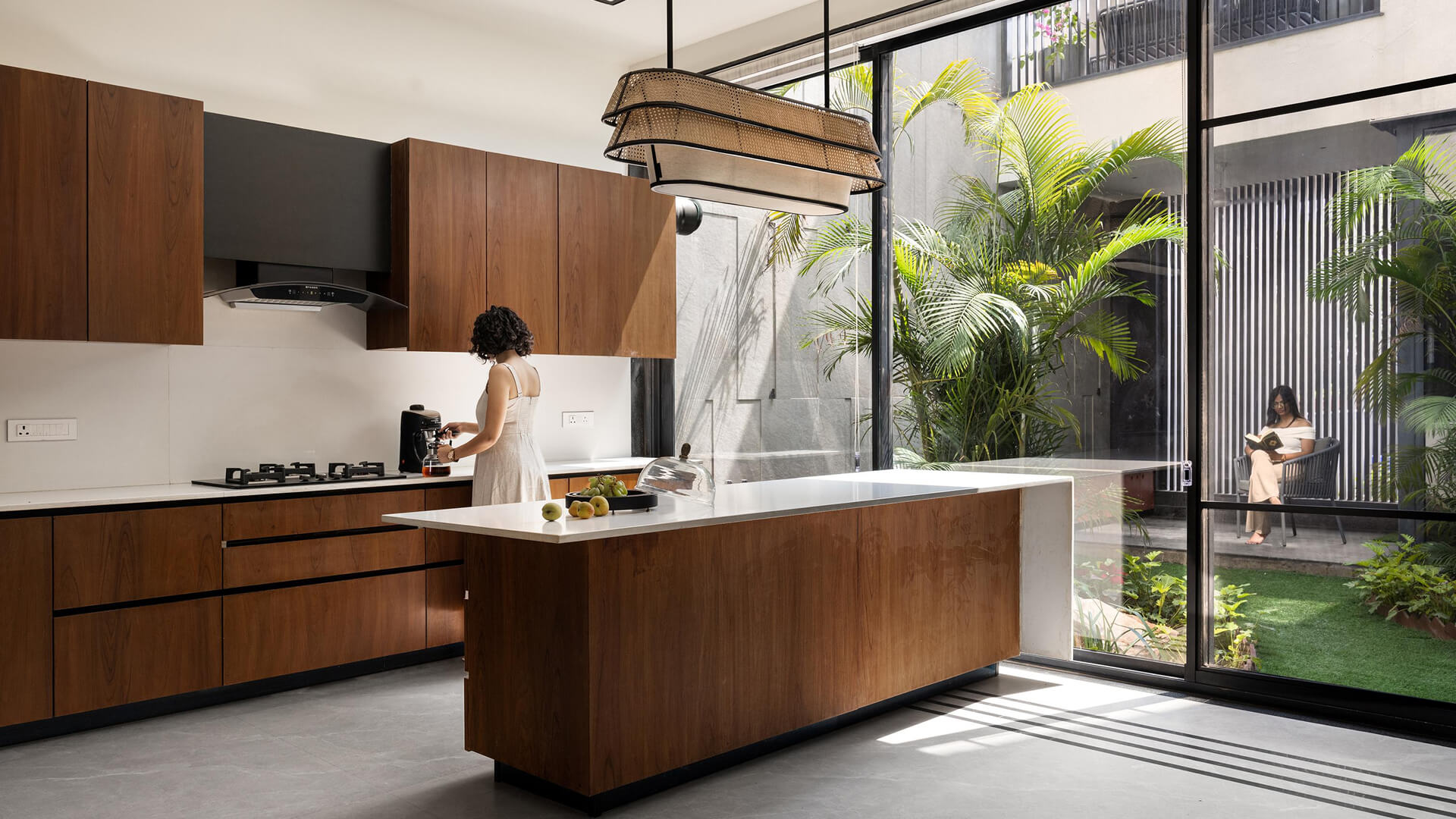
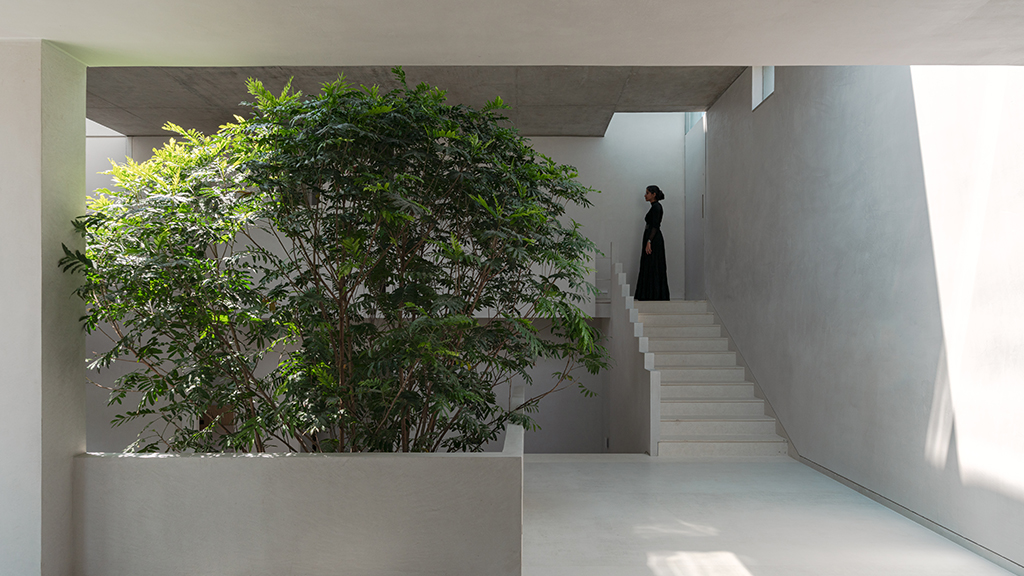
To balance raw textures, designers often contrast rough or matte surfaces with smoother materials such as glass, metal or polished finishes. This contrast amplifies the tactile quality of both: the raw surface feels more alive against a smooth counterpoint and the smooth surface gains sophistication from the juxtaposition. In contemporary interiors, this material dialogue is one of the most effective compositional strategies.
Raw vs unfinished: the role of intentional design
A truly raw surface in contemporary interior design is deliberately conceived to preserve the visual and tactile qualities of natural materials while meeting architectural performance requirements. Intentional imperfection is about designing surfaces with enough variation, texture and material depth to avoid visual sameness, while retaining the technical control that makes them suitable for floors, walls and large-scale features
An artisanal surface has the intelligence of its making: the decisions about leaving a mark or smoothing it, accentuating variation or containing it. The tile communicates but how it was made. That distinction is a form of material honesty that no purely industrial process can replicate on its own.
Leaving the signs of manufacturing visible is a conscious design decision: time, craft and material experience become elements of the design itself. Even when technology enters the process, the decisions remain human: when to intervene, leave things rough, stop.
The principles of the Italian bottega – time, heritage, material mastery – continue to inform how crafted surfaces are developed today. We traced this lineage in The Art of Patience: Why Italian Craftsmanship Still Inspires Design Today.
Why ceramic surfaces fit the raw aesthetic
Ceramics occupy a unique position in the raw texture conversation. Unlike natural stone, concrete or terracotta, which carry inherent raw qualities but also inherent limitations (weight, porosity, dimensional variation, maintenance requirements), ceramic and sintered surfaces can be engineered to combine the visual and tactile character of natural materials with architectural-grade performance.
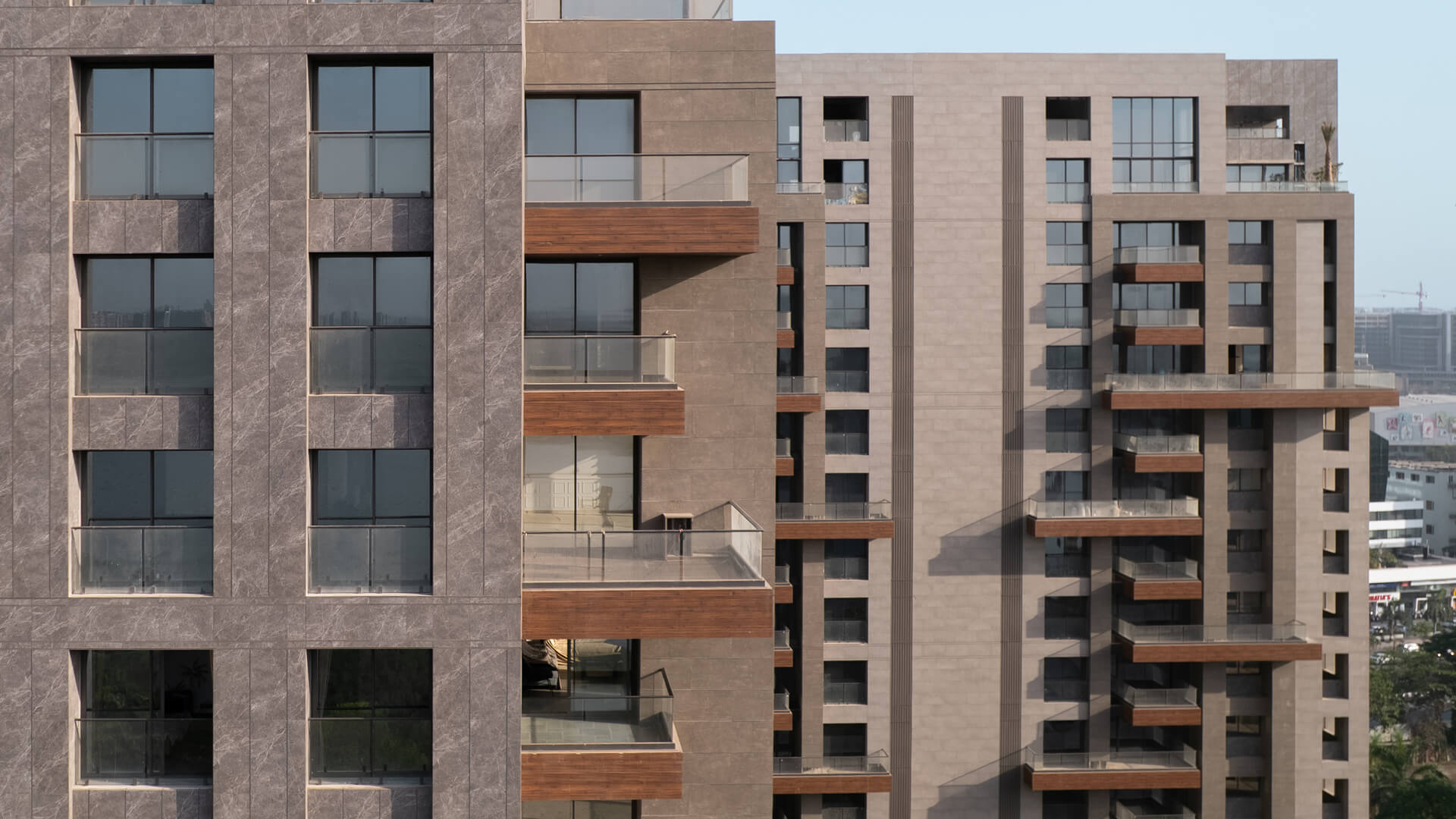
Today architects and designers choose sintered ceramic surfaces for the raw aesthetic to deliver the visual depth and tactile character of natural materials together with the performance that architectural projects demand: dimensional consistency across large formats, resistance to scratches, stains and moisture, and suitability for both interior and exterior applications at any scale.
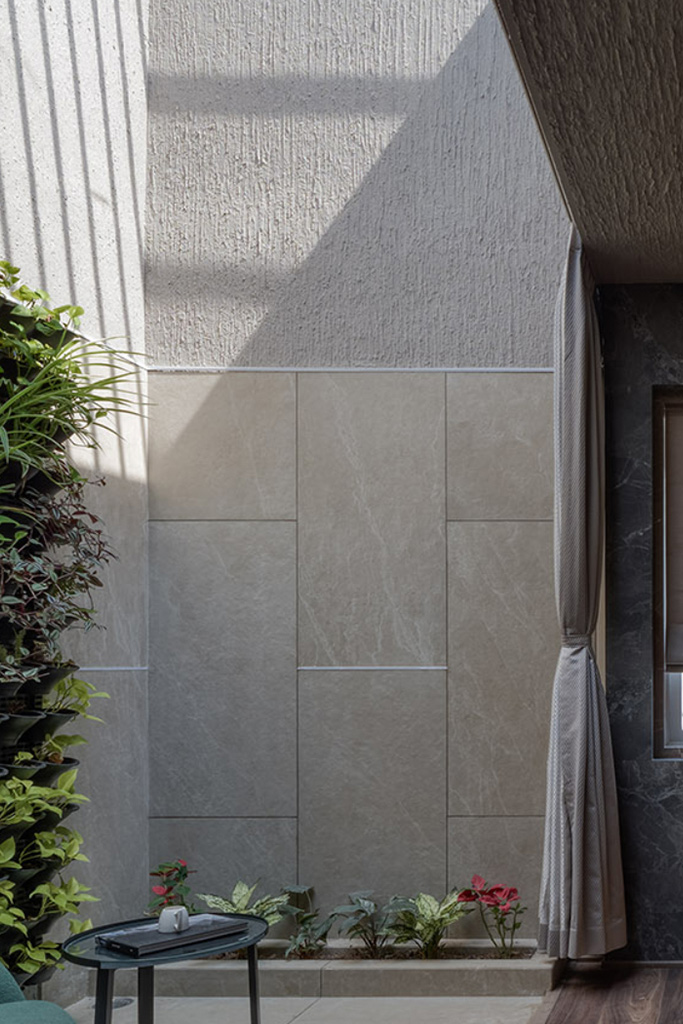
The most compelling ceramic surfaces achieve surface relief, material depth, controlled variation and interaction with light while offering continuity across large areas, dimensional consistency and resistance to the wear that natural materials may not withstand in high-traffic applications.
Nexion sintered surfaces reinterpret marble and natural stone variation into tiles with architectural-grade consistency. Concrete-inspired ranges and textured wall surfaces bring grain, matte depth and tonal irregularity into large-format sintered panels suitable for both interior and exterior applications. Handmade research and material experimentation at the origin, advanced CoreTech sintering technology in production and a tactile surface engineered on performance.
The Ombre Collection, winner of the iF Design Award 2026, is the most recognised expression of this philosophy, awarded for its ability to blend artisanal craft with technical innovation, turning handmade imperfection into a deliberate, repeatable design quality.
Its artisanal surface performs as an architectural product: durable, scalable, suitable for interior and exterior wall applications, representing a synthesis of craft and innovation where imperfection becomes meaning and depth becomes structure.
Crafted surfaces with raw character no longer require the trade-offs traditionally associated with natural materials. Textured ceramics make the raw aesthetic architecturally viable at scales and in applications where natural stone or concrete would be impractical.
The beauty of imperfection: a new idea of luxury
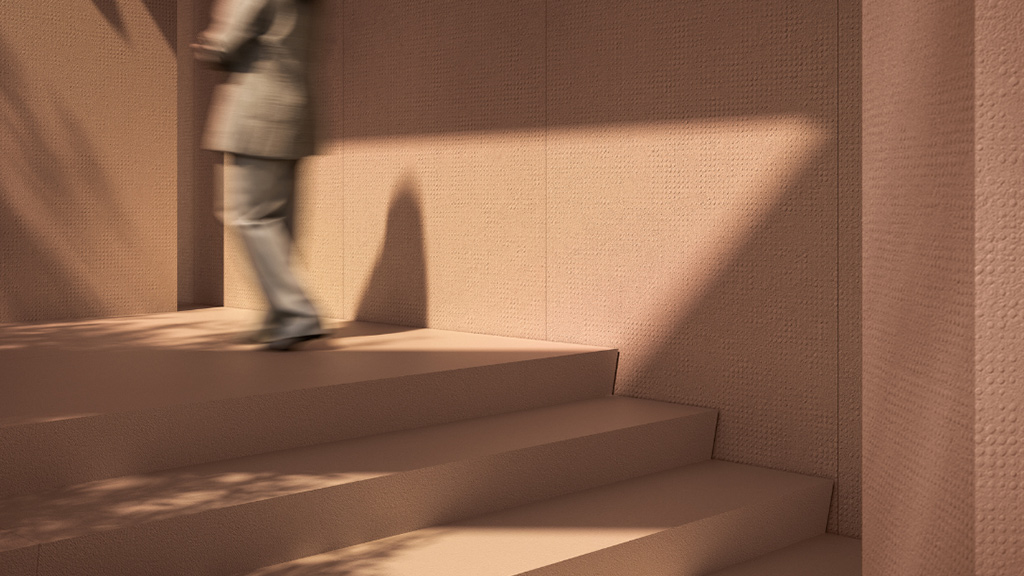
Since perfection becomes the default output of any software, it stops being a marker of quality. What signals quality instead is distinctiveness: the visible evidence that a surface was chosen, not generated; its texture was designed, not defaulted to; its imperfection embodies intentionality.
This new idea of luxury is defined by material, temporal and cultural depth that comes from designing with knowledge of place, process and precedent.
The beauty of imperfection is, ultimately, the choice to specify materials with intention, surfaces that reward attention, that age with grace and that give space a character worth inhabiting.
Nexion sintered surfaces are redefining spatial perception through light, depth and touch through a relationship between craft, technology and material. Explore a curated selection of raw textures.
Sources: