A seamless dialogue between built form and landscape, choreographed through volumes, calibrated openings, and
spatial hierarchy, defines this 16,000 ft² residence in Mangalore.
A home where the terrain itself becomes the
primary generator of architecture.
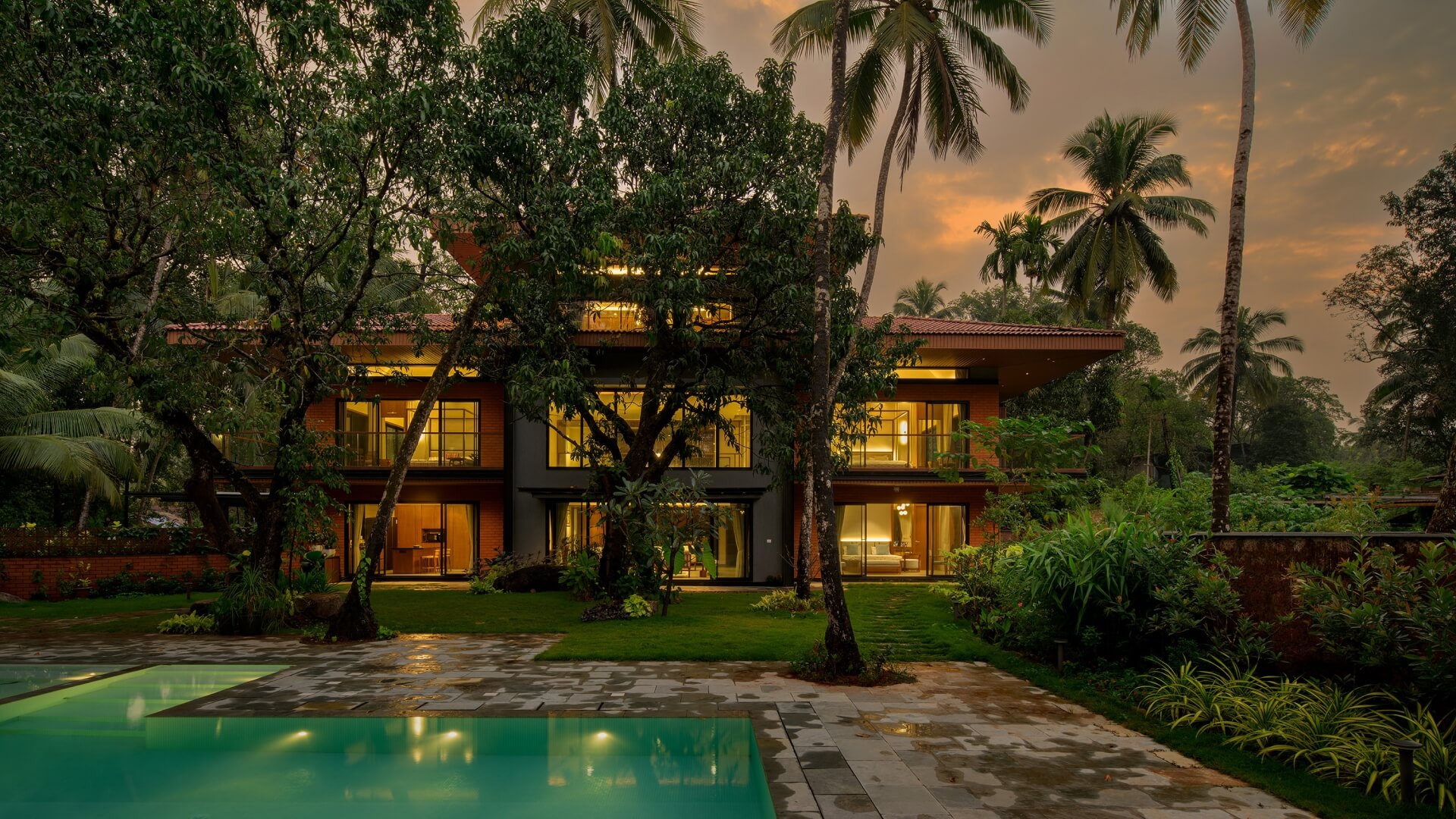
Designed by architect Ashrika Ameen of Infinitum Studio, this residential project turns a richly contoured site into a spatial narrative of volumes, framed garden views, and sculpted voids.
Set on land that has evolved over generations, designed as a deeply personal home for the architect’s mother, the house responds not only to its natural topography but also to the climatic, cultural, and material conditions of coastal Karnataka. Rather than imposing a structure onto the site, the design works with its natural contours, resulting in a residence that feels shaped by the landscape rather than situated above it.
A design framework
The site’s steep natural gradient, rising nearly 14 meters from its lowest to highest point, became the framework for the home’s spatial organization. The design leverages the terrain shifts to shape circulation, sightlines, and program distribution.
The entrance is positioned at one of the site’s higher contours, allowing the house to unfold downward and outward in a series of volumetric gestures that echo the land’s inherent movement. Double-height spaces, alternating floor levels, and strategically elevated platforms create an architectural rhythm that mirrors the topography, ensuring that every major space opens onto garden views, light wells, or natural slopes.
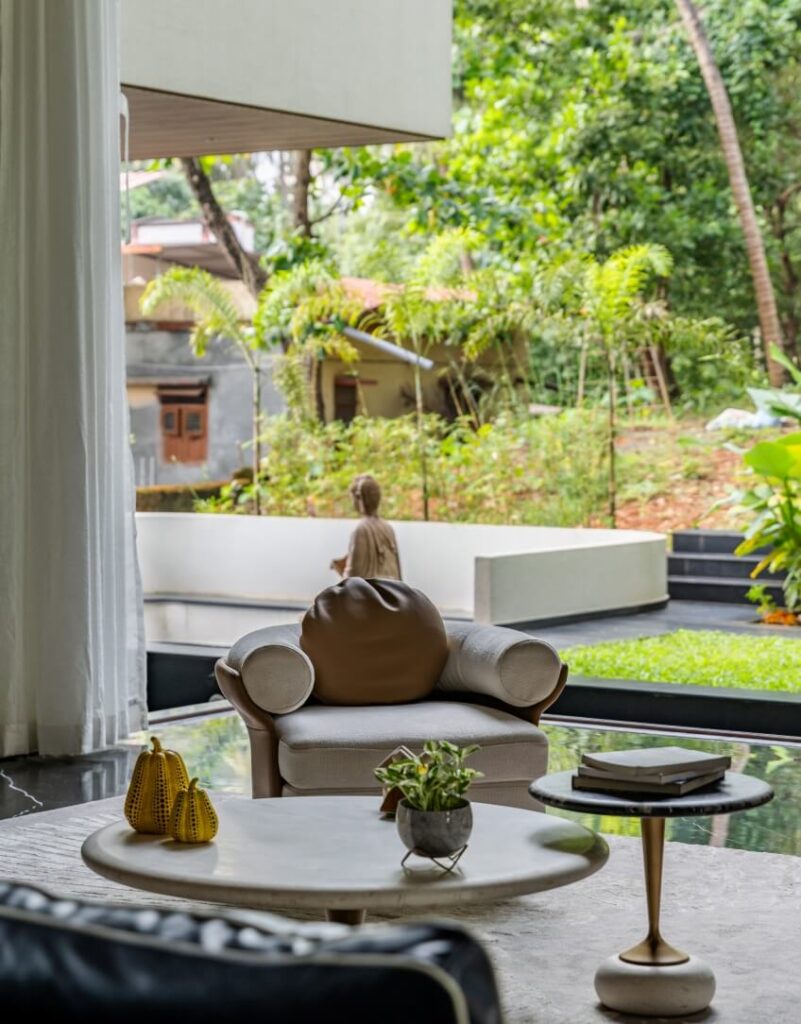
Crafting with the land
Here the site’s dramatic natural slope becomes a catalyst for spatial richness. Rather than flattening the land, the design uses its height shifts to choreograph a layered sequence of spaces.
Subtle level variations enrich circulation, turning every transition into an opportunity for new perspectives, framed garden views, and sectional depth. The terrain guides the architecture, shaping volumes and movement in ways that feel intuitive, grounded, and inseparable from the site itself.
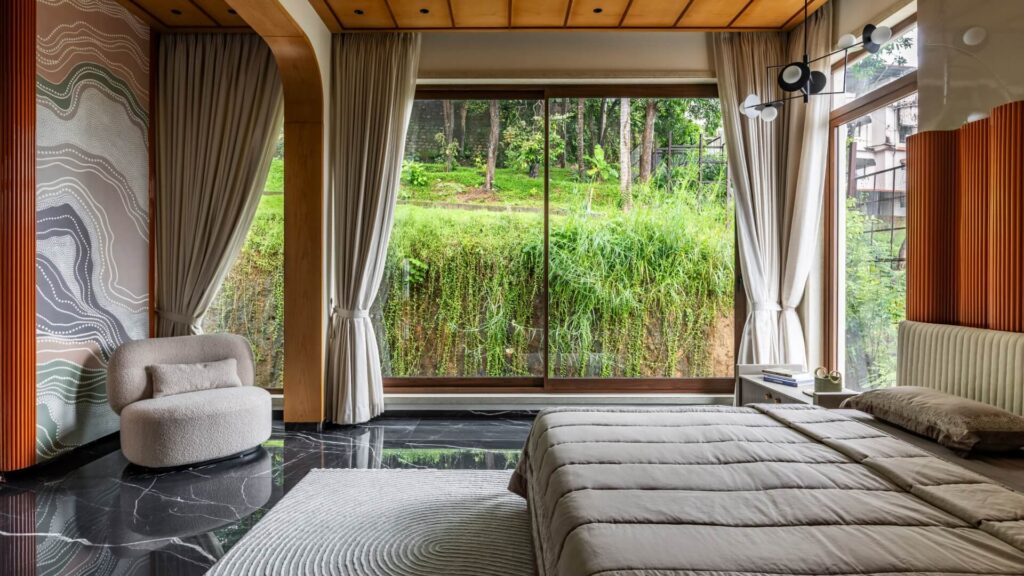
Transitions that technically dissolve inside-outside boundaries
Transitions in the house are conceived as precise design operations. Large sliding systems open entire wall planes, transforming enclosed rooms into porous extensions of adjacent terraces. The elevated dining deck acts as a calibrated connector: its level, orientation, and projection engineered to extend the social core outward without interrupting structural or topographic continuity.
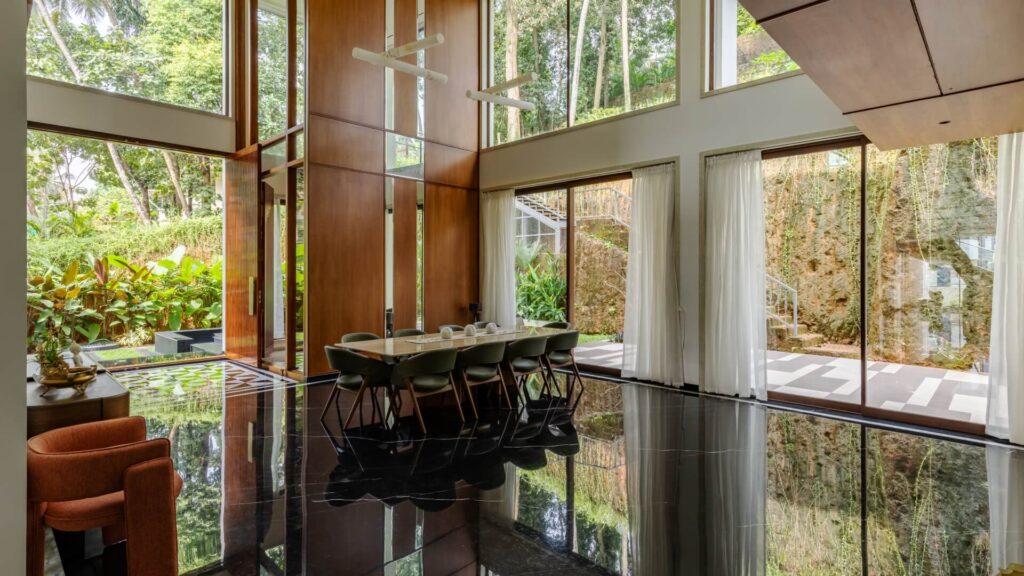
Subtle level shifts across the plan follow the site’s natural gradient, enabling smooth circulation while maintaining visual alignment between interior volumes and outdoor platforms. Inside and outside operate as a single spatial field, where thresholds are not edges but instruments of controlled openness.
Spatial hierarchies defined by landscape views
In this residence, spatial hierarchy is shaped by what the architecture chooses to frame.
The home’s volumes,
scales, and orientations are determined by a constant dialogue with the surrounding gardens and natural
terrain. Double-height living and dining spaces rise to capture expansive views across the
contoured landscape, while more intimate rooms borrow light, greenery, and atmosphere through curated
openings.
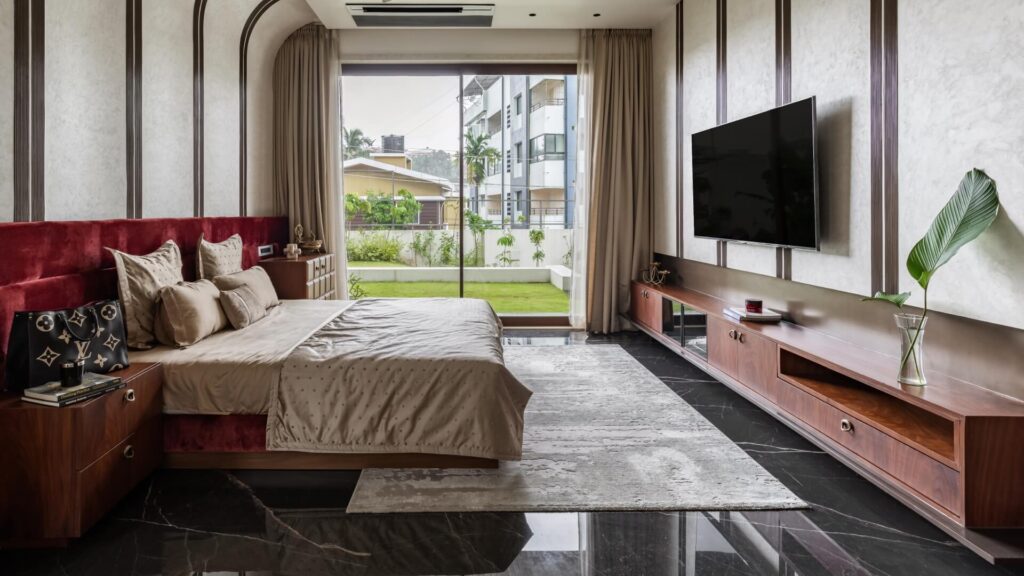
Openings orchestrated to frame and enhance the site
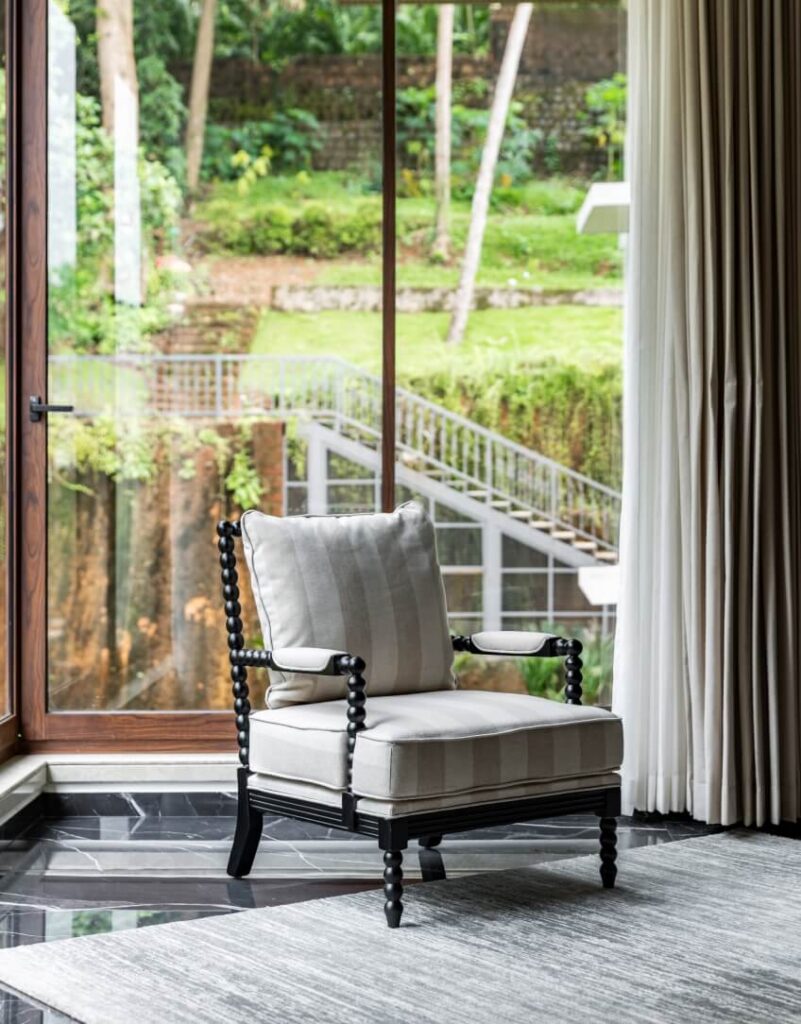
Openings are treated as calibrated instruments rather than simple voids, each one intentionally positioned to heighten the dialogue with the natural setting.
Corner windows extend sightlines diagonally across the terrain, amplifying depth and revealing the site’s spatial richness. Tall vertical apertures draw the eye upward, echoing the height of surrounding vegetation and accentuating the home’s volumetric rhythm.
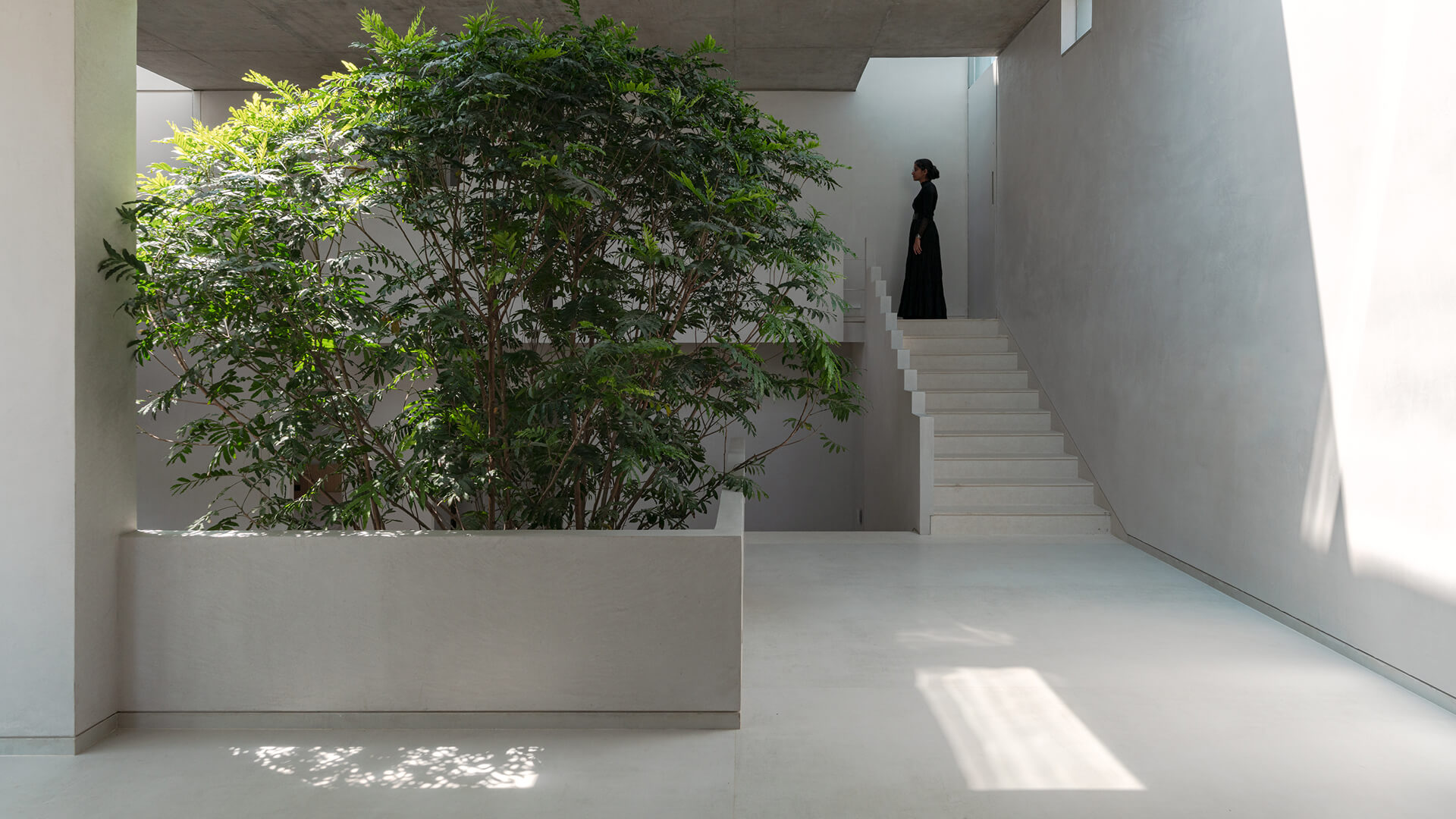
Strategic overhangs and sculpted cutouts filter sunlight throughout the day, casting shifting patterns that animate interior surfaces. Through these deliberate framings, the outdoors is perceived as an integral architectural layer.
Light and ventilation as expressions of landscape logic
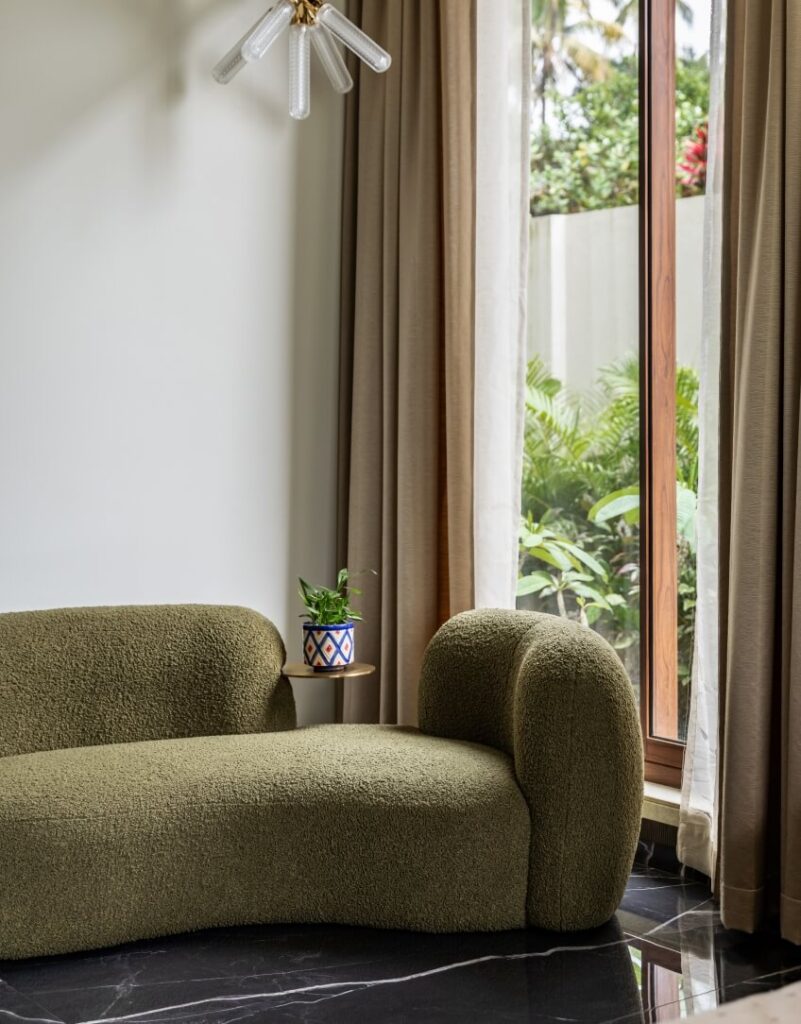
Natural light and airflow are interpreted as architectural materials, shaped directly by the
site’s environmental cues.
Triple-height voids pull daylight deep into the residence, creating luminous
vertical axes that anchor key spaces. Cross-ventilation is orchestrated along the natural wind paths shaped by the
terrain, ensuring constant airflow without mechanical intervention.
The result is an interior that feels
open, breathable, and climatically attuned, a spatial atmosphere born from reading and responding
to its environmental setting.
A material palette that amplifies the sensory qualities of the site
The material strategy reinforces the home’s deep connection to its site, selecting surfaces that echo the tones, textures, and atmospheres of the surrounding environment. Earth-tinted greys, shadowy blacks, and lush mineral greens form a palette that resonates with the soil, foliage, and monsoon light of coastal Karnataka.
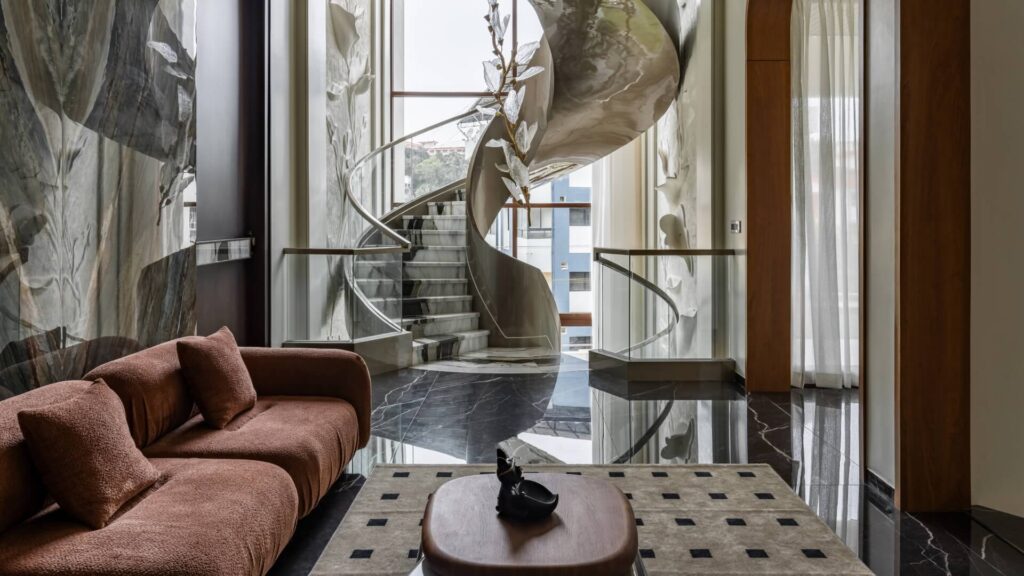
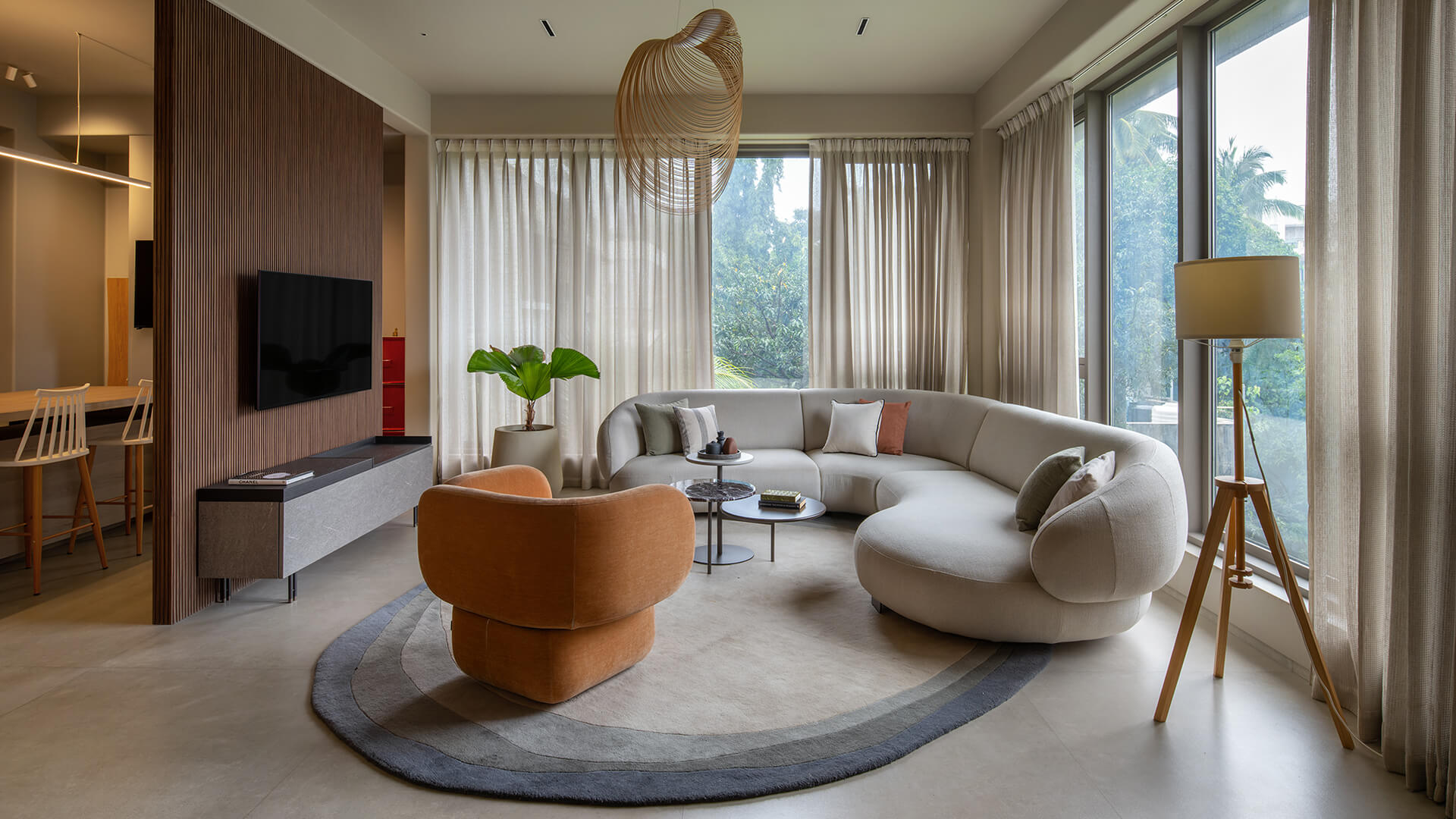
Within this dialogue, Nexion surfaces play a defining role, used across the outdoors, as well as the countertop in the lounge, in five bedrooms, seven bathrooms, and the living area, not only for durability, but for their ability to translate natural references into refined architectural language.
Calacatta Nero, used as the primary flooring surface and sourced from Nexion’s marble gallery, introduces a mirror-like depth that echoes the tonal contrasts of the site’s rocky contours. Its polished finish amplifies reflected light across the interiors, enriching volumes that open toward framed outdoor vistas.
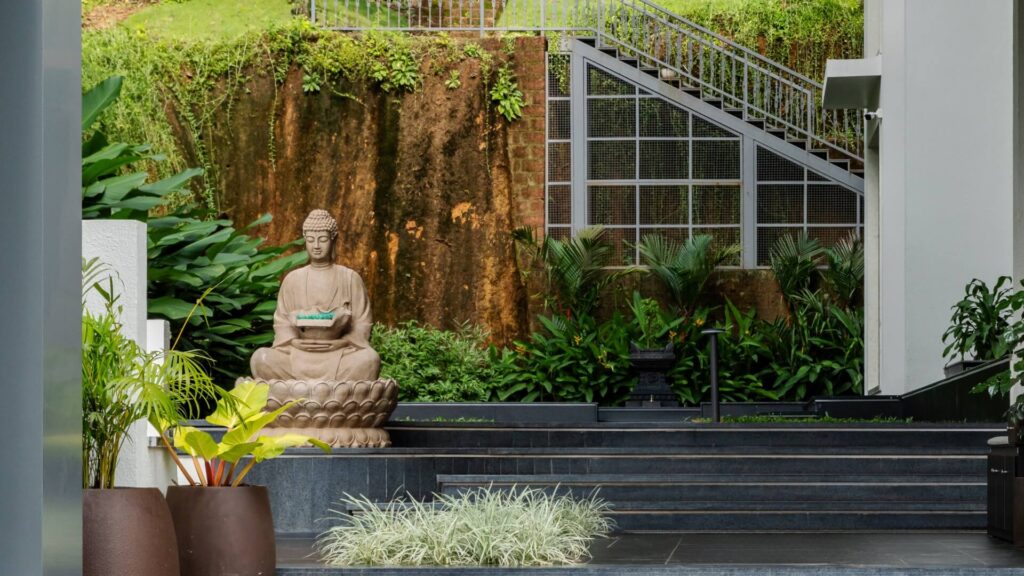
Outdoors, Runa Nero provides a grounded, slate-inspired texture with a gentle tactility that aligns with the home’s interplay of shadow, stone and vegetation, anchoring terraces and transitional zones with a material that feels both natural and contemporary.
In the bathrooms, Emperador Grigio offers a refined and modern interpretation of ancient stone, its layered greys harmonizing with the coastal terrain and supporting the home’s overall chromatic restraint. Complementing it, the verdant mineral depth of Quarzo Verde Aqua introduces a subtle note of luxury, echoing the dense greenery that surrounds the residence and adding a controlled, expressive contrast within the private spaces.
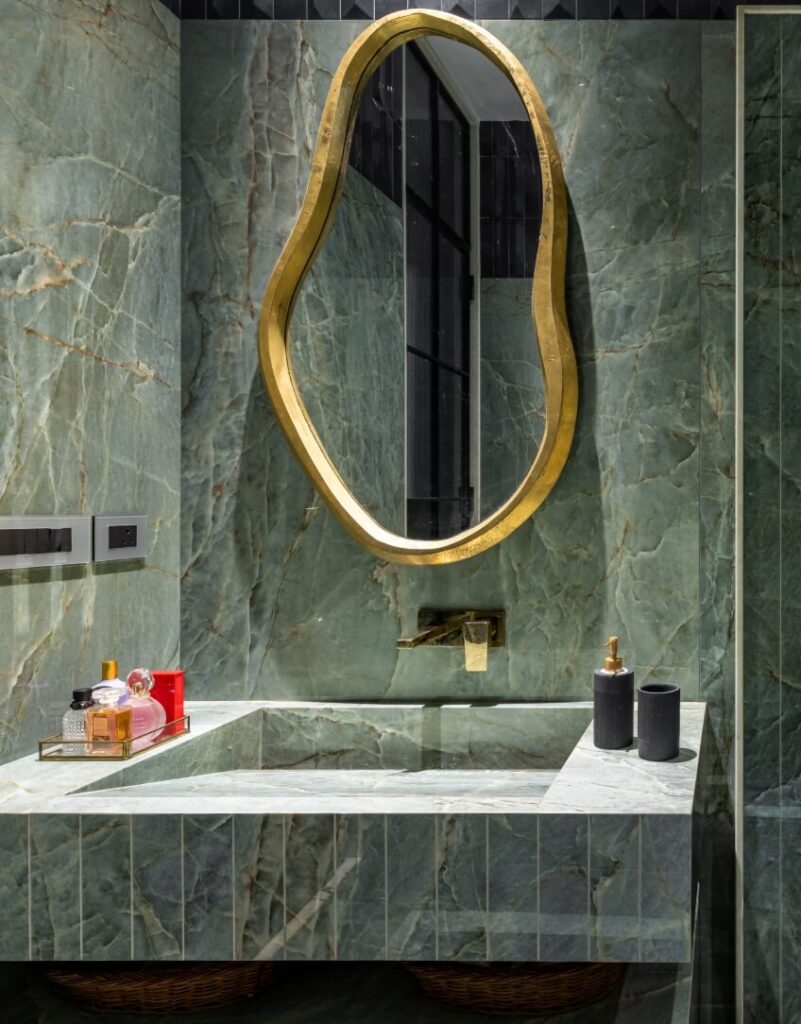
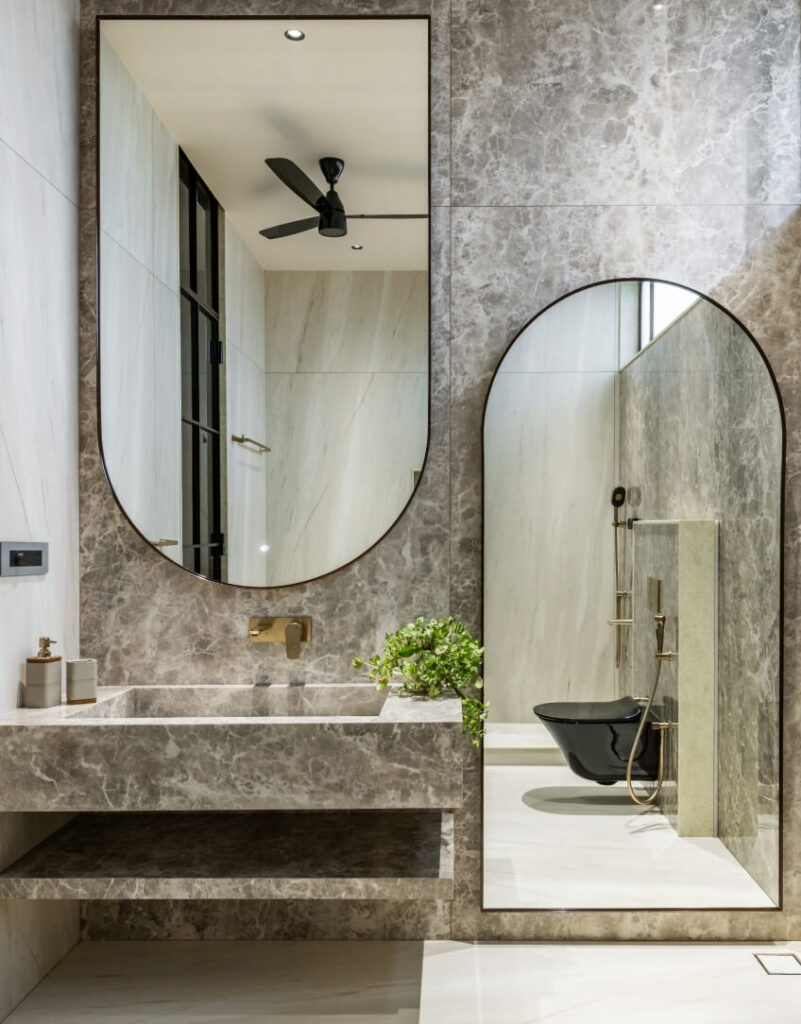
Across indoor and outdoor spaces, Nexion sintered surfaces establish a shared visual language, textures echo the terrain, colors blend into vegetation, and every finish reinforces the architecture’s sensitive, site-born identity.
A home that strengthen the dialogue between architecture and materials
In this beautiful house form, section, and circulation are shaped by the land itself, and the material vocabulary becomes the connective tissue that unifies experience.
Nexion’s sintered surfaces play a decisive role: they create continuity between levels, frame interior-exterior transitions, and reinforce the visual logic dictated by terrain, vegetation, and light.
Explore more residential architecture projects and discover how Nexion surfaces elevate architecture in every context.