Every city tells its story through its facades. Long before we enter a building, its exterior shapes our first impression. In contemporary architecture, facade design is expected to do more than create a visual identity, it must withstand decades of sun, rain and changing climate while keeping its appearance intact. Across four landmark towers, Nexion sintered facade panels show how beauty and long-term performance can exist together.
“The facade being the first impression of any project becomes an integral part of our design process” says Ar. Apurva Desai, founding partner at Utopia Designs. For his practice, the outside and the inside are never separate conversations. “We believe the facade is an integral part. It has to reciprocate to the function inside the building.” Get the right facade and the building earns its place for decades.
The facade design principle across four works of architecture
The principle that facade design begins with the life inside has quietly shaped skylines. Across a growing portfolio of premium residential and commercial towers, one surface keeps returning: the sintered facade. What follows is the story of four projects that turned Nexion’s surfaces into a signature and of the architects and developers who decided a first impression should also be a lasting one.
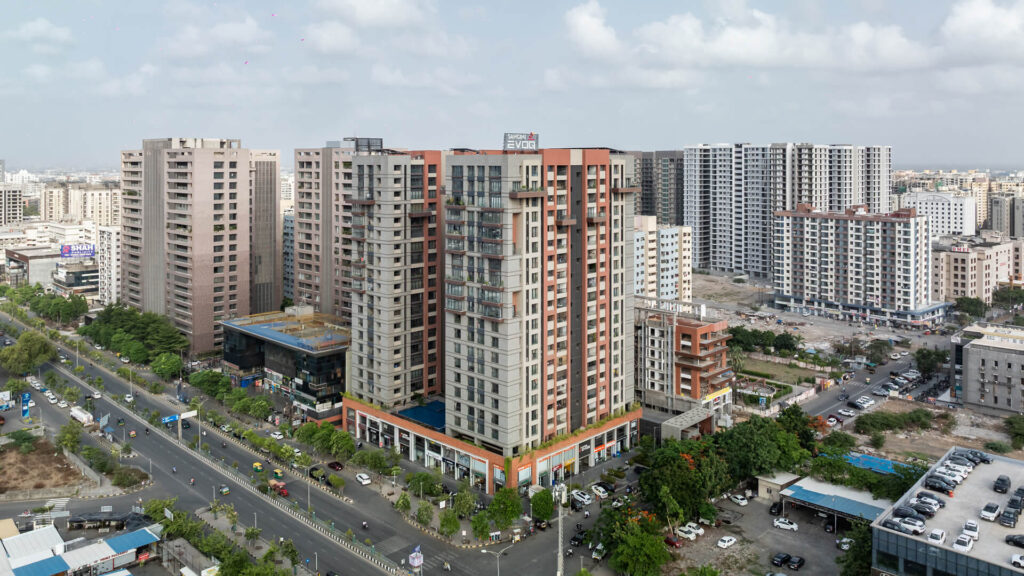
Each project approached facade design differently. Some required greater verticality, others needed to merge into surrounding landscapes, while others demanded an iconic skyline presence. What connected all four was a material capable of translating architectural intent into a durable facade.
Evoq: high-rise facade design for a 70-metre tower
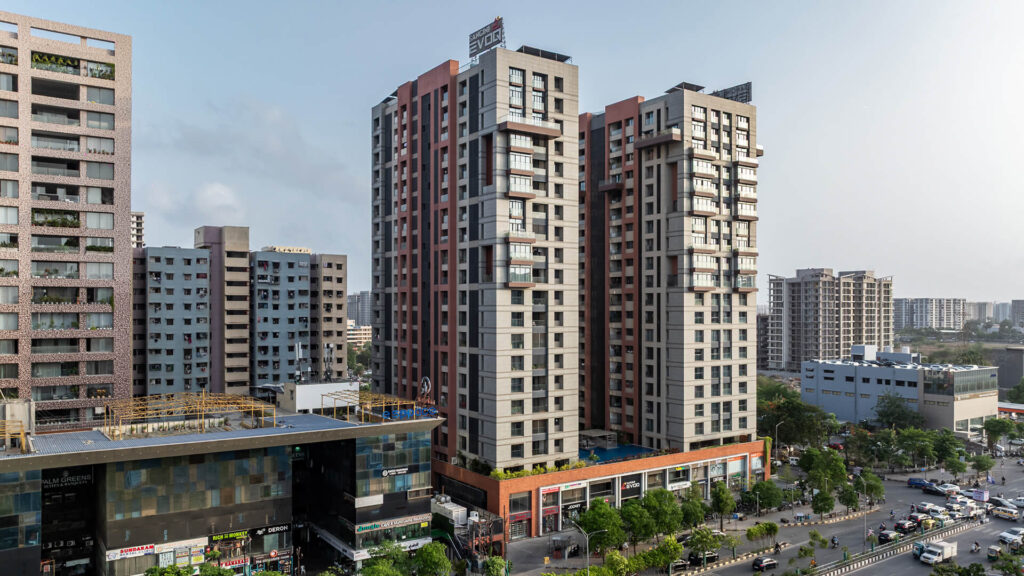
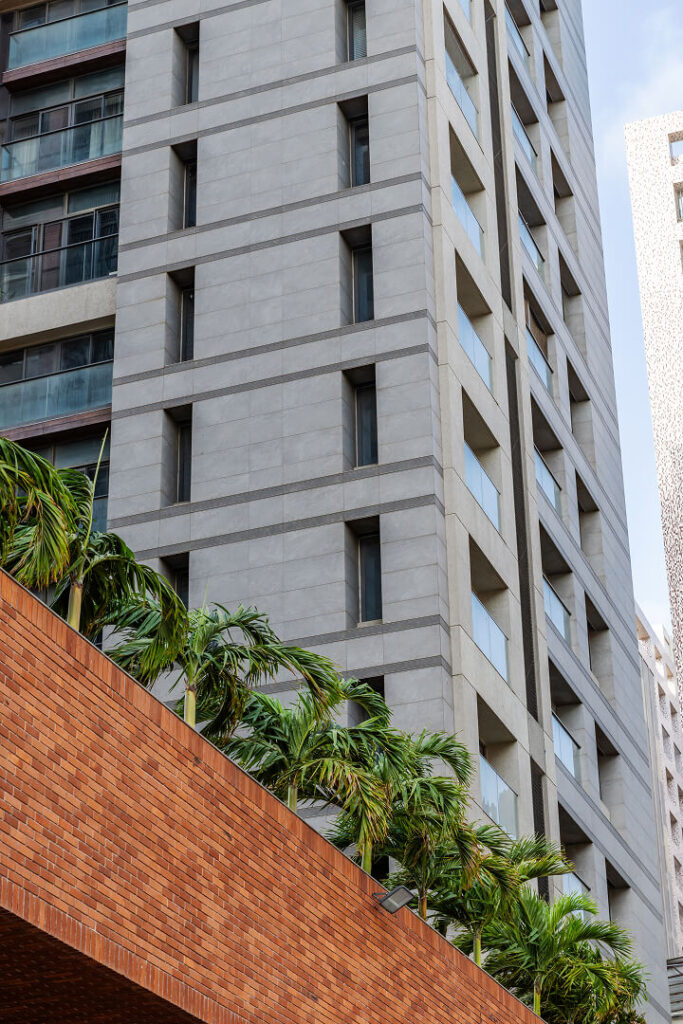
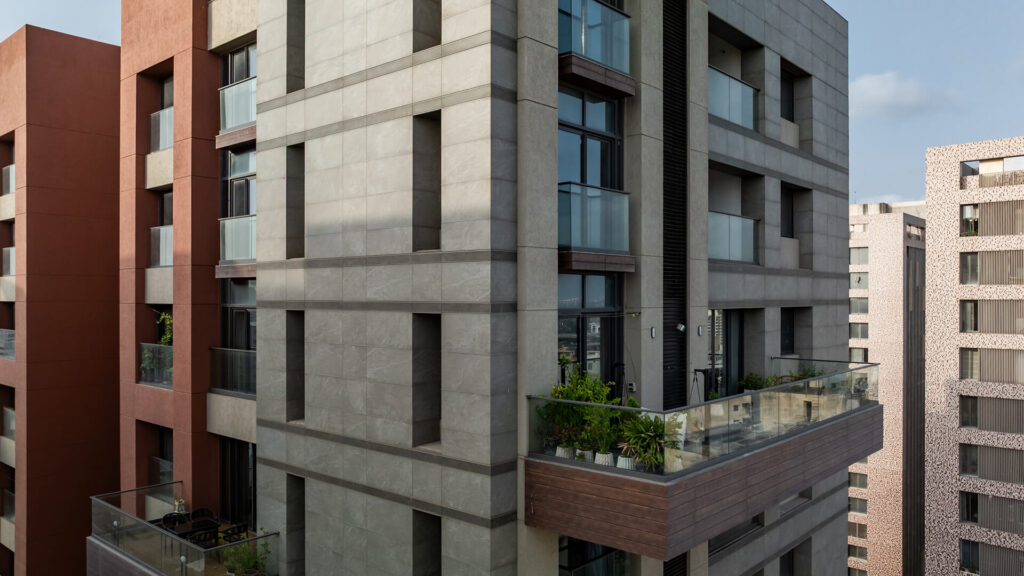
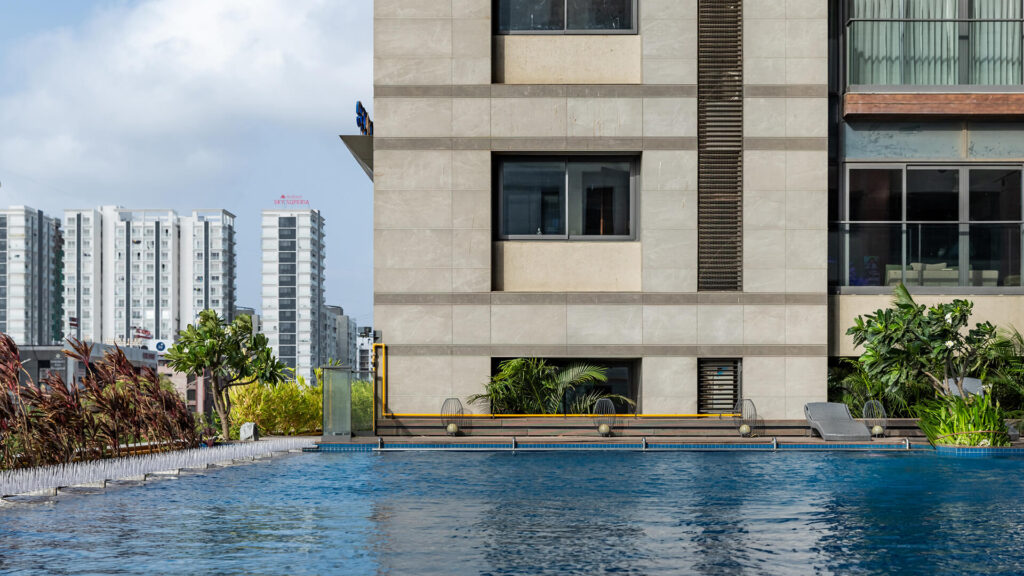
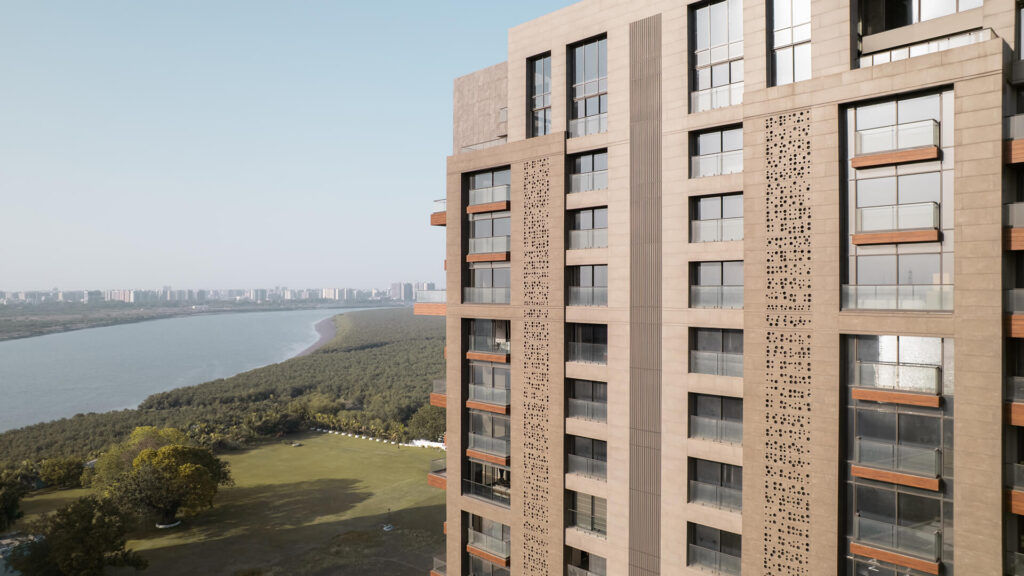
The design principle is clear yet demanding: a tower that sets new benchmarks in height while keeping a timeless appeal for generations to come. Sangini Evoq is a 70-metre residential and commercial tower designed by Utopia Designs for the Sangini Group. Rising from a commercial podium as one of the first buildings of its height in its city, it commits fully to a sintered ventilated facade, in a disciplined two-tone composition of Nexion Runa Grigio Scuro and Endless Nero.
Runa Grigio Scuro sets the tower’s cool, vertical register. Sober in character yet strong to the eye, its dark grey matte surface brings the restraint of natural slate into a contemporary urban skyline, the very setting where slate feels most at home. Layered into the darker bands, Endless Nero adds depth: inspired by the quiet power of concrete, its soft tonal variation gives the composition weight without a hint of gloss. Read together, the two surfaces draw the eye upward and let the tower stand tall and cosmopolitan, while a warmer podium grounds the base.
Installed as a ventilated, dry-cladding facade, the panels keep that composition crisp long after a painted elevation would fade. In a climate of extreme heat, humidity and monsoon, where most buildings face repainting and crack-filling every eight to ten years, the sintered surface holds its colour and its edges, so the building keeps the face it opened with.
Siddhanta: brick-pattern facade panels with a red marble look
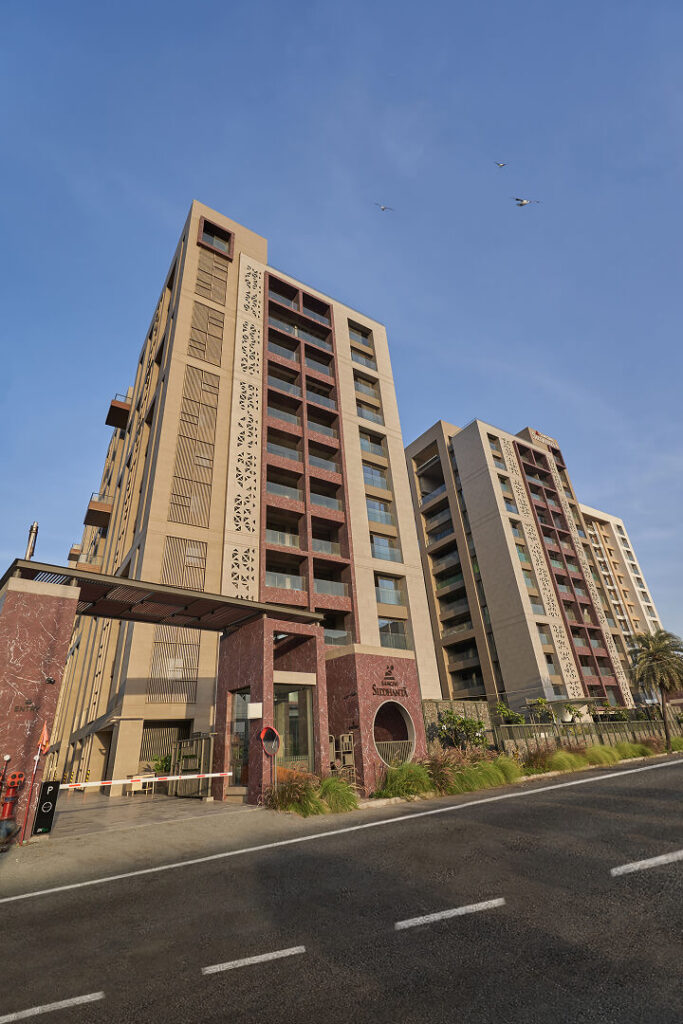
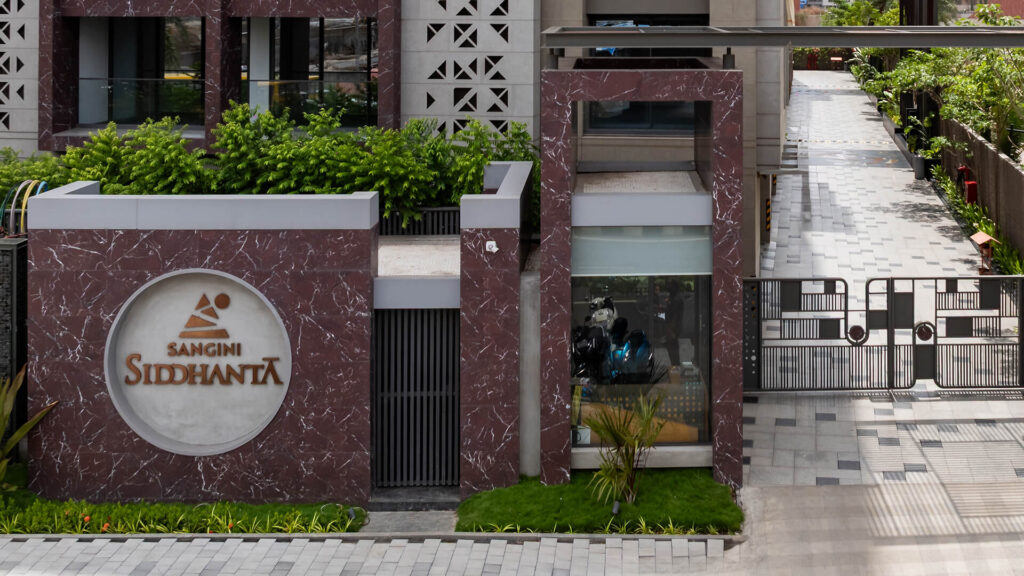
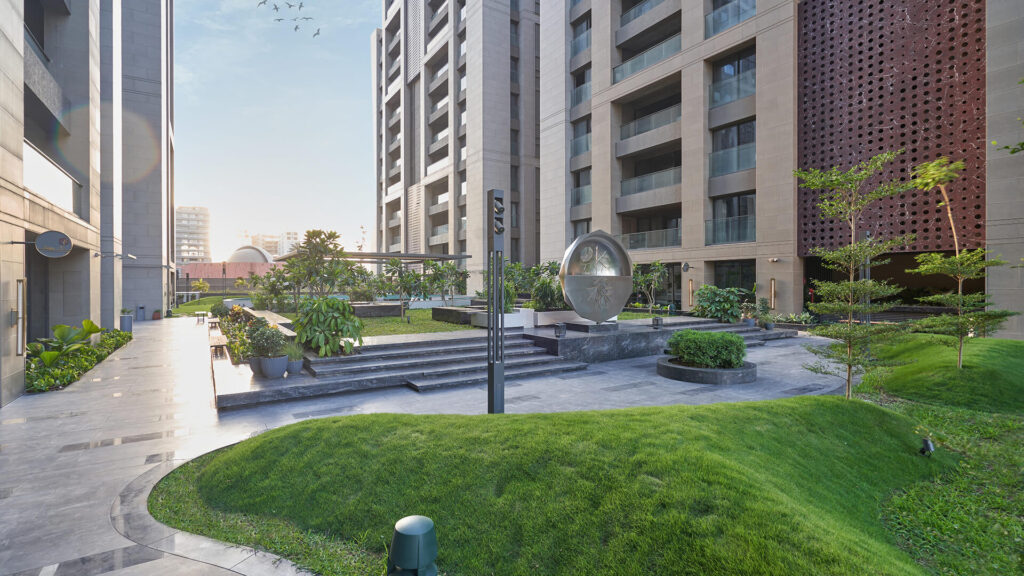
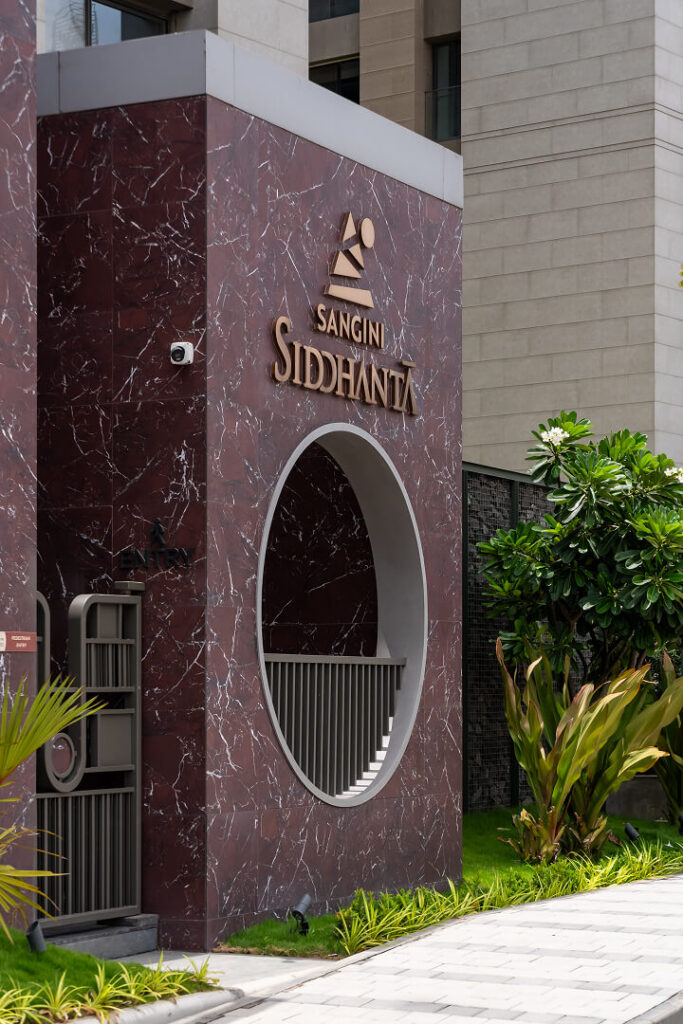
Siddhanta is about belonging, a tower asked to settle into its setting. A residential project by Utopia Designs for the Sangini Group, Sangini Siddhanta moves away from the conventional grid into a brick-laid pattern of Nexion Rosso Levanto, so the building reads as grounded and close to natural stone.
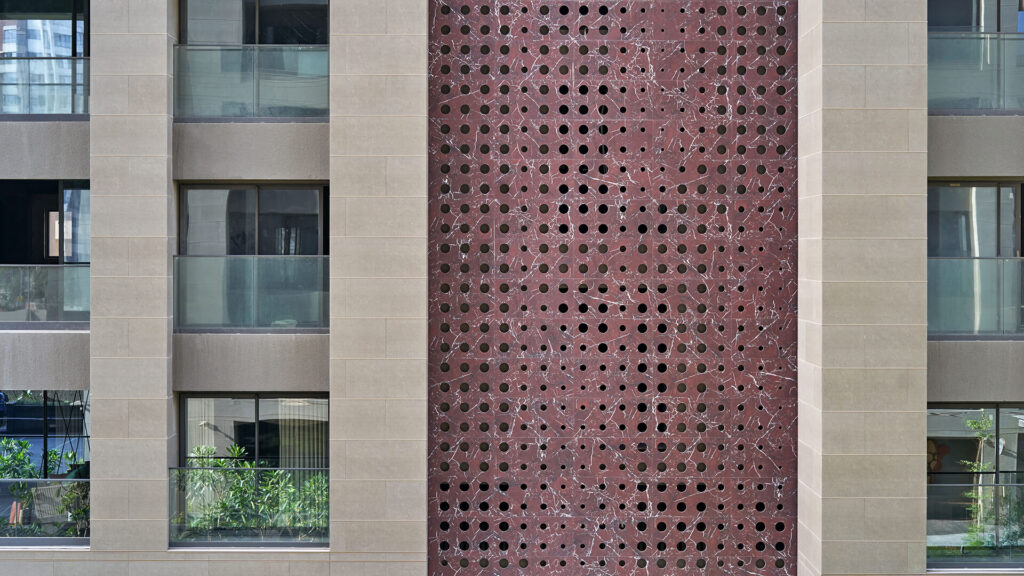
With a park unfolding along its open edge and greenery pressing in, Siddhanta needed a facade that would answer the landscape and Rosso Levanto opens that dialogue in red. A tribute to the rare Italian marble, the surface carries a deep blood-red to purple field furrowed with thin white veins, a natural warmth that sits easily against green surroundings.
Laid in a brick pattern, the large sintered panels scale the tower down and give it a grounded, stone-like presence. The finish stays so faithful to the original marble with its realistic depth and veining intact, that the eye reads natural stone.
Emperia: earthy terracotta facade panels
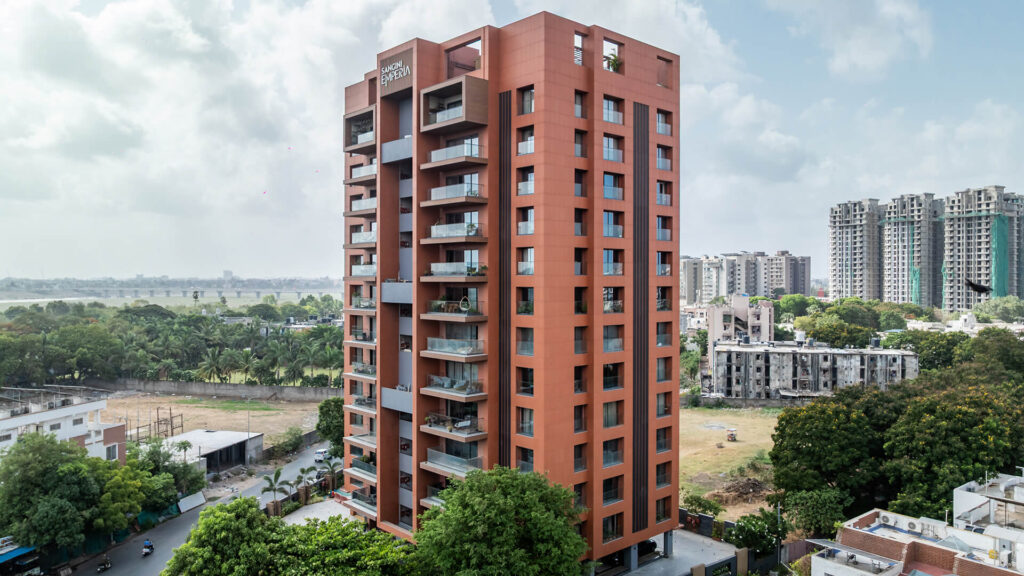
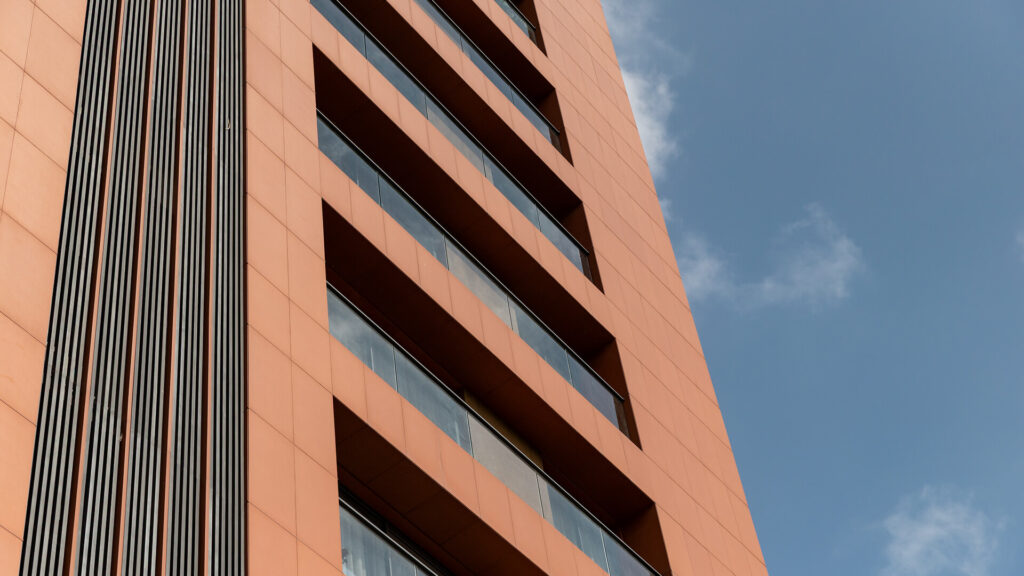
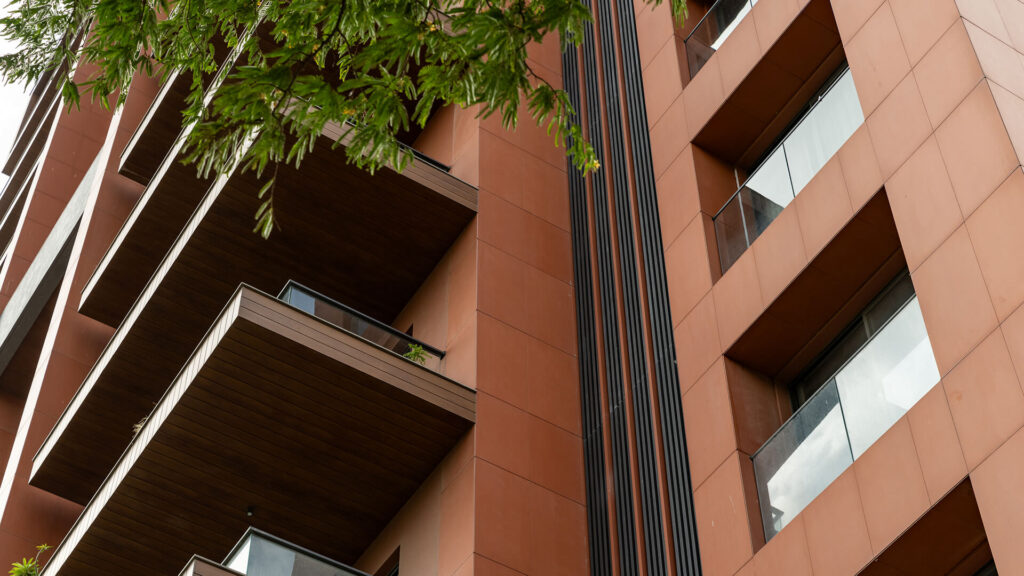
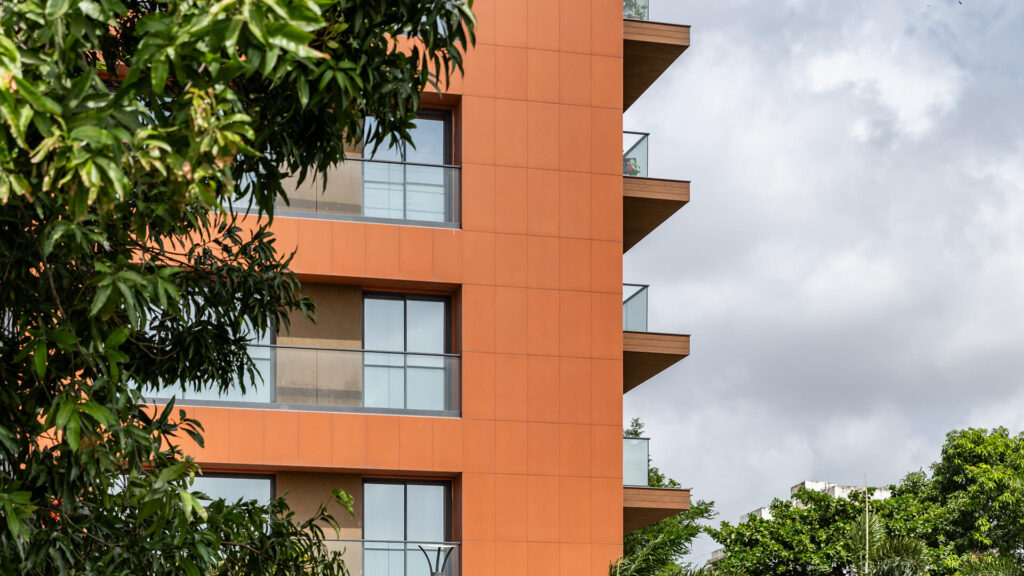
If Siddhanta settles into greenery, Emperia leans fully into warmth. A residential tower by Adda Architects for the Sangini Group, Sangini Emperia is clad in Nexion Terracotta Scuro, whose warm earthy tones create a distinctive identity across the neighbourhood.
Terracotta Scuro reinterprets the most ancient ceramic material of all, terracotta, in a deeper, darker tone. Beyond its colour, it features Nexion’s Grainy surface, a textured finish inspired by the subtle irregularities of handcrafted materials. By reinterpreting the natural inconsistencies of traditional terracotta, the surface brings depth, authenticity and a tactile quality that shifts with the light throughout the day. The result is a facade that feels remarkably natural, giving the building a warm, unmistakable presence in the skyline.
Emperia shows the range of a single technology: the same sintered facade can disappear into a landscape or stand apart from it, depending entirely on how it is coloured and applied.
KKB Palladium: vertical facade panels on the riverfront
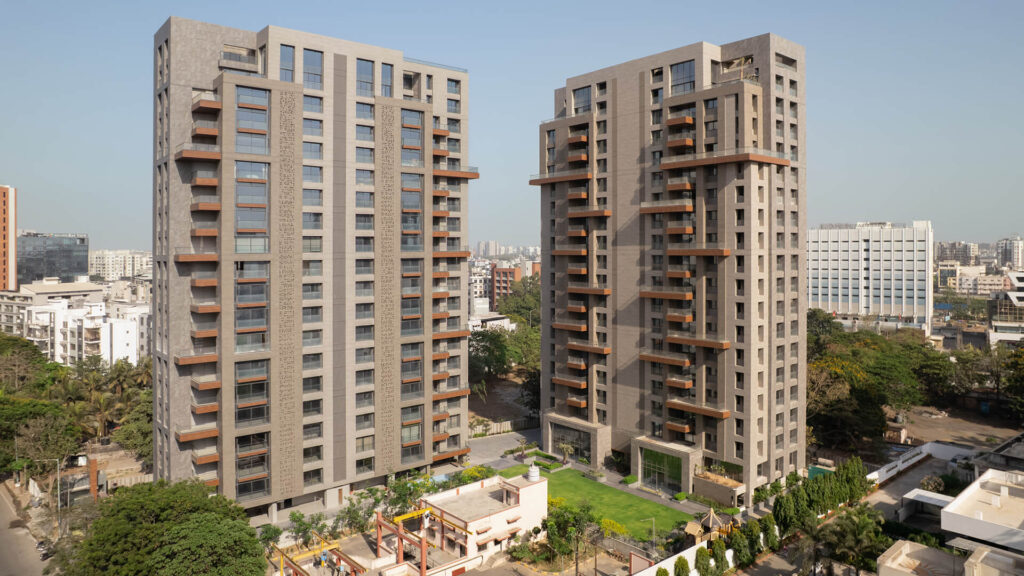
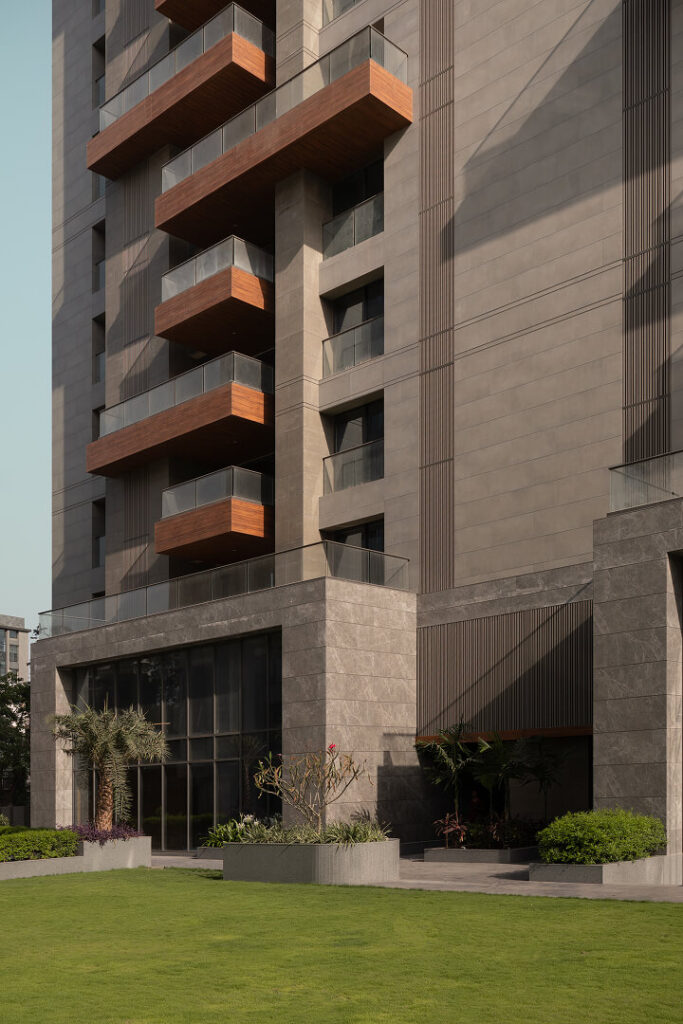
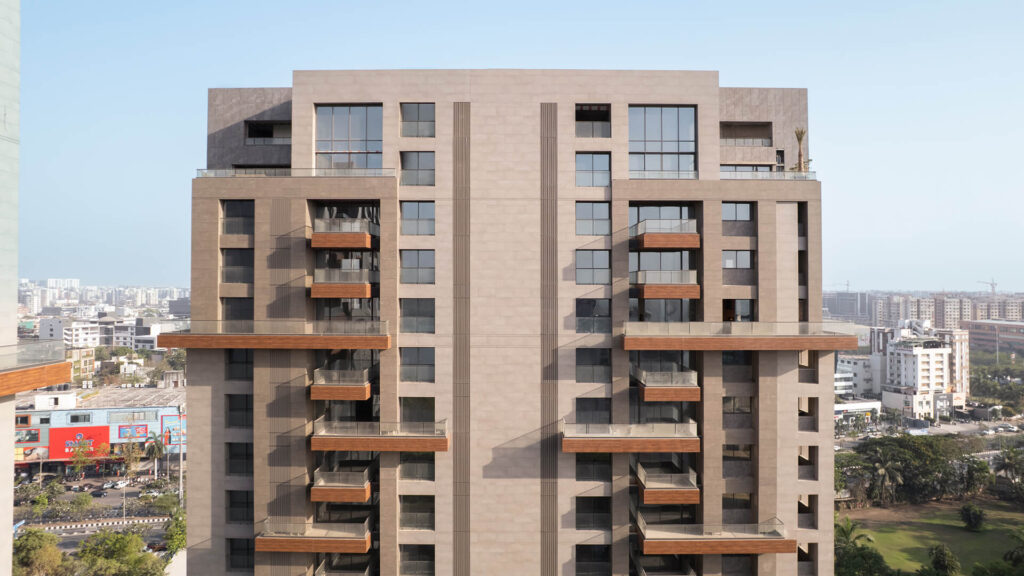
On the waterfront, the brief was simple and absolute: an icon. KKB Palladium, a premium riverfront tower on Surat’s Dumas Road designed by Utopia Designs for KKB Realty, answers it with a sintered facade that runs vertically to lift the tower’s silhouette against the river, in a layered palette of Nexion Gabbro Sfumato, Terraelino Calce, and Endless.
For a landmark on the water, the facade puts veined, figured surfaces to work at a scale and in a vertical installation, rarely attempted before. Gabbro Sfumato, from Nexion’s Lithic collection, brings the deep, sophisticated darkness of natural gabbro, its absolute-matte finish reading as authentic igneous stone. Terraelino Calce warms the composition: a surface born of a symbiosis between earth and linen, its earthy calce tone softening the darker stone. Endless grounds the palette in the timeless power of concrete. Run vertically, the panels draw the eye up the tower against the open sky and river.
Set against water and sky, the three surfaces give the tower a layered, natural materiality that a single flat finish could never achieve.
The technology of sintered facade panels
Beauty is the visible half of the story; the other half is technology. Nexion sintered facade panels are made under high pressure (44,000KN) and high temperature (approx 1200°c for 75min), compressing natural minerals into a dense, stone-hard surface with exceptional performance.
Water absorption is virtually nil, scratch resistance is exceptionally high and the sintered panels are frost-resistant thanks to that near-zero porosity. They are certified weatherproof, fire-classified and UV-stable under prolonged testing. Produced in large-format slabs and a range of thicknesses, they stay remarkably light for their size, which matters when you are cladding a tower storeys high.
Installed as a ventilated, dry-cladding facade, the panels create a cavity between skin and structure. That air gap is what shields a building from the weather and the elements in a hot, humid climate: it lets the wall breathe, keeps moisture from settling and resolves the damp, cracking, and rust that force painted facades into repainting every few years. The same cavity works as thermal insulation, too. Air moving behind the panels carries heat away and keeps interiors cooler than the air outside. The surface stays as fresh as the day it went up and the facade becomes part of the design.
For Adarsh Patel from Sangini Group behind these towers, that endurance is where value begins.
Beauty that celebrates the building’s identity in the skyline
A facade is a building statement. With sintered surfaces, that declaration is made in the language of natural stone – marble, slate, gabbro, terracotta, concrete – and it is made to last, holding its colour, depth and edge against sun, rain and time. Each Nexion collection lets architects give a tower a face that is unmistakably its own and built to endure. The lasting identity of a building on the skyline.
Explore the Nexion sintered facade collections and find the one that belongs to your next project.
Frequently asked questions
Why choose a ventilated facade system?
A ventilated facade creates an air cavity between the building and the cladding panels, helping reduce moisture, improve thermal performance and protect the structure from the weather. It also reduces maintenance compared to conventional painted facades.
Why are sintered surfaces used for facades?
Sintered surfaces offer the aesthetics of natural stone, concrete or terracotta while providing excellent resistance to UV exposure, moisture, stains and temperature changes. They retain their appearance for decades with minimal maintenance.
Why choose a ventilated facade in contemporary architecture?
A ventilated, dry-cladding facade leaves an air cavity between the panel and the structure. This resolves the moisture, cracking and rust issues common in hot, humid climates and eliminates the recurring cycle of crack-filling and repainting that painted facades require. Because sintered stone is dense, non-porous and highly resistant to weather, UV and impact, the surface keeps its colour and finish for the life of the building.
Do sintered panels really look like natural stone?
Sintered stone surfaces replicate the finish of the original natural stone, its veins, depth, and texture. They are difficult to distinguish from the real material without close inspection.