Surat is a city shaped for generations by diamond cutters and silk weavers. On the thirteenth floor of a building above the Tapi River, RangRaas occupies a vantage point where the day opens with first light and closes over distant temple spires.
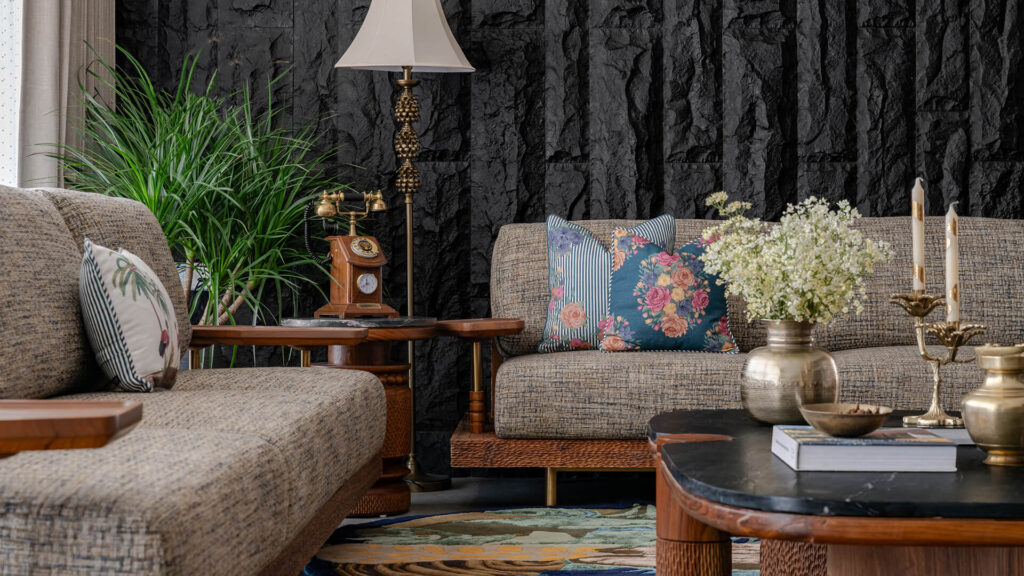
Designed by Studiorachana369 for a four-generation joint family, the 8,000 sq ft apartment is conceived as a contemporary home where carved teak, hand-painted panels, brass detailing and devotional palettes speak the visual language of Gujarat from the moment of arrival.
For Ar. Rachana Chovatiya and Ar. Ashish Chovatiya, founders of Studiorachana369, the project became an opportunity to apply their design philosophy at full residential scale: rooted in cultural memory, experiential spirituality and a deep respect for context.
Here spatial relationships, art and interior design evolve together as a single integrated narrative. What distinguishes RangRaas is the rigour of its layering, a contemporary residence where vernacular memory is inhabited.
A home shaped by sacred narrative
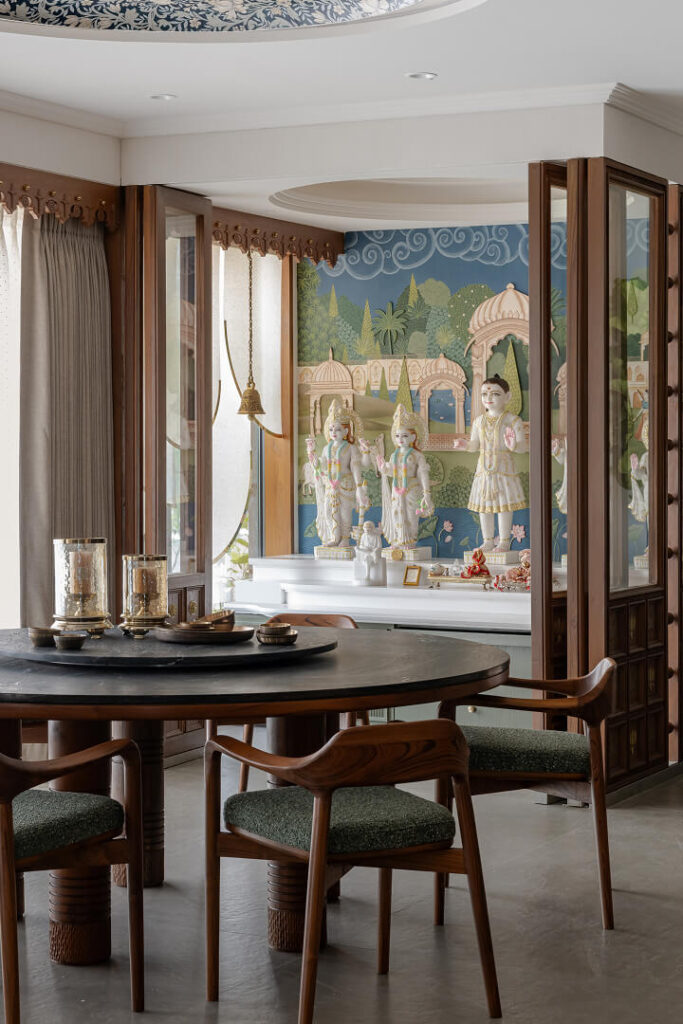
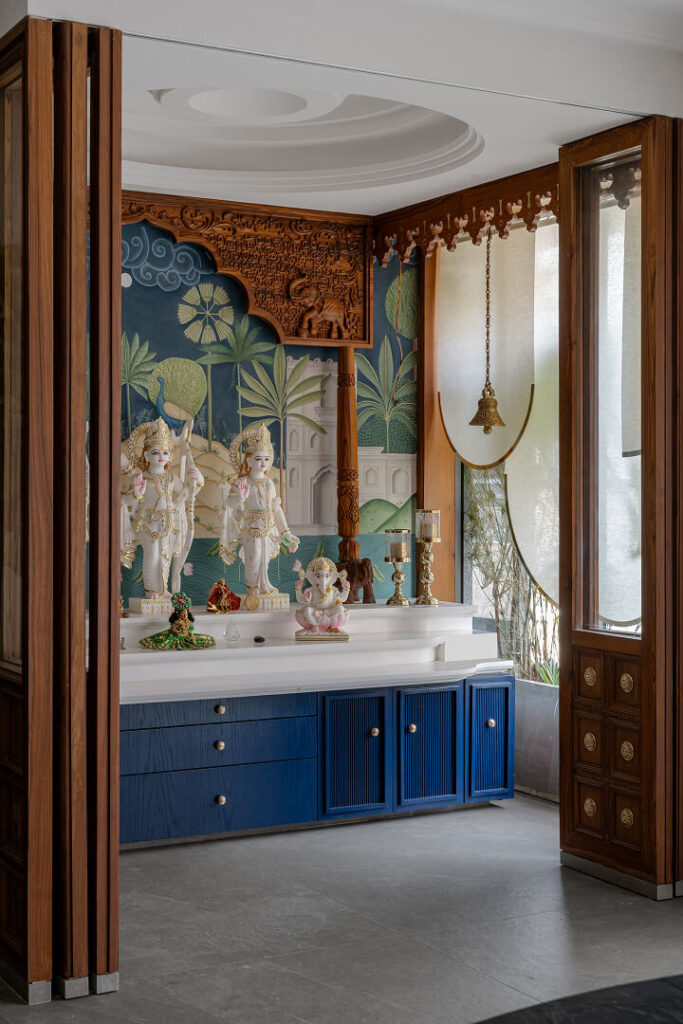
At its conceptual core, RangRaas unfolds as two homes side by side. Two brothers, mirrored layouts and one shared intent, but each apartment carries its own spiritual register. One reads as an ode to , the divine court of Awadh. The other celebrates Krishna’s Vrindavan, with its lush, devotional sensibility.
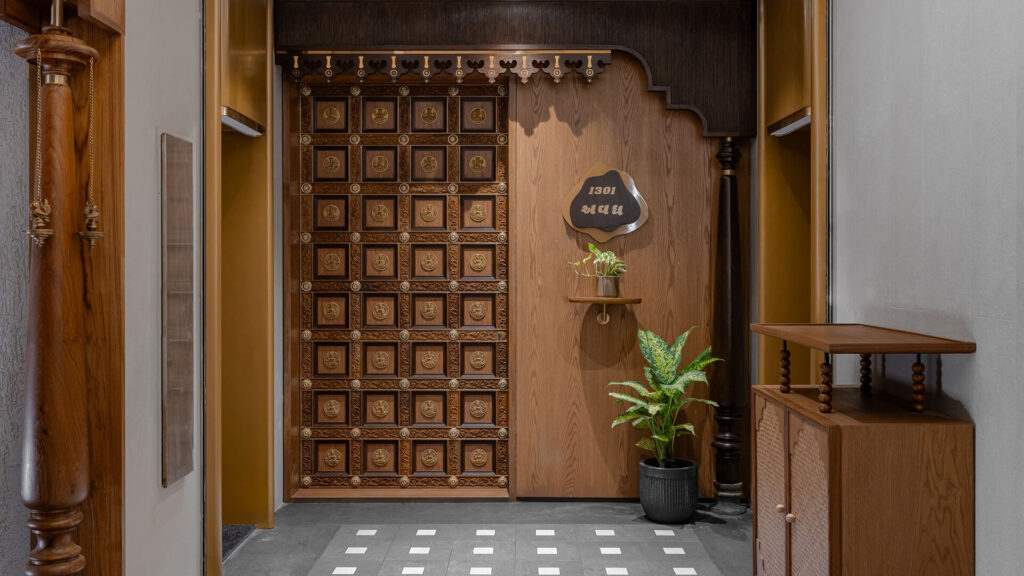
The duality becomes a design grammar in which Vrindavan’s palette leans into deep devotional blues while Awadh blooms in tranquil greens. Each temple represents the spiritual anchor of each home and is composed with hand-painted mural backdrops, wooden frames for the idols, and brass lotus detailing. From the common lift lobby the home opens in two directions, each entrance marked by a door honouring Ashta Laxmi, framed by carved wooden columns, ornate torans, and intricate brass detailing. The Ashta Laxmi carving operates as a symbolic threshold between the everyday and the sacred.
Choreographing the day through orientation
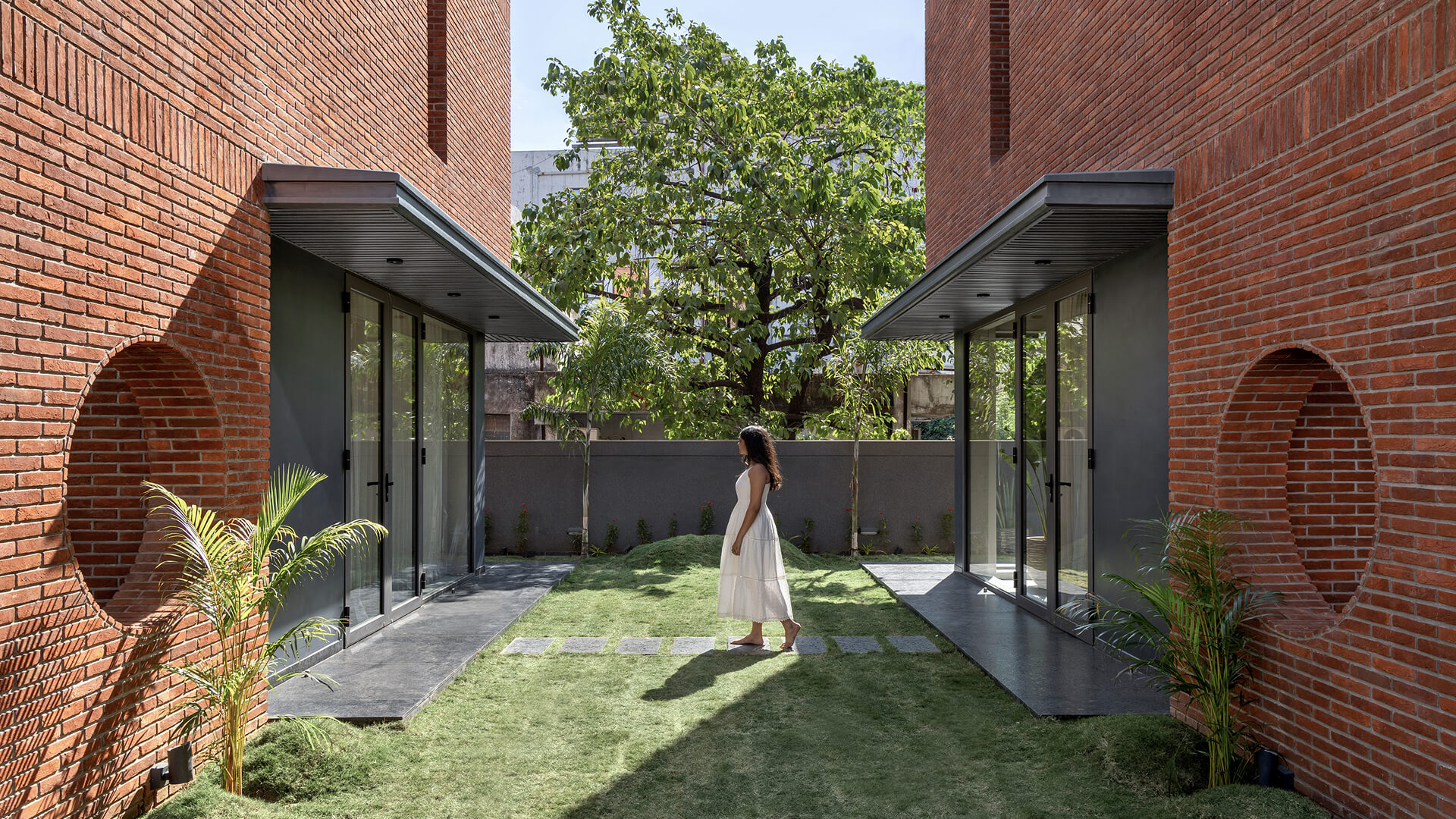
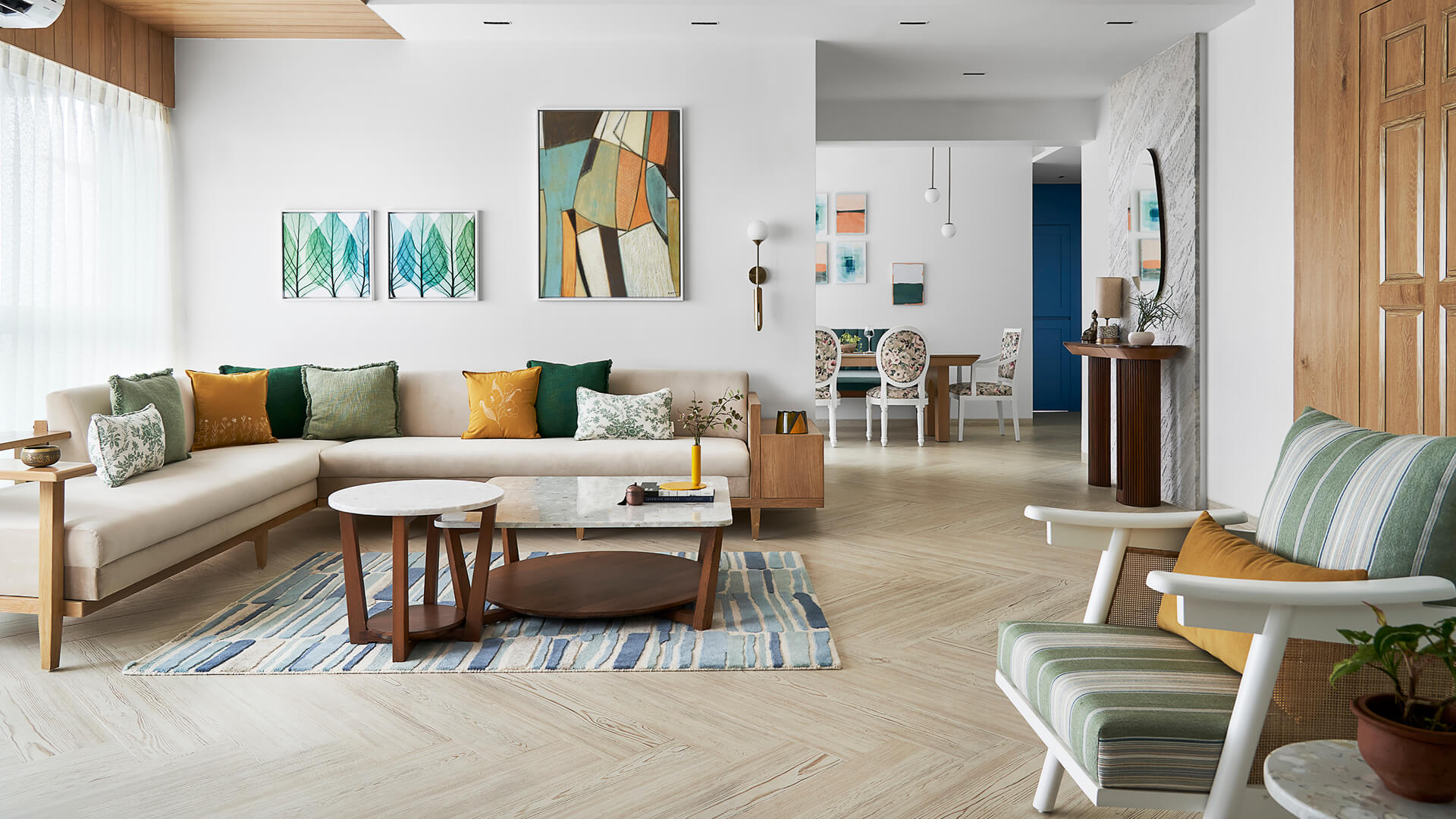
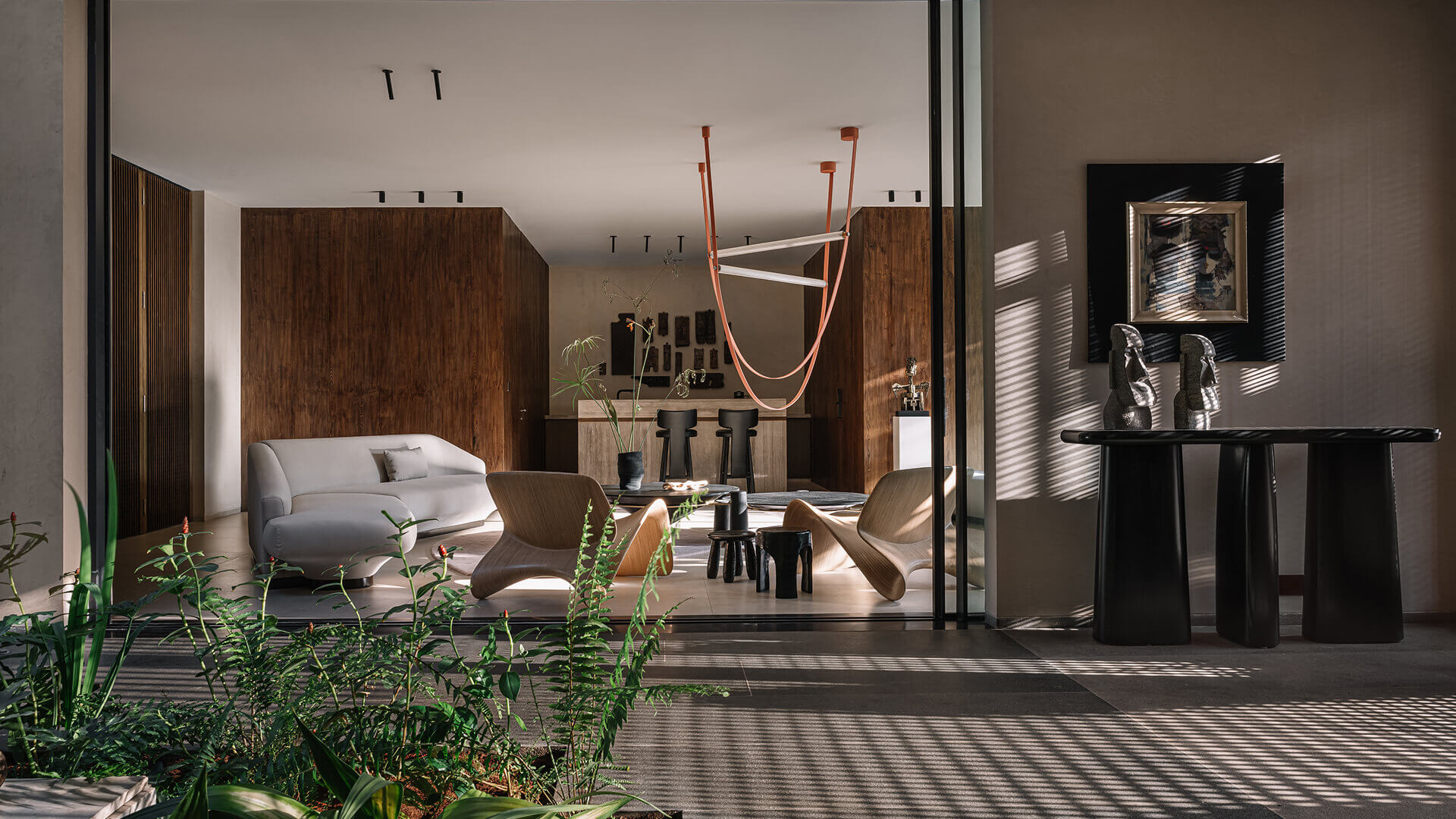
The apartment’s orientation worked in favour of how the family actually lives and the design leans into that alignment. The east-facing kitchen and Tulsi courtyard catch the sunrise over the Tapi, turning morning rituals into something close to meditation. To the west, a multi-functional, courtyard-like space – the aangan – becomes the family’s evening retreat: coffee, conversation, movie nights under an open sky. Between the two, the living room sits as the connective heart of the home, linking foyer, kitchen, dining, and pooja areas so that movement and dialogue happen without effort.
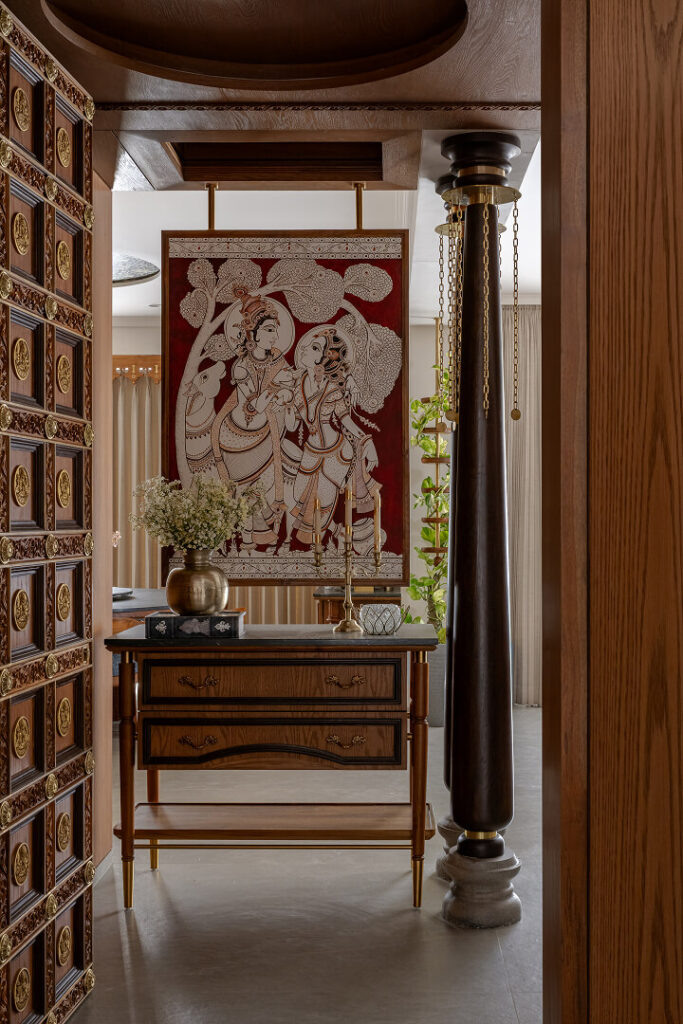
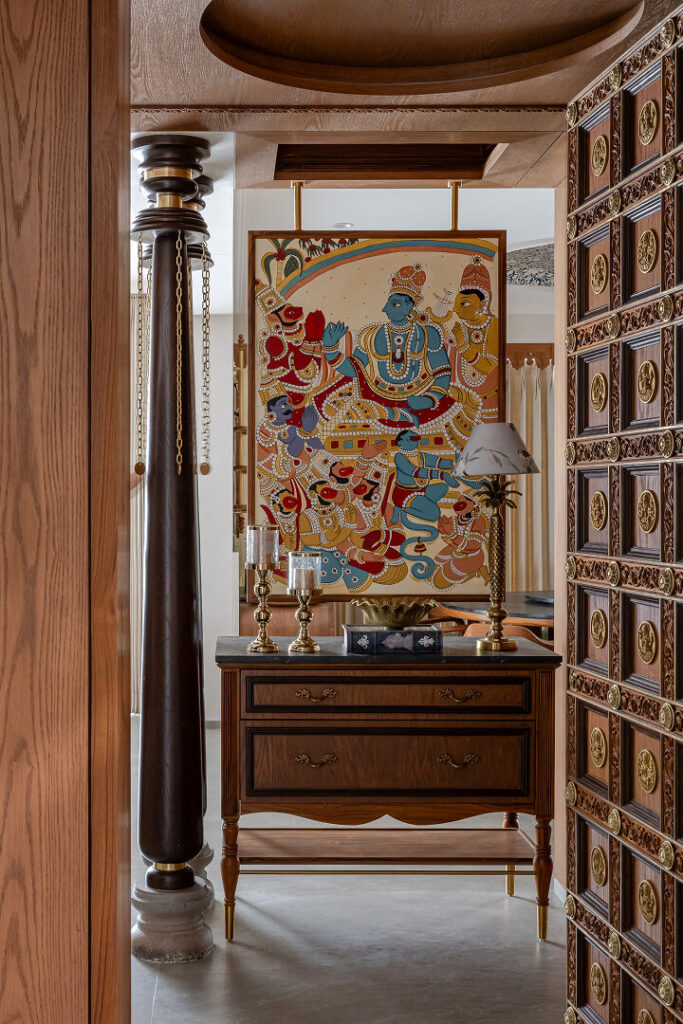
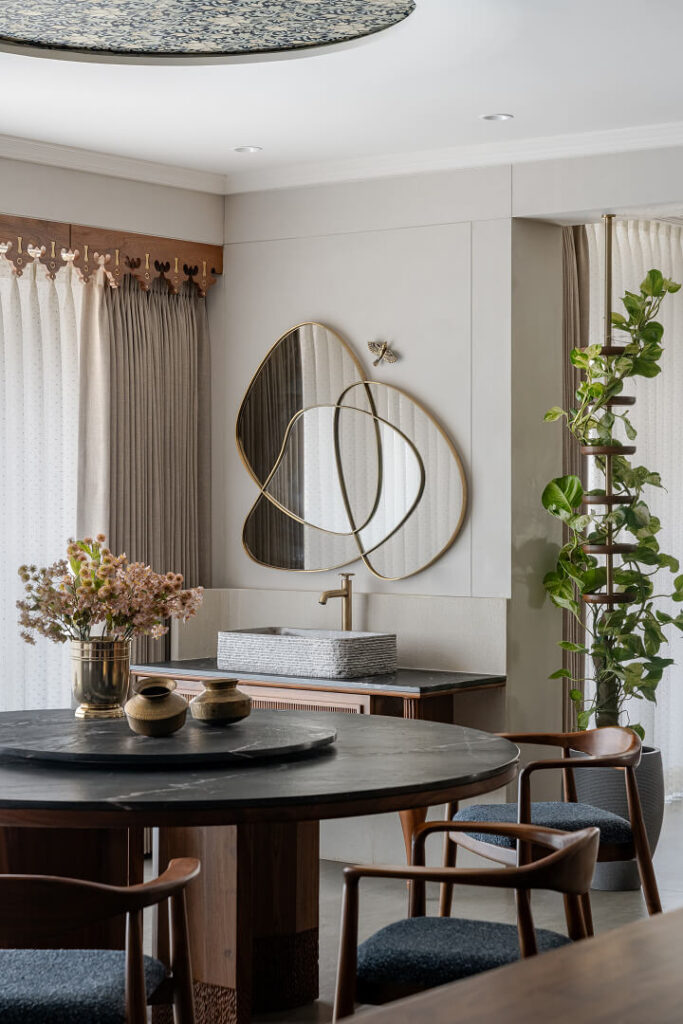
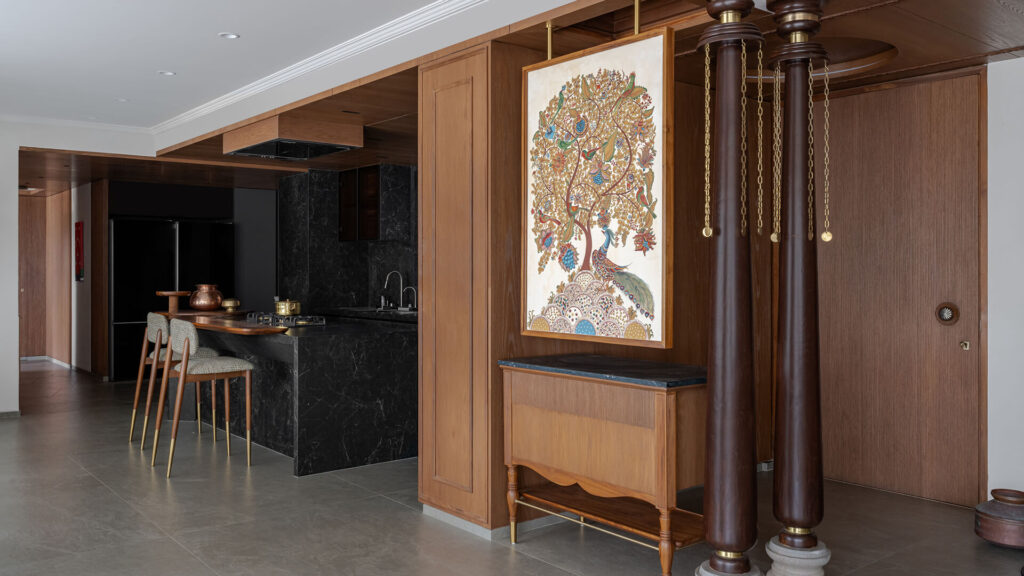
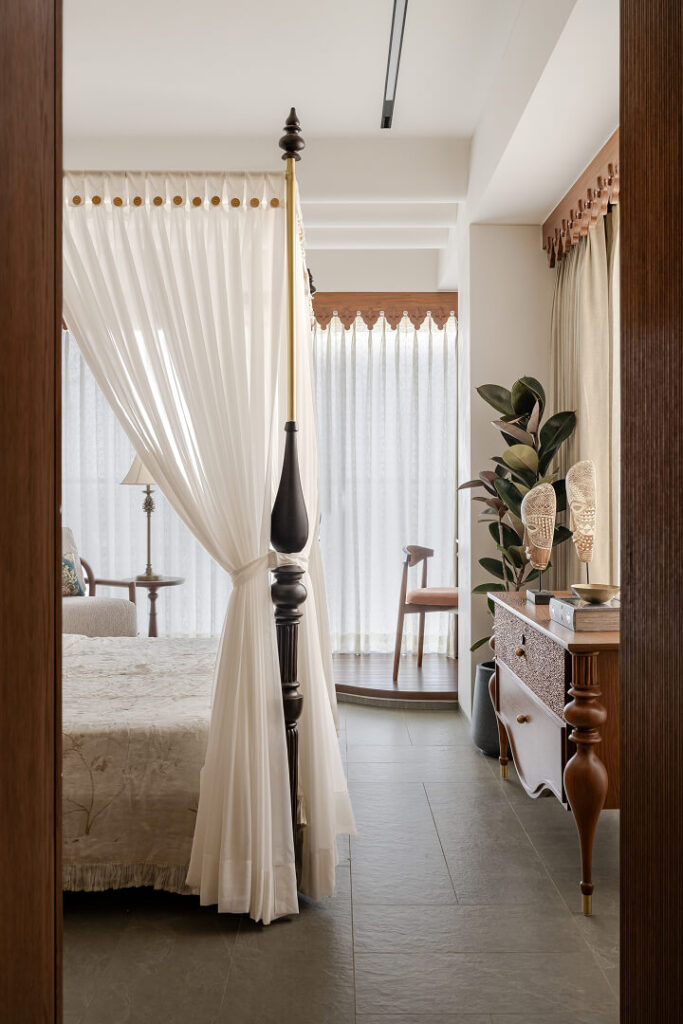
Even structural columns are reframed as features, including one that anchors a sculpted dining basin. A hand-painted pichwai and kalamkari panel screens the entry foyer from the living room, two grand teakwood columns rise from stone kumbhi bases and a kaangri roofline detail borrowed from old Gujarati homes is reinterpreted as interior pelmets running through the apartment, a quiet reminder that vernacular architecture can be carried into a contemporary high-rise.
The quiet foundation: Nexion surfaces in RangRaas
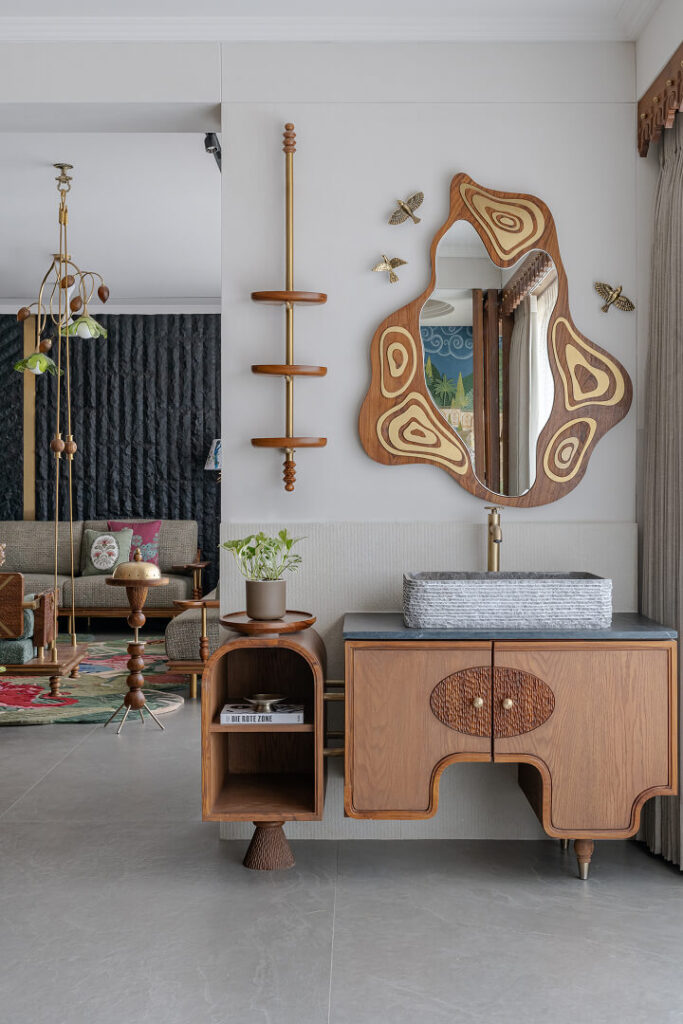
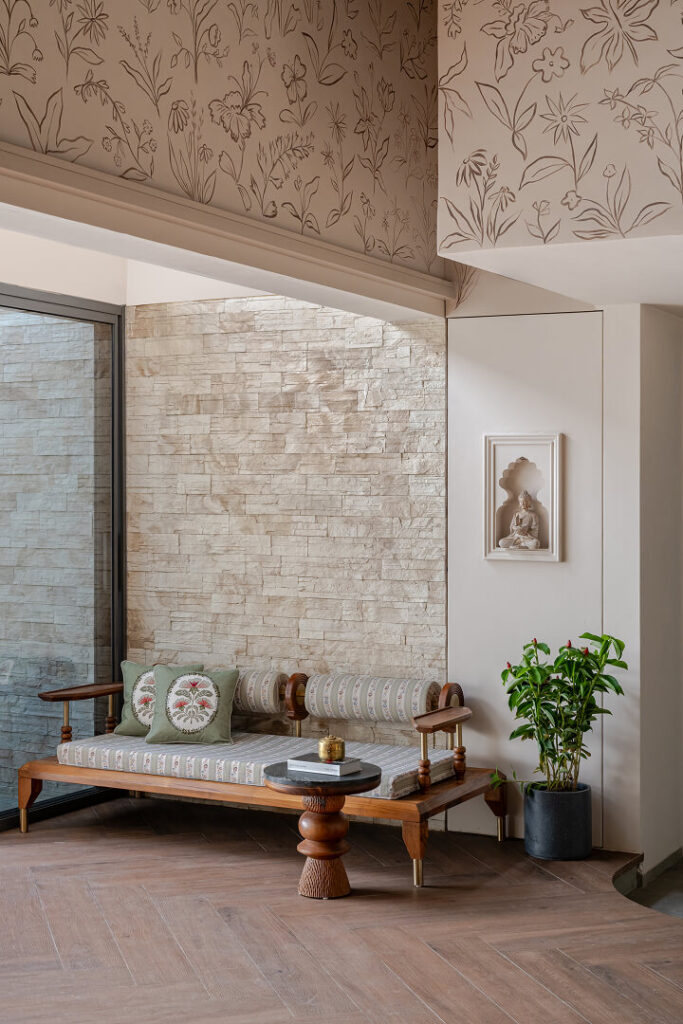
Inside a home this layered, the role of the floor and key wall surfaces is to hold the narrative. The materials know when to recede and when to lead. Within a residence rich in craft and symbolism, Nexion sintered surfaces act as the quiet, unifying base of the project, understated yet essential.
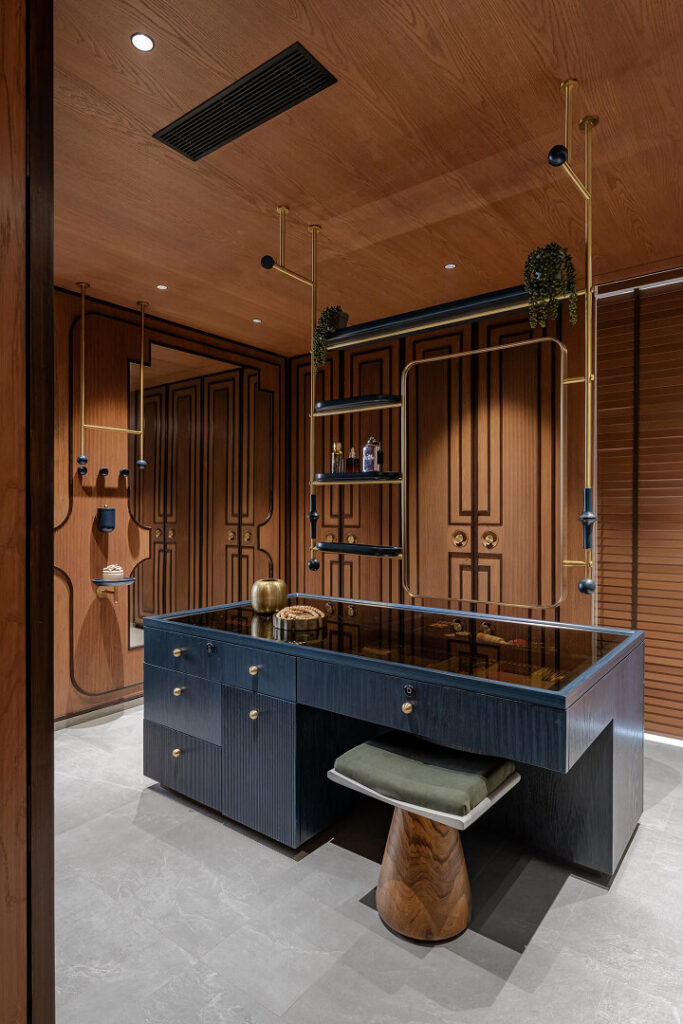
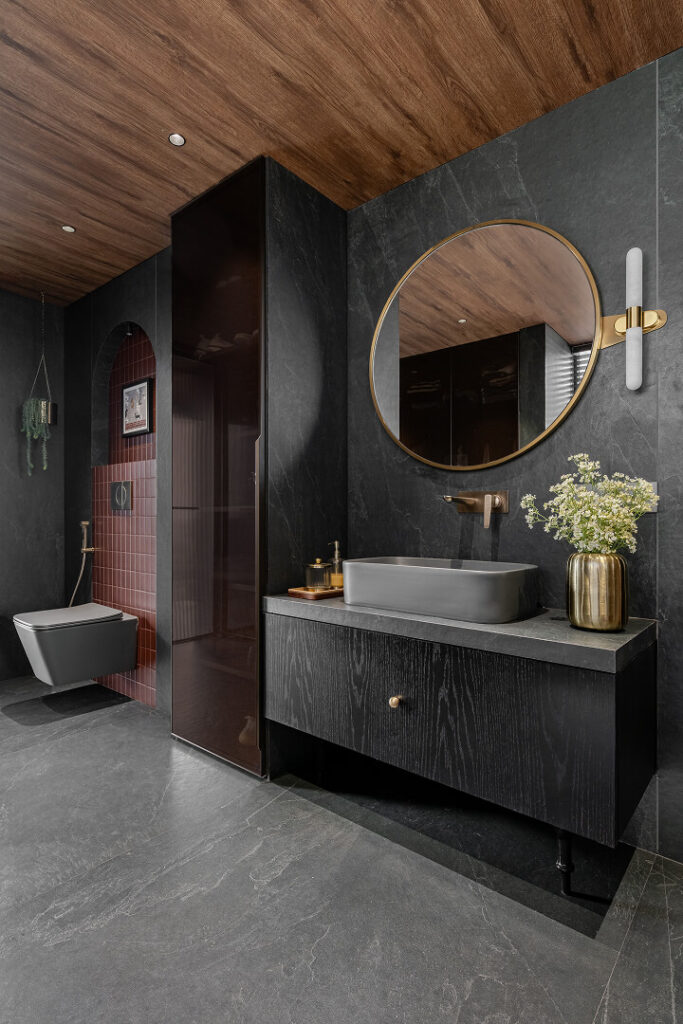
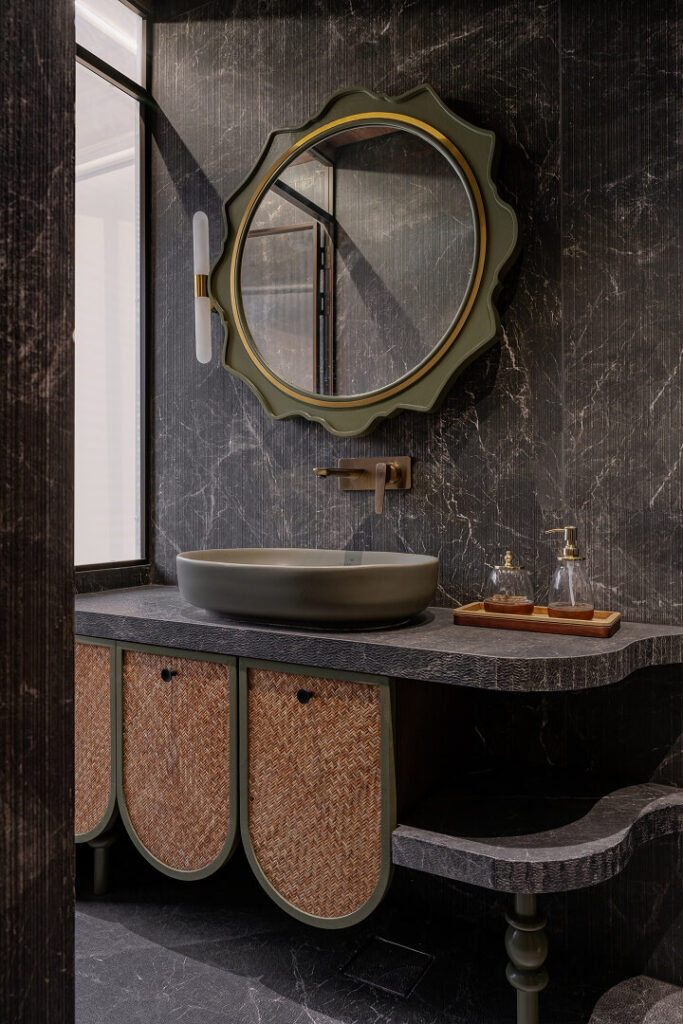
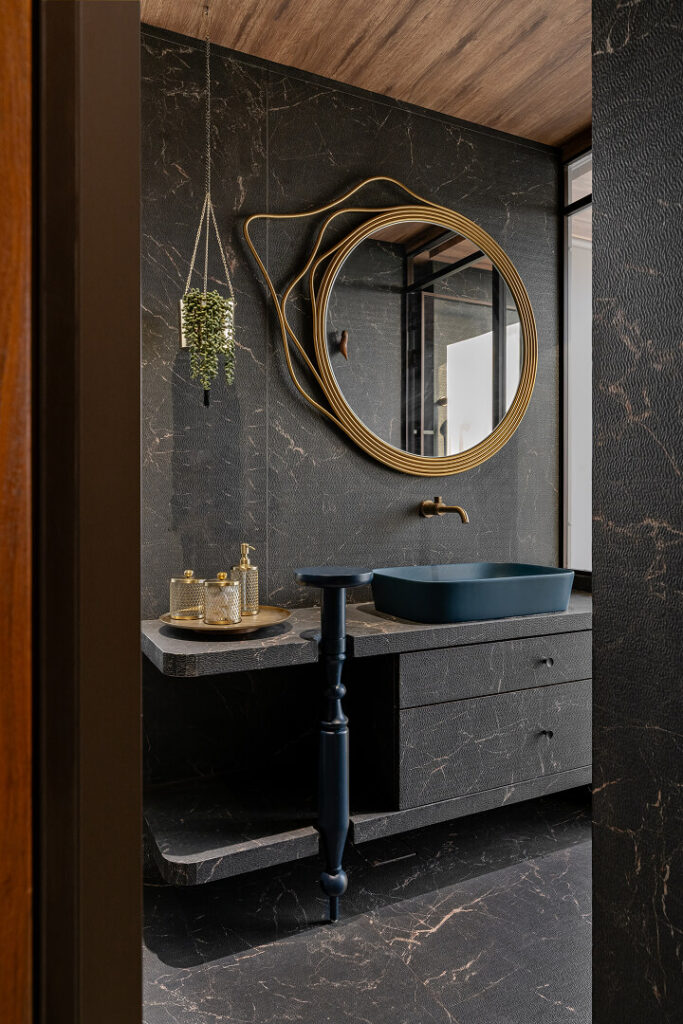
The Runa collection runs as the connective thread: in Grigio Scuro across both apartments as a continuous stone-inspired ground and returning in Nero and Grigio Chiaro to anchor the bathrooms with subtle tonal shifts. The entry foyer is composed as a textural dialogue between Planum Grigio Chiaro and Planum Nero on the floor and Riga Rigato Grigio Chiaro on the wall, a balanced interplay of smooth and textured finishes that marks the transition from outside to within. The same collection picks up this finish in Bianco on the master bedroom feature wall, where it acts as a sculptural backdrop to the carved wooden bedstead. Port Lorent marble-effect surface carries the master bathroom with sophisticated veining, while Frappuccino Pettinato on the walls and Rigato on the floors warms the family bathrooms with soft, mocha-warm tones.
Across the home, the surfaces provide a consistent, tactile foundation that lets every crafted, cultural layer of the design stand out with clarity.
A memoir in texture, a courtyard in the sky
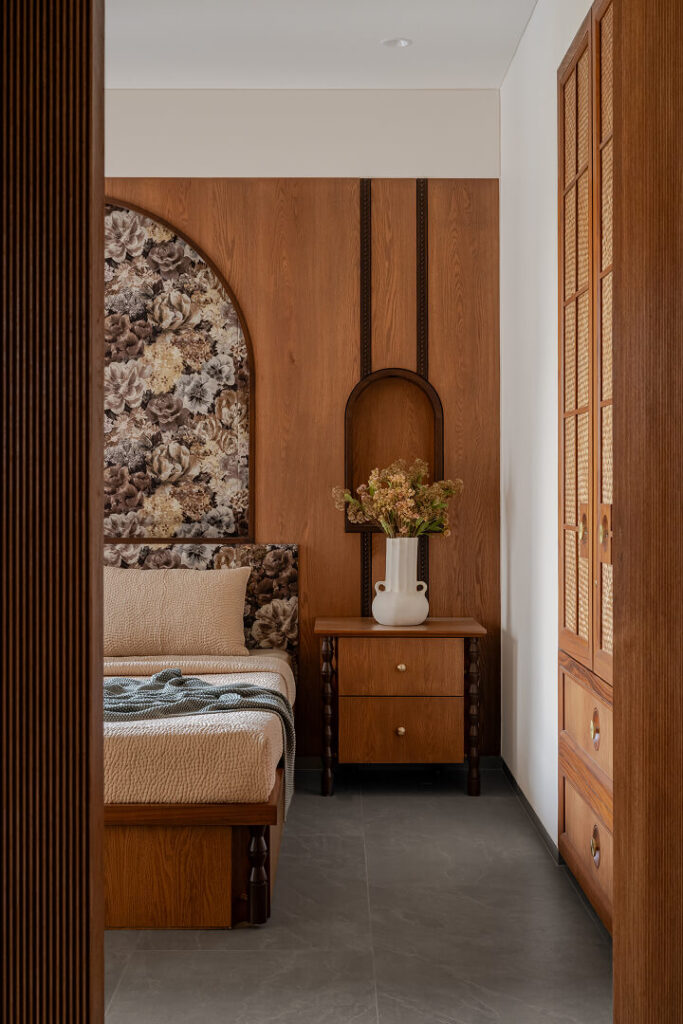
Where the public spaces speak in mythological language, the bedrooms shift into a more personal register, each layered with texture, colour, and memory. The corridor connecting the private quarters becomes a visual memoir, lined with a series of round canvases that chronicle the family’s journey from the quiet charm of their native village, through milestones in business and family life, to the realisation of this home in the sky.
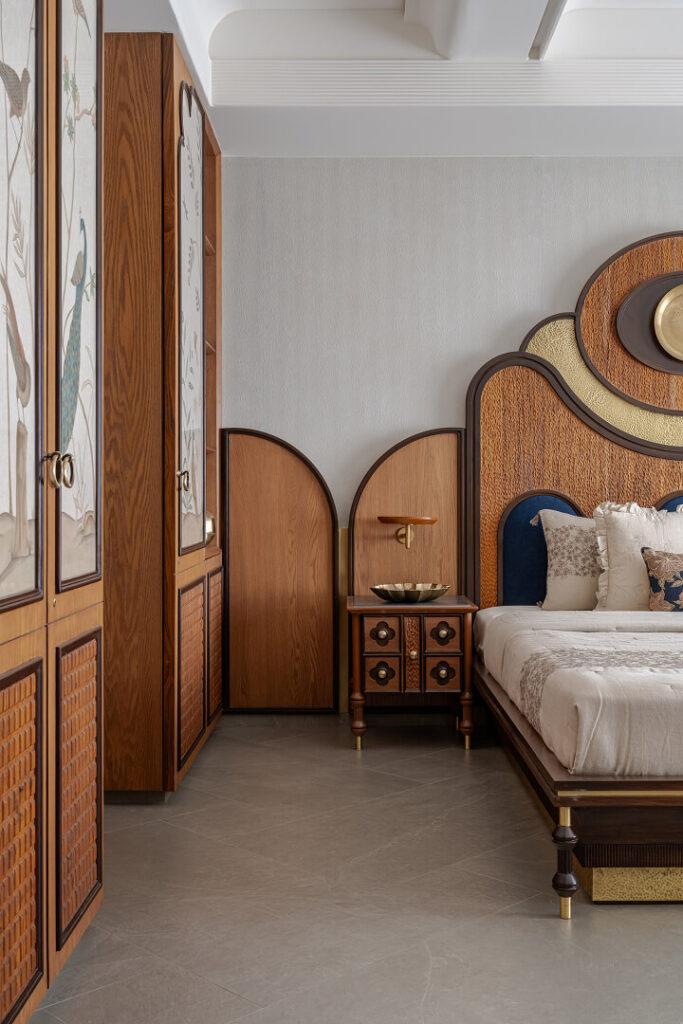
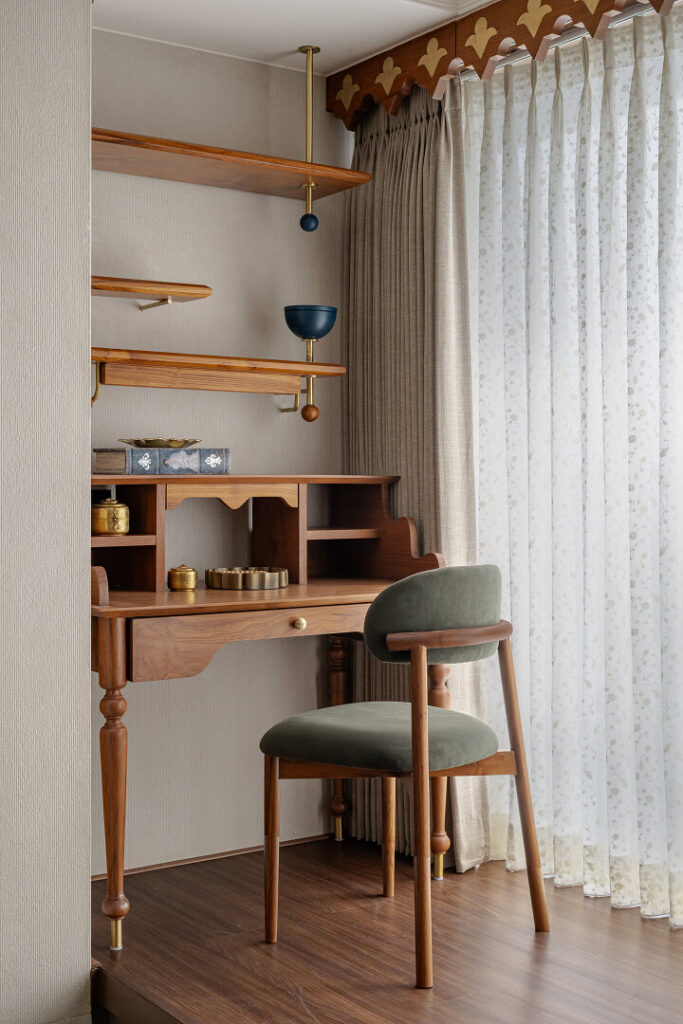
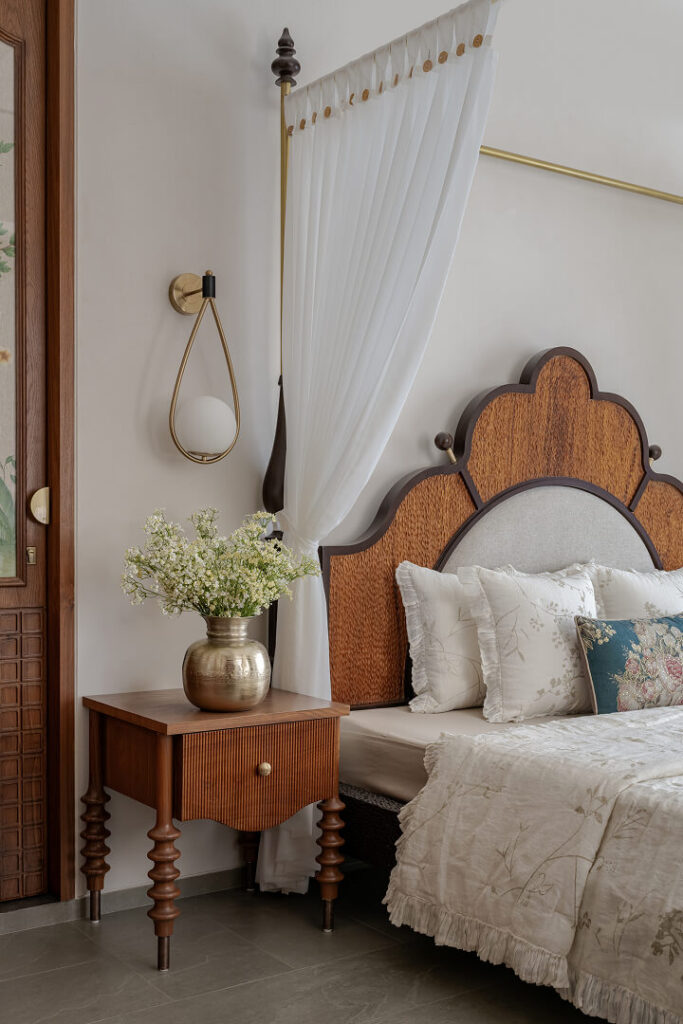
The master bedroom holds that memoir in a sanctuary of earthy elegance, its handwoven linens and brass details echoed by the Riga Rigato Bianco sintered surface. The children’s bedrooms move into lighter, playful palettes and the guest bedroom pairs vintage-style furniture with contemporary fabrics for the soft welcome of a familiar home.
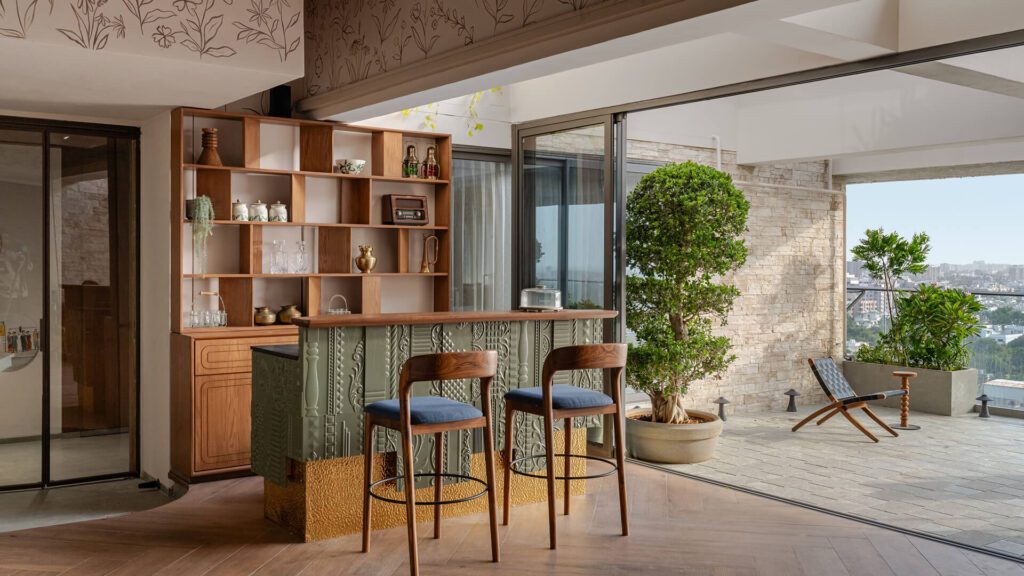
The home’s final chapter unfolds on the outdoor deck, where the rhythm of the day slows into unhurried conversations with the cityscape as a backdrop. Ar. Rachana Chovatiya describes it as both “a courtyard back in the village and a sky lounge above the city“, a double identity, grounded and elevated, that distills the design thesis of the entire project into a single open-air room.
Nexion surfaces as cultural ground
In a home where every carved column, hand-painted panel and devotional motif carries cultural intent, the surfaces hold the architecture quietly, then return as tactile, durable presence.
This is the role Nexion’s sintered surfaces are built to play, giving every other layer of a project – wood, brass, textile, art, ritual – the room to speak. Restraint at the foundation is what allows meaning at every other scale.
Discover how architects and designers use Nexion’s sintered surfaces to weave cultural narratives into contemporary residential architecture.