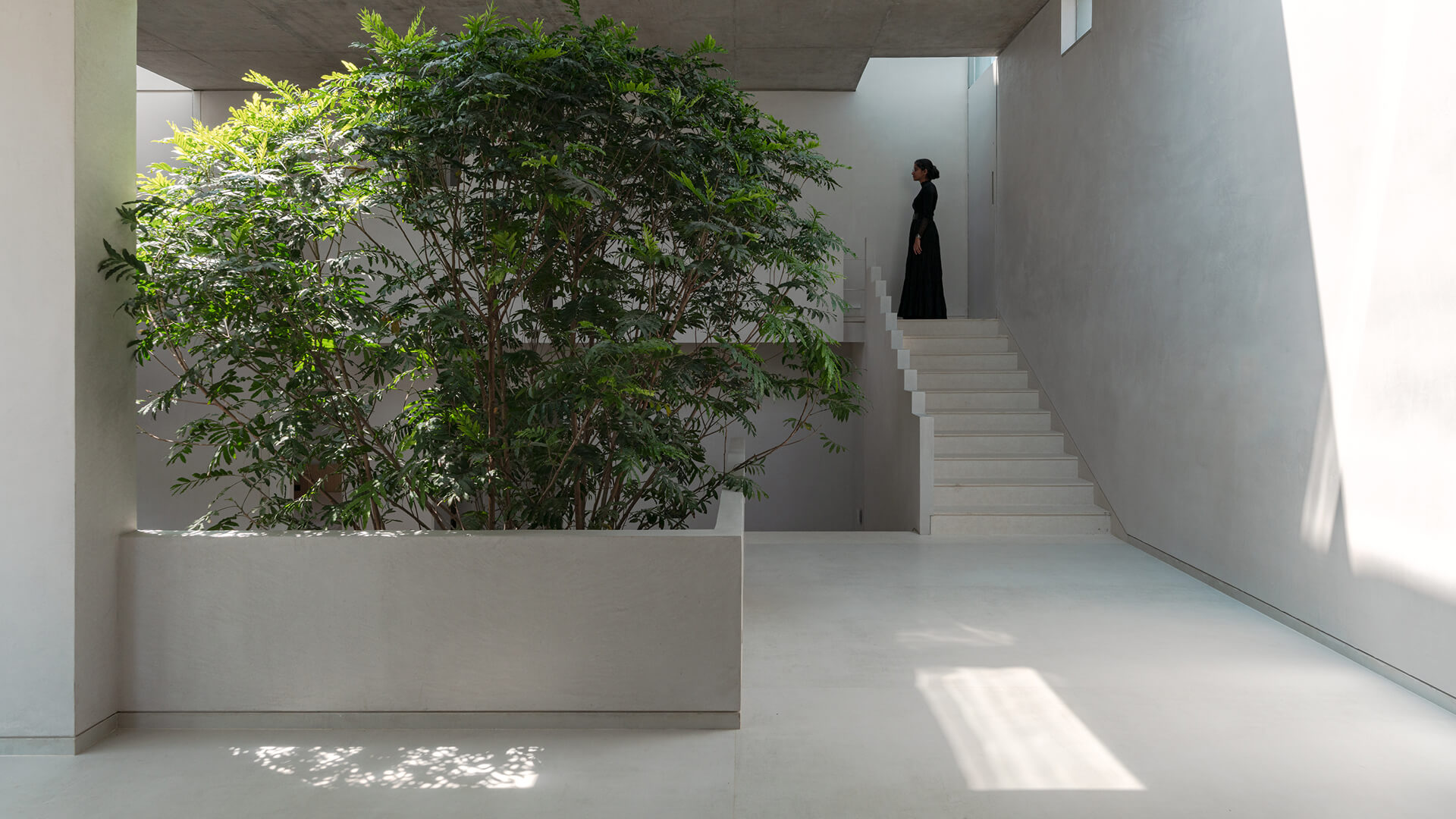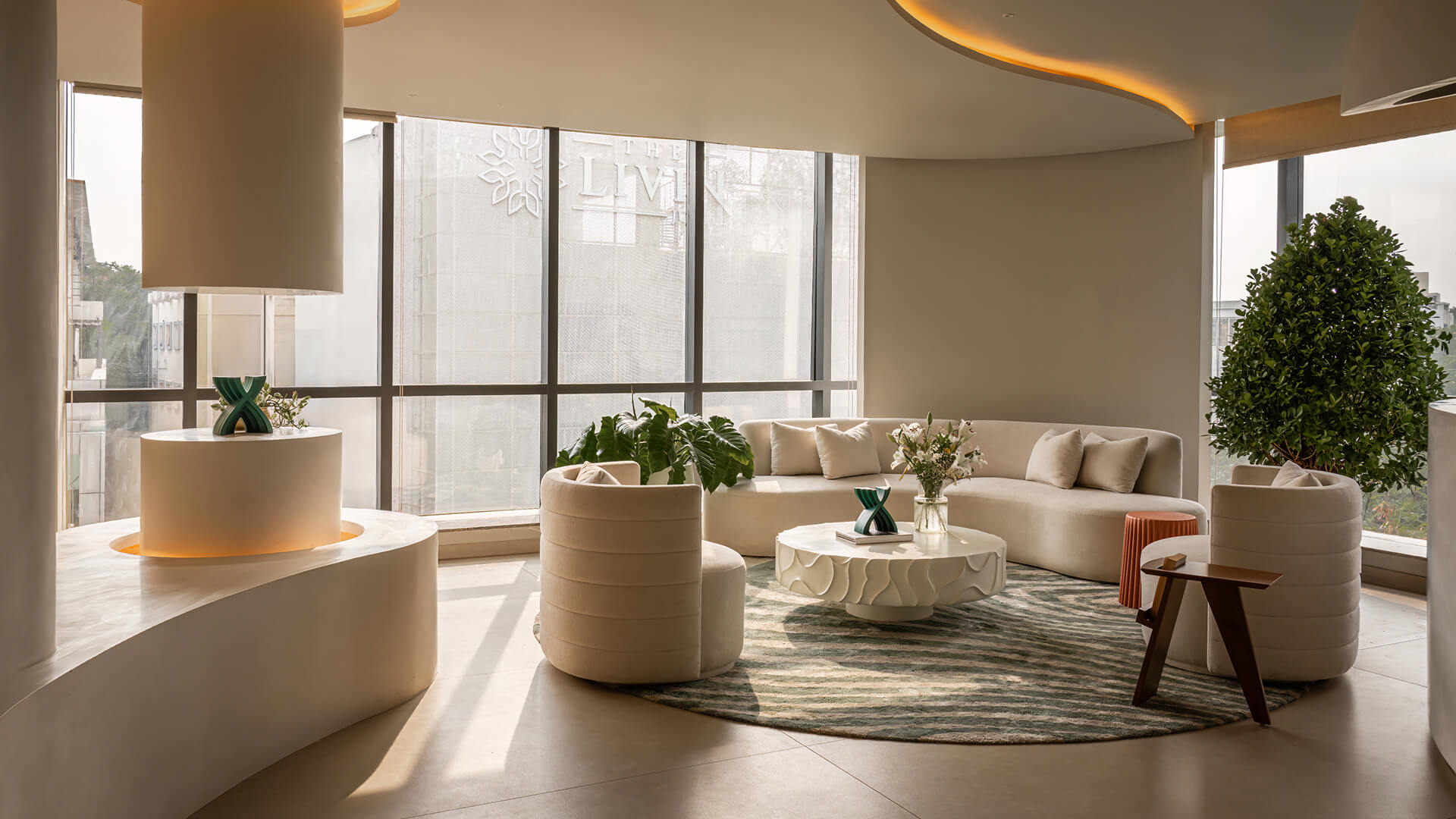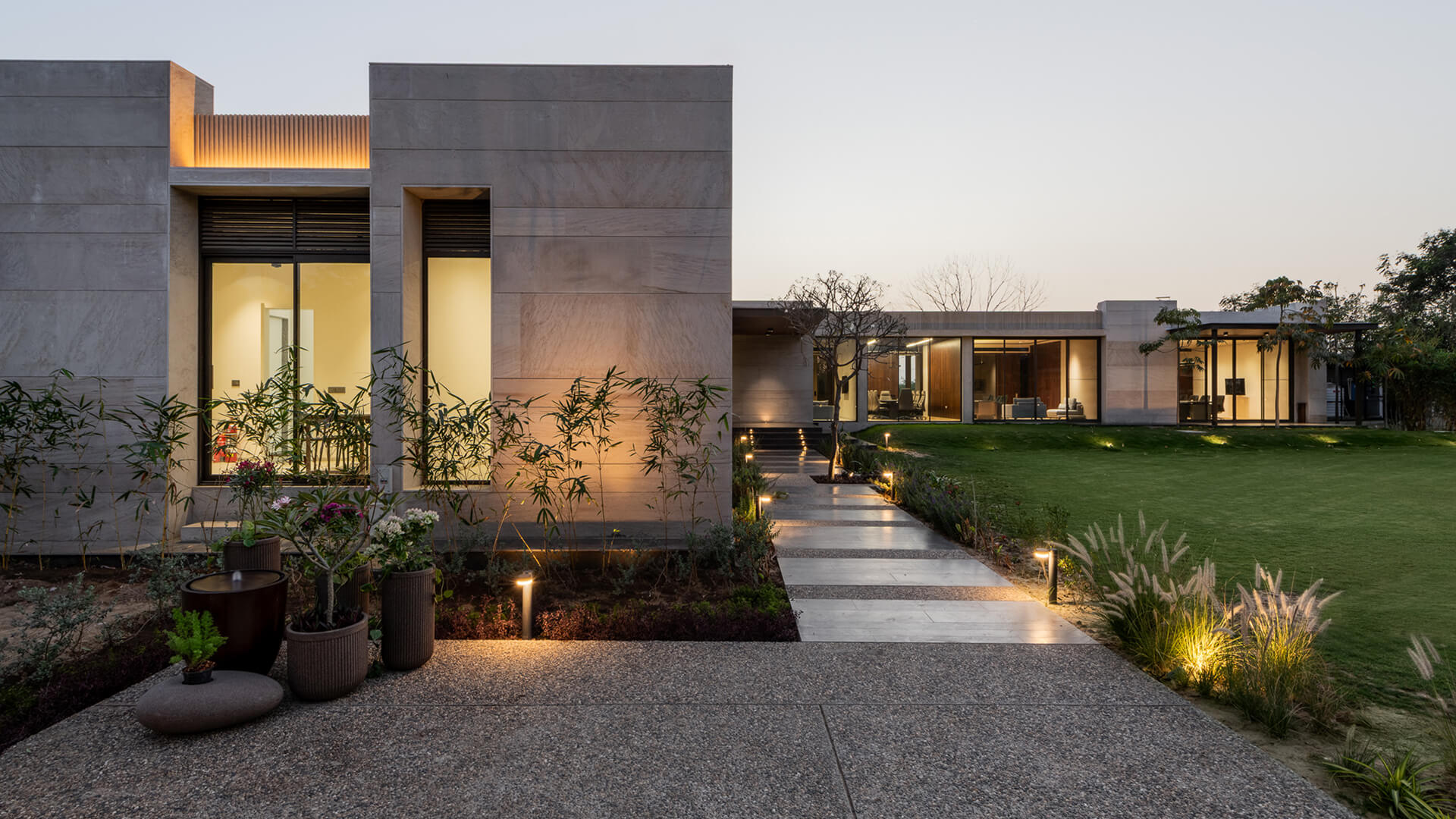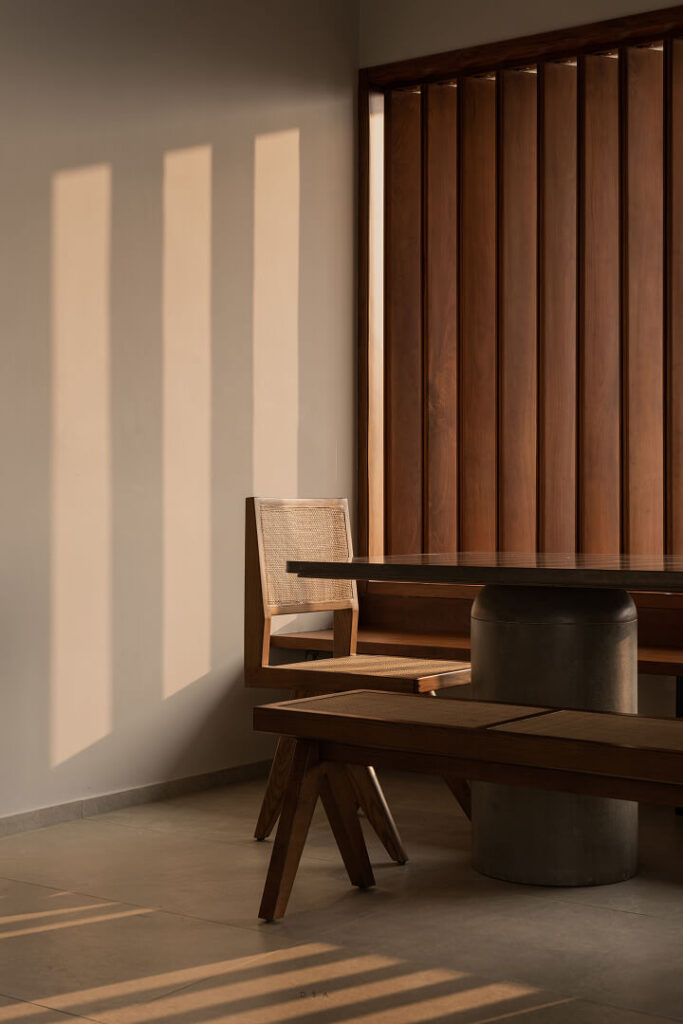
As interiors grow ever busier, a quieter sensibility is taking hold, understated, tactile, and deeply liveable: warm minimalism.
Born from a desire for calming spaces, warm minimalism reshapes how a home feels to live in. It keeps the clarity and restraint of minimalism, but restores the warmth, texture, and emotional resonance that a purely pared-back interior can lose. It speaks to anyone drawn to interiors with serenity, soul and intention at their heart, homes that feel composed, never cold.
What is a warm minimalism style?
Warm minimalism blends minimalist restraint with natural materials, warm neutral tones, and rich texture for spaces that feel calm yet inviting.
Where strict minimalism can tip into something cold or impersonal, warm minimalism does the opposite: the same stripped-back rooms, but ordered, tactile, welcoming and unmistakably lived in.
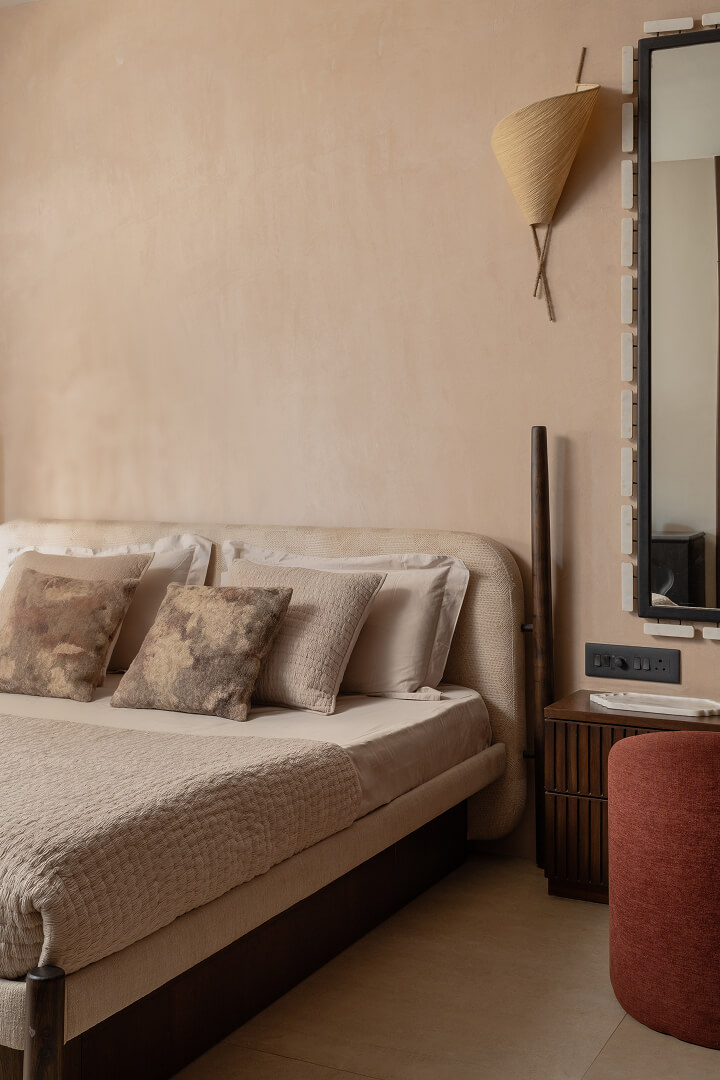
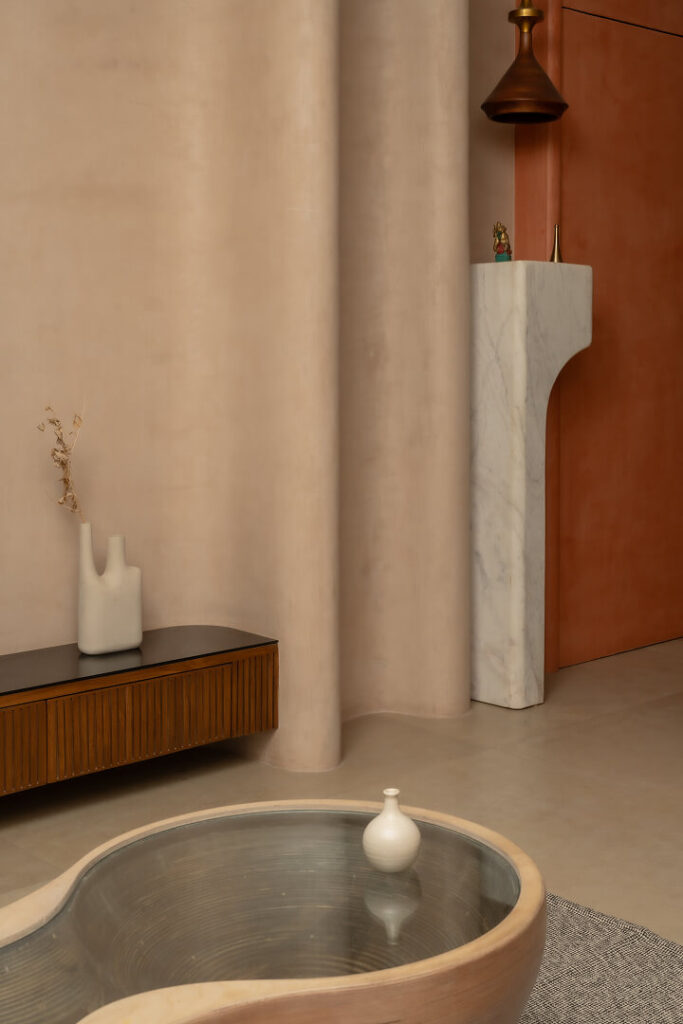
The difference between cold minimalism and warm minimalism comes down to material temperature. Cold minimalism leans on gloss, glass, lacquer and neutral grey. Warm minimalism keeps the same restraint but swaps the materials: stone, wood, lime, linen, soft concrete. The palette shifts from stark white with black accents to beige, greige, warm brown, terracotta and sage. The feeling moves from aseptic to composed and clearly human.
The emotional dimension: warmth and texture that make minimalism human
After years of maximalism and high-gloss perfection, there’s a collective pull toward spaces that ask less of us. Warm minimalism answers a deeper need: for interiors that feel calm, grounded and are made to age gracefully.
A pared-back interior supports presence and ease, uncluttered enough to let the mind rest, soft enough to feel held. What keeps it from turning sterile is everything the materials bring: natural materials, muted tones and tactile finishes that turn discipline into comfort. This is minimalism in the service of wellbeing.
The work of creating that feeling falls to a space’s largest, most constant elements. Floors and walls set the material temperature of a room before a single object enters it, so the surface here becomes the protagonist, holding warmth and continuity on its own.
How sintered surfaces bring warm minimalism to life
Getting warm minimalism right comes down to how surfaces work together, the material doing the quiet, grounding work that decoration once did.
Stone, wood, and clay set the mood, while performance, durability and authenticity are what make a surface worth specifying. That’s where Nexion’s sintered surfaces make their statement: the beauty and tactility of natural materials, engineered to last and to flow uninterrupted across an entire home, indoors and out.
From there, three principles guide the approach.
One continuous material language
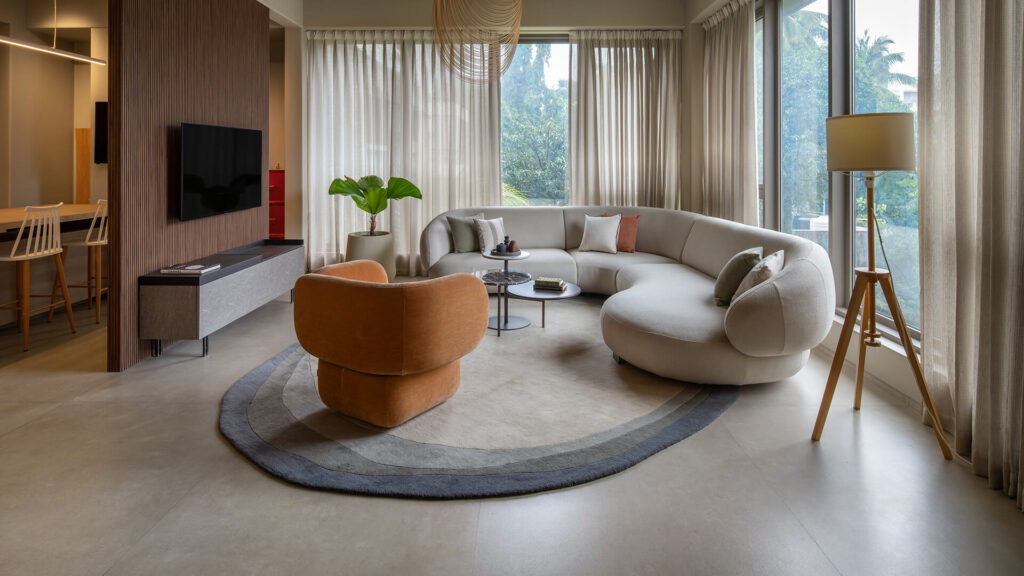
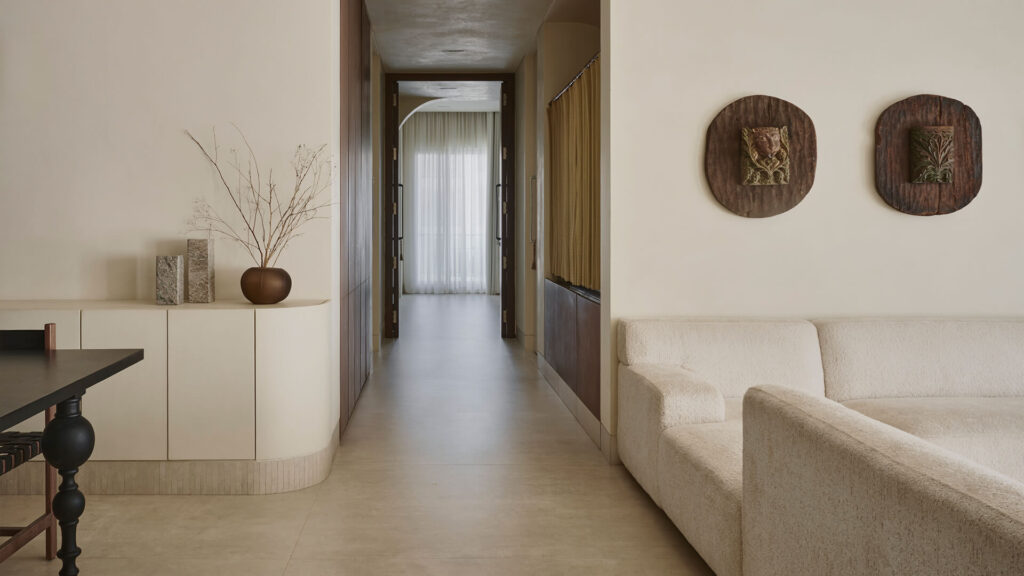
The most powerful move in warm minimalism is also the most restrained: letting a single family of surfaces run uninterrupted. Large-format sintered slabs with minimal joints carry the same tonal language from floor to wall, room to room, and indoors to out, dissolving the visual breaks that make a space feel busy.
Warmth layered, not zoned
Warmth in these homes is built in gradients. A cooler stone-effect neutral can ground shared and working areas, while softer beige and wood-effect surfaces bring intimacy to bedrooms and quiet corners, the temperature rising as the spaces grow more private. Earthy tones then act as punctuation: clay on a single vanity, terracotta in a niche, sage on one wall, never across an entire scheme. The shift lives in the material itself, underfoot and on the walls.
Texture and light as the only ornament
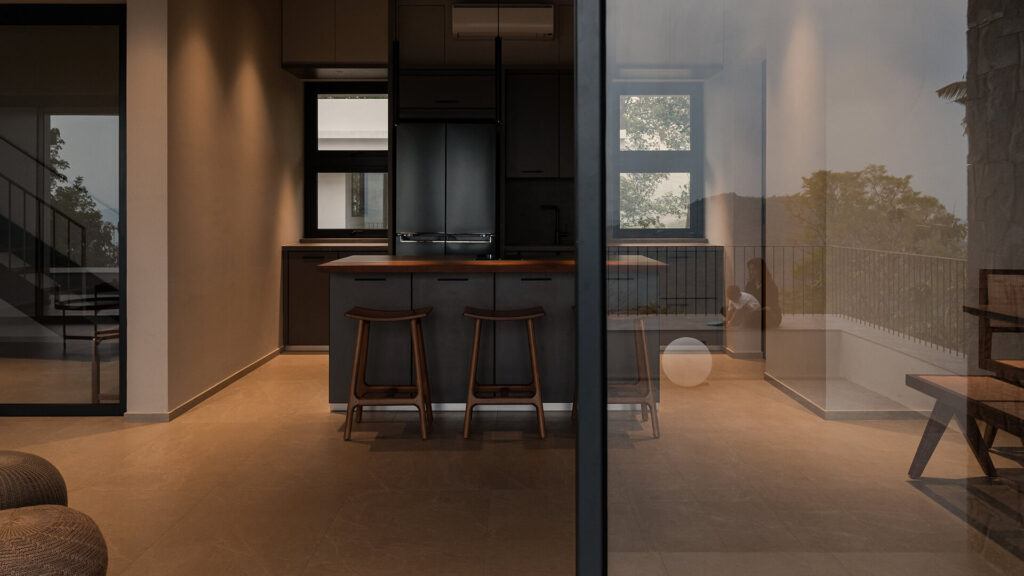
With decoration pared back, texture and light become the design and what remains is a quieter kind of beauty that rises from the material itself. Matte and natural finishes absorb light, so a surface shifts gently from morning to dusk and never reads as cold or slick. Where a room needs a focal point, a textured or three-dimensional sintered finish gives the eye somewhere to rest, a hand-of-nature tactility that does the work a painting once did. The result is an interior that feels alive precisely because it holds so little.
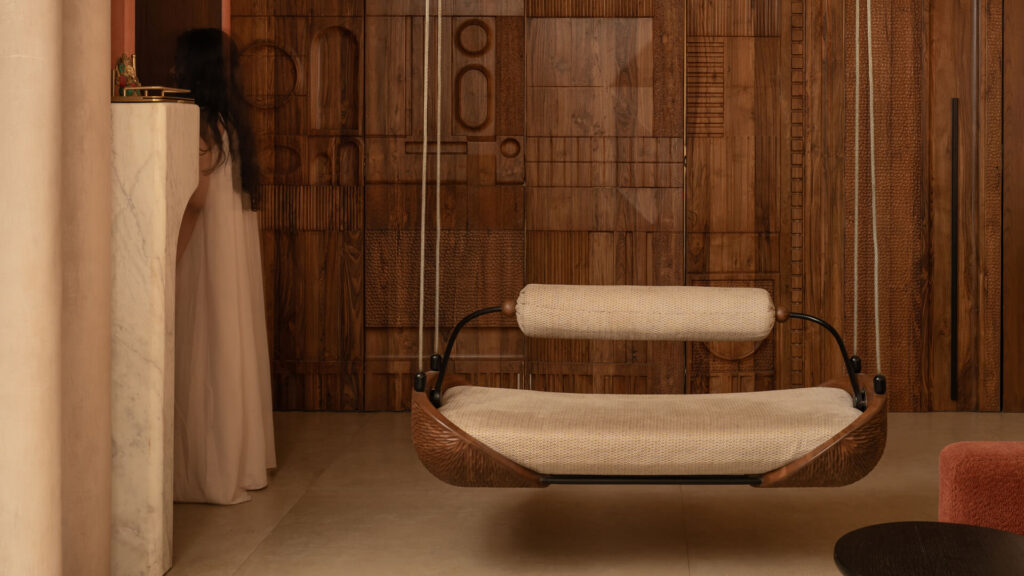
A warm minimalist starter palette
When you’re specifying a project and want a shortcut, this is a reliable, on-trend starting point, built around surface roles:
- The base: a soft, matte floor that grounds the whole scheme: in a stone, wood, or concrete-effect surface with a low-glare finish. Light wood and warm greige stone are the most classic warm minimalist starting points.
- The warm layer: deepen the warmth where rooms turn private: wood-effect surfaces or softer beige tones in bedrooms, studies and quiet corners.
- The accent: an earth-toned surface (clay, terracotta, or sage) for a single vanity, niche, or backsplash.
- The texture moment: a textured or three-dimensional sintered finish on one feature wall.
The rule: one base, one warm layer or one accent repeated across rooms for continuity.
FAQ
What’s the difference between warm minimalism and regular minimalism?
Regular minimalism feels cool and can seem sterile; warm minimalism keeps the restraint but adds natural materials and warm, neutral tones.
The clean lines and edited palette stay the same, only the material temperature changes, moving from white, grey, and gloss to beige, greige, clay, and wood.
Which colors define a warm minimalist palette?
A warm minimalist palette centers on beige, greige, warm brown, terracotta, and muted sage green over a neutral base, with sparing black accents.
The aim is tonal harmony: colors that sit close together on the spectrum, layered through texture rather than high contrast.
Can sintered surfaces really look like natural stone or wood?
Yes, sintered surfaces replicate the texture and tonal variation of natural stone and wood, with far greater durability and lower maintenance.
That authenticity is why a single tonal language can run continuously across floors, walls, and even outdoor areas, resisting wear, heat, and UV.
What finish works best for warm minimalism?
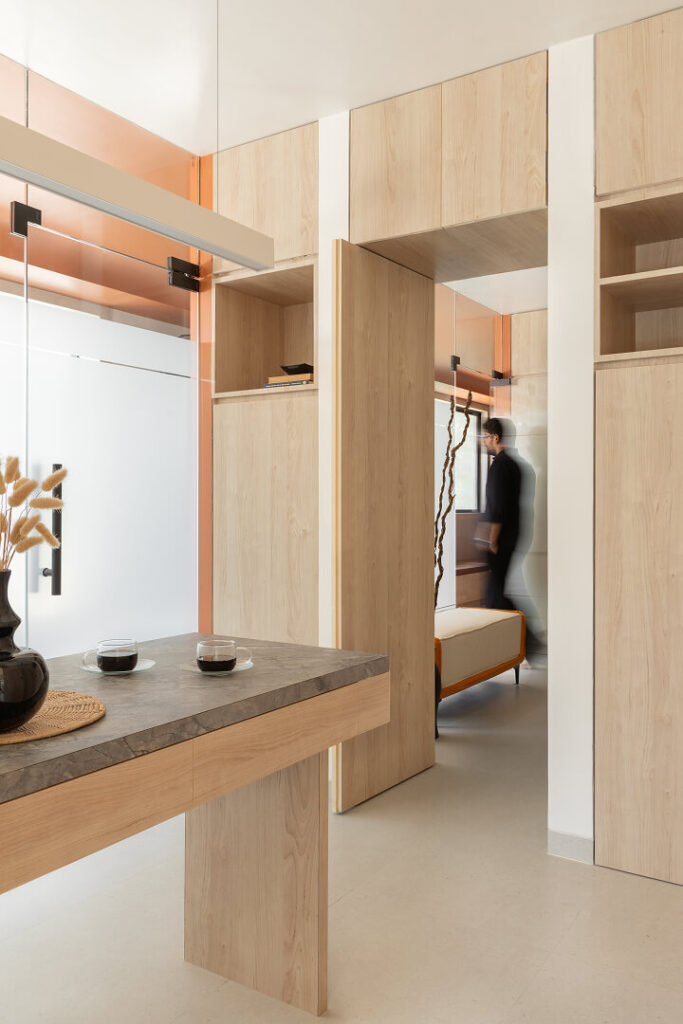
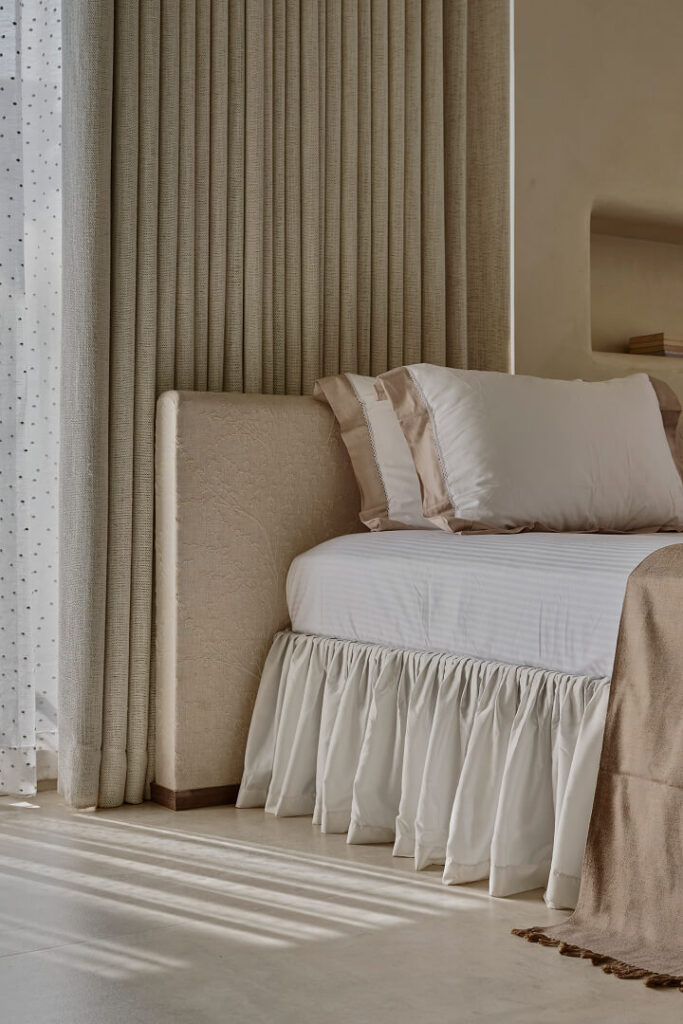
Matte, natural, and lightly textured finishes work best, they reduce glare, respond softly to changing daylight, and feel tactile rather than slick.
Glossy and polished finishes reflect light and read as cold, working against the warm, lived-in mood the style depends on.
Where should I add warmth without breaking the minimalism?
Add warmth as punctuation: one wood-effect wall, one clay-toned vanity, or one textured niche against an otherwise neutral palette.
Keeping the surrounding surfaces continuous and restrained lets each warm moment register clearly without crowding the room.
Find the surfaces for your warm minimalist project?
Warm minimalism is about choosing surfaces that carry calm, warmth and texture all at once. Explore the quiet luxury of Nexion surfaces you can specify for your own warm minimalist project, from stone- and wood-effect floors to earth-toned accents.
Sources:
How to Master Warm Minimalism for a Serene and Stylish Home
What Is Warm Minimalism? Interior Designers Say the Trend Will Be Everywhere in 2026
Embracing warm minimalism: a guide to cozy, clutter-free living