Designing a space that brings together professional activity and private life requires a clear architectural vision, one that supports everyday routines through balance, order, and spatial coherence.
The Srujan home-office project unites work and living within a single architectural system, where each function maintains its identity while contributing to a cohesive whole. Here, form follows use, and material choices reinforce a calm, durable spatial experience.
Conceived as a continuous environment, the building relies on the careful organization of relationships between functions, ambiances, and users.
A spatial organization revealed through two rhythms
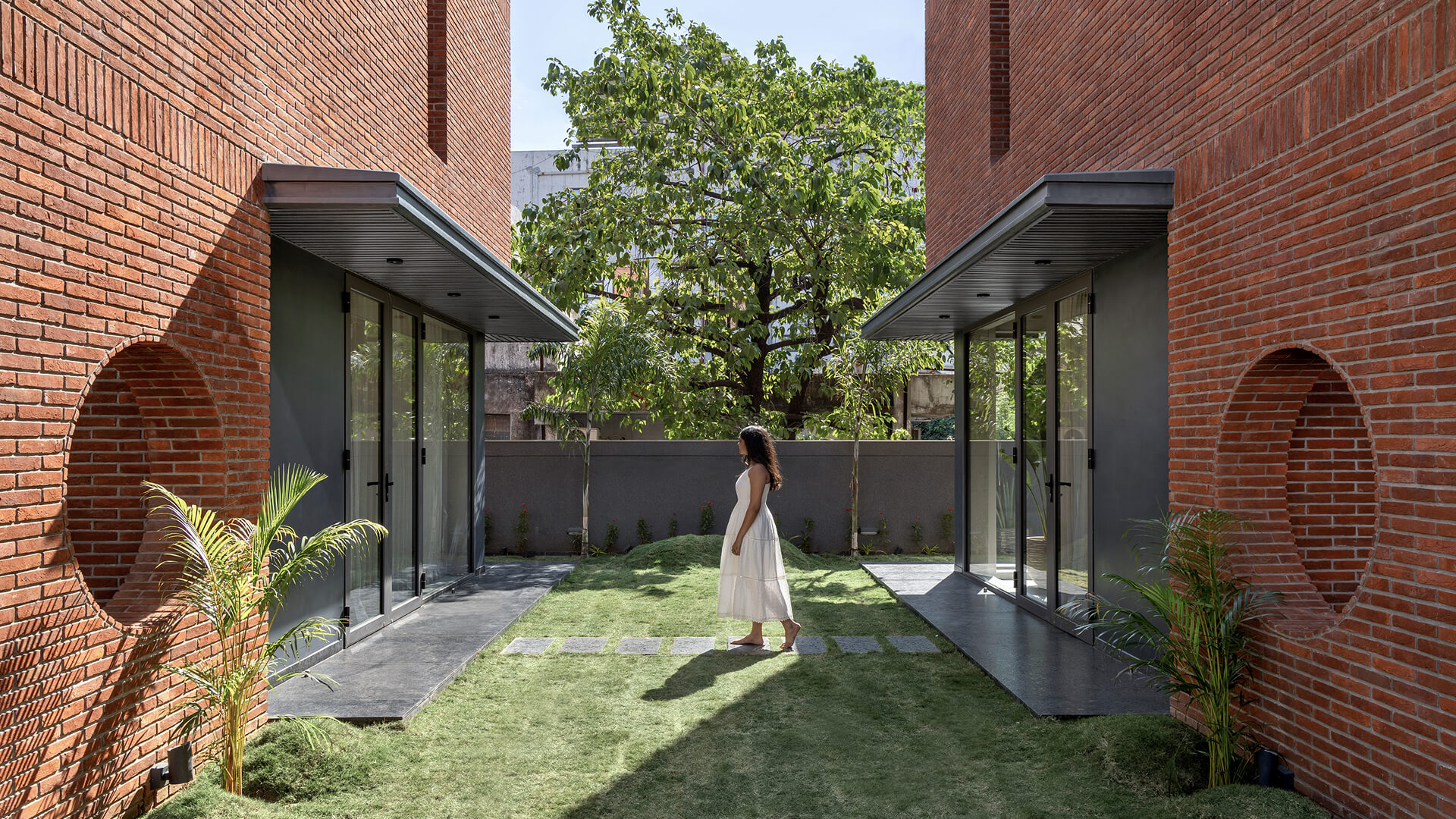
The Srujan project is conceived as a single architectural volume articulated through clear hierarchies and carefully calibrated transitions. Office and residence coexist within a unified design language, where proportions, openings, and material continuity generate visual order and spatial calm.
The building operates as a coherent system, allowing professional and domestic functions to retain their distinct roles while contributing to a shared architectural identity.
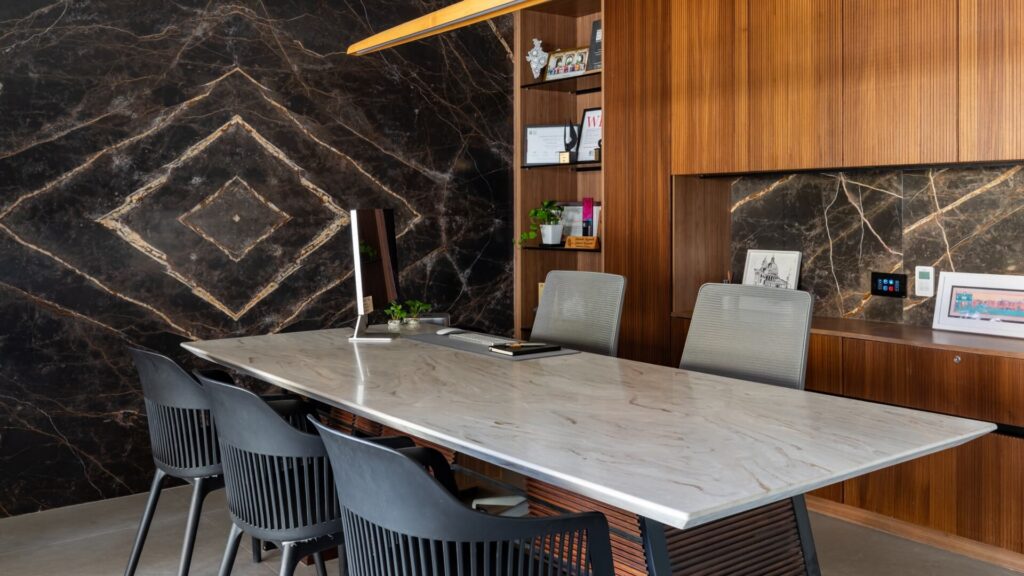
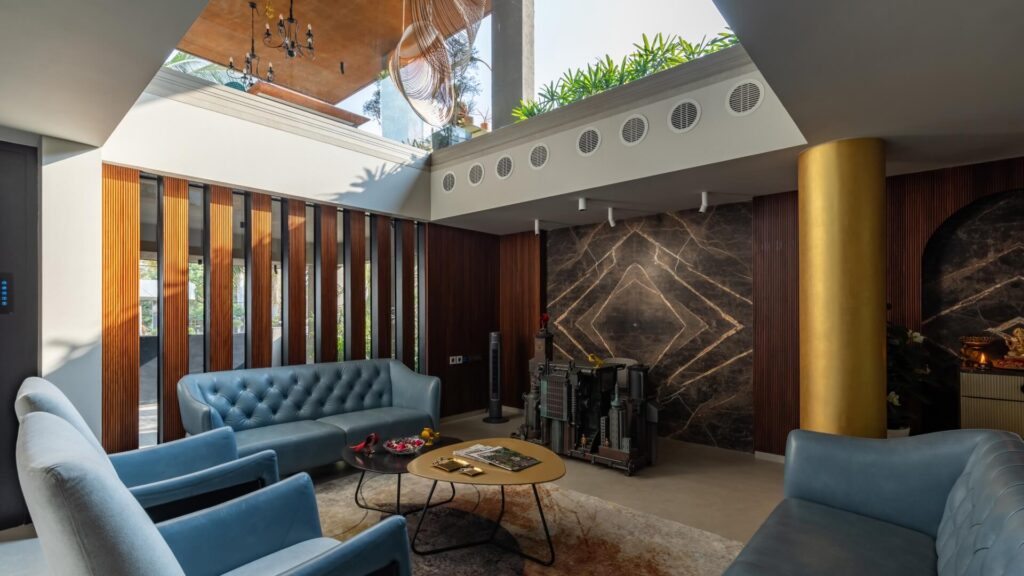
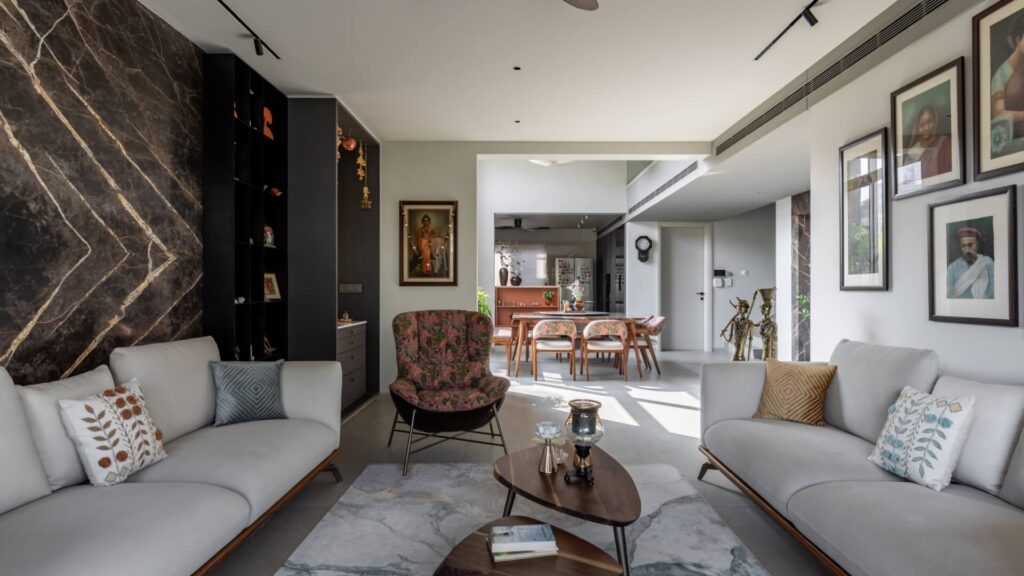
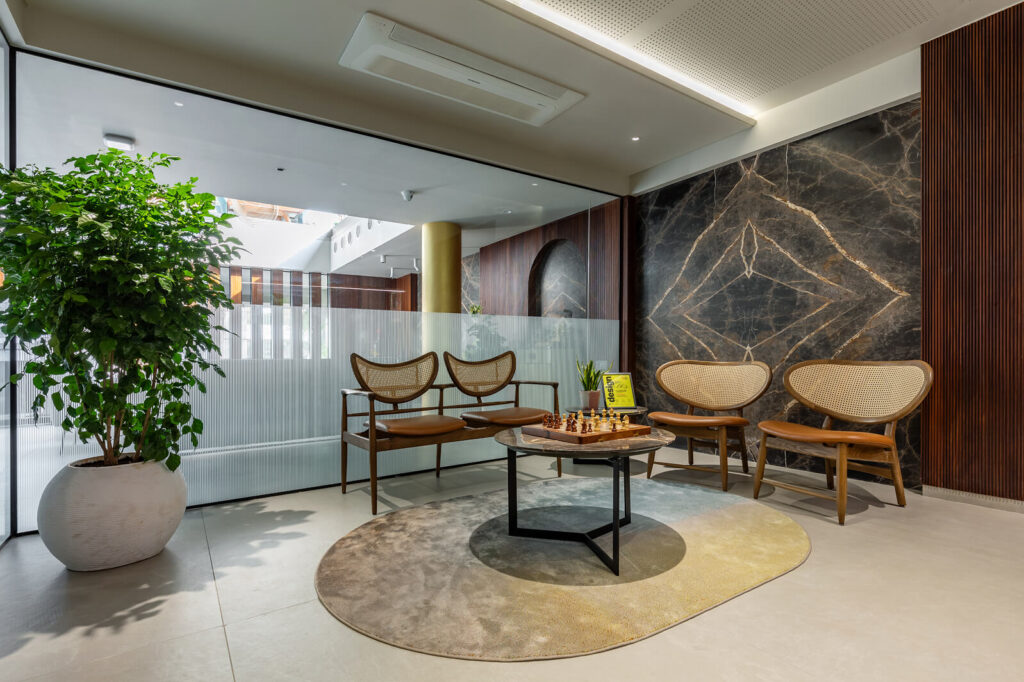
Privacy and access
A single point of entry structures circulation for both the office and the home, ensuring clarity of movement while safeguarding the residents’ privacy. From this shared threshold, the two programs unfold into separate spatial domains, each with its own public areas and internal rhythms. This controlled access strategy enables interaction where appropriate, while preserving privacy and reinforcing the balance between work and living.
A sober and consistent design language
The design of this beautiful project is based on proportion, alignment, and continuity, shaping spaces that feel composed and deliberate. Minimalism operates as a working method aimed at reducing visual noise in favor of spatial clarity and everyday usability.
In the office areas, this approach translates into clean lines, controlled material transitions, and a neutral chromatic palette that supports concentration and professional interaction. The environment is designed to feel orderly and focused, where architecture provides a calm backdrop for work-related activities.
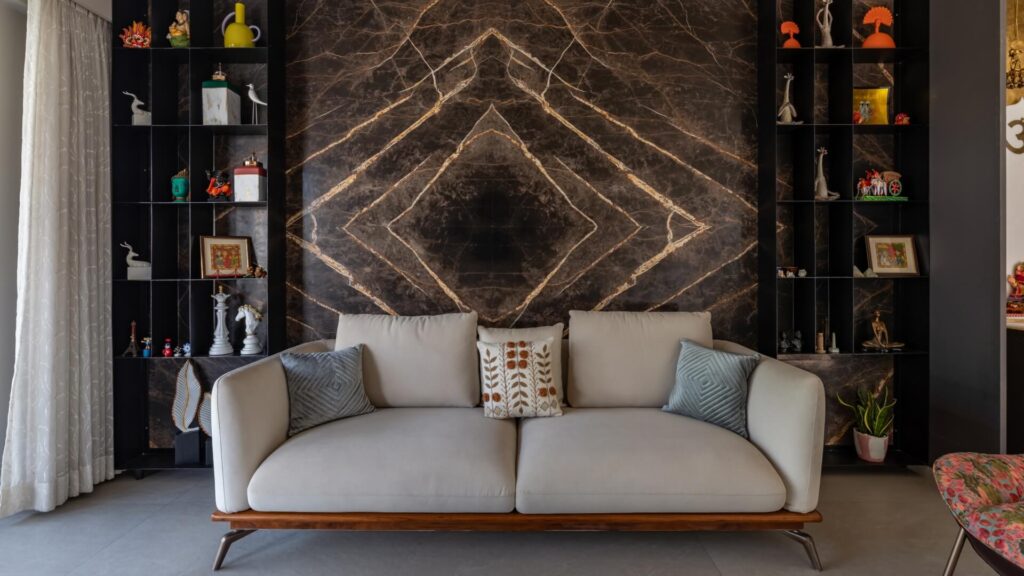
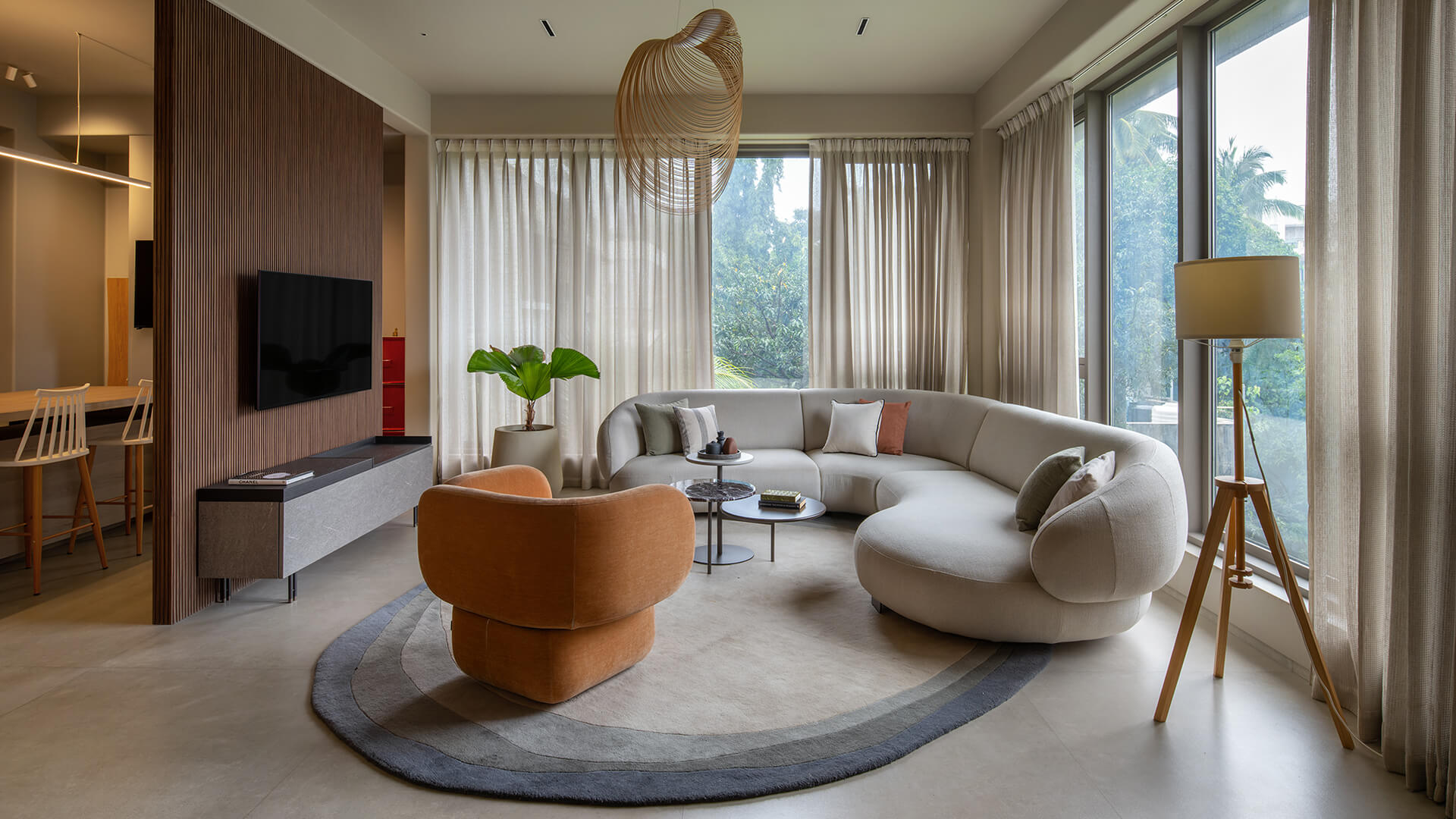
In the residential areas, the same principles of sobriety and coherence are softened to accommodate domestic comfort. The visual code remains consistent, ensuring unity across the building, while proportions and details are calibrated to create a more intimate and welcoming atmosphere. This balance allows the project to preserve architectural rigor without sacrificing livability.
Light, views, and everyday comfort
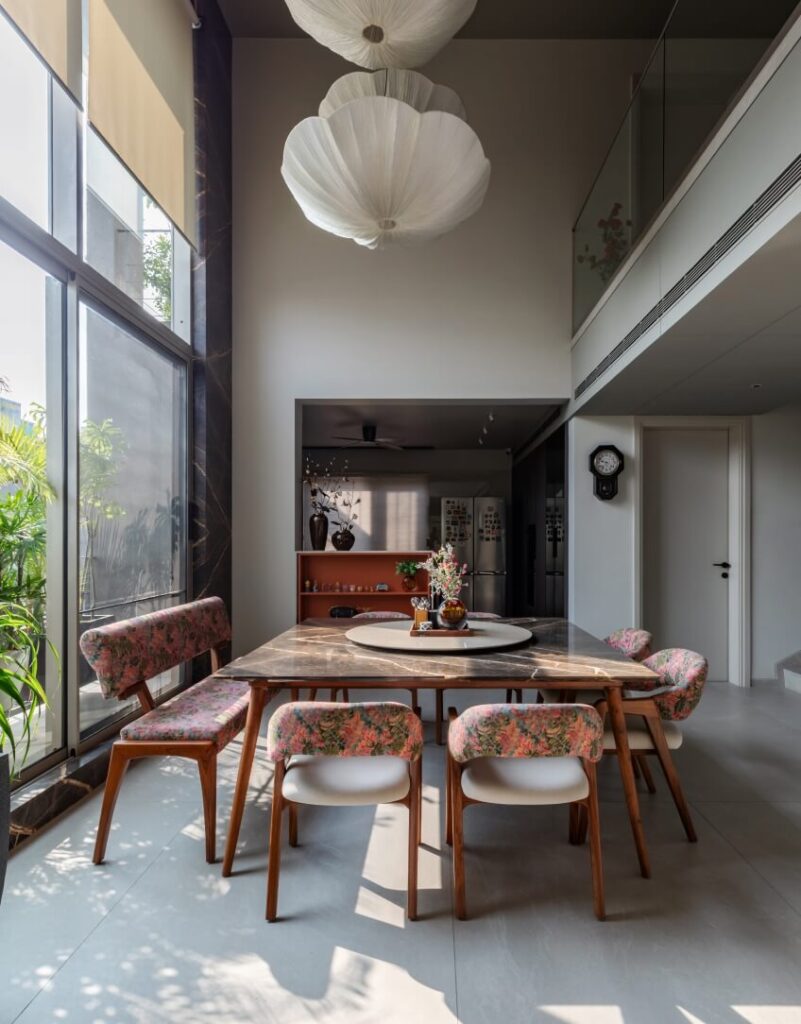
Natural light is a primary design driver in the Srujan project, enhancing both spatial quality and everyday experience.
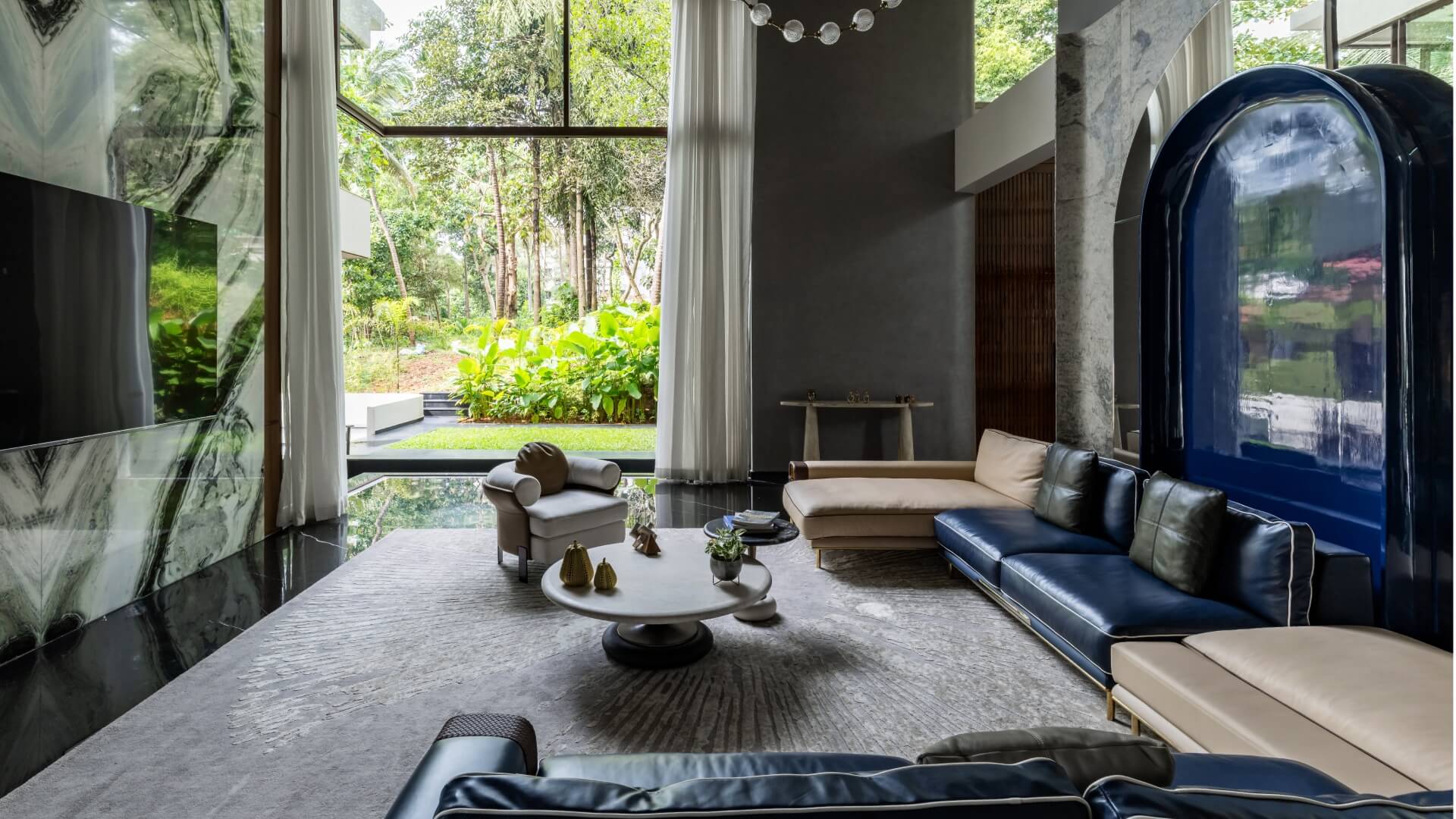
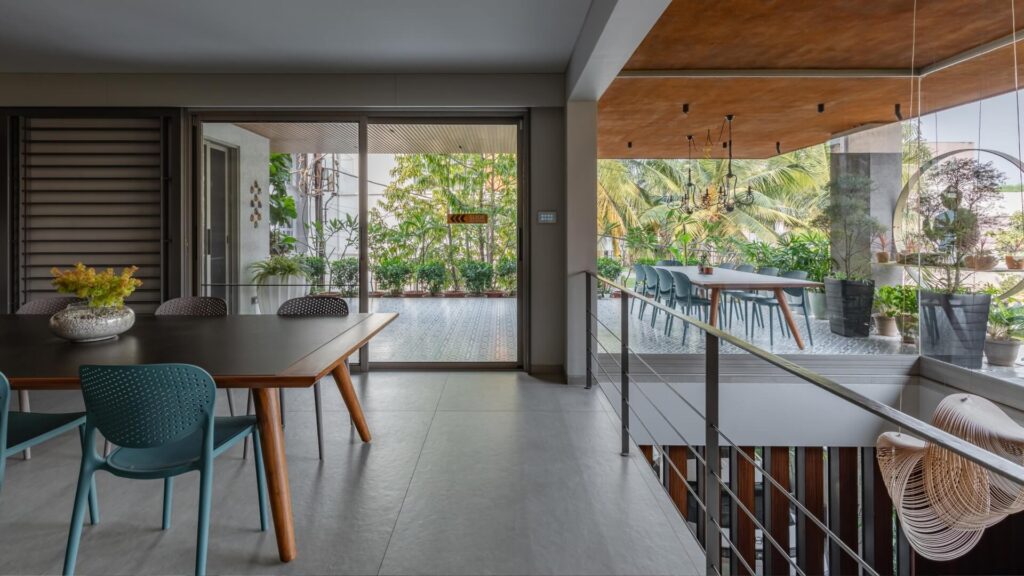
The building is oriented to capture soft, glare-free daylight, with generous openings that draw light deep into the interiors while framing views of the surrounding landscape.
In the office spaces, generous windows and double-height volumes enhance visual openness and promote a healthy working environment. Light supports concentration and interaction, while cross-ventilation contributes to thermal comfort throughout the day.
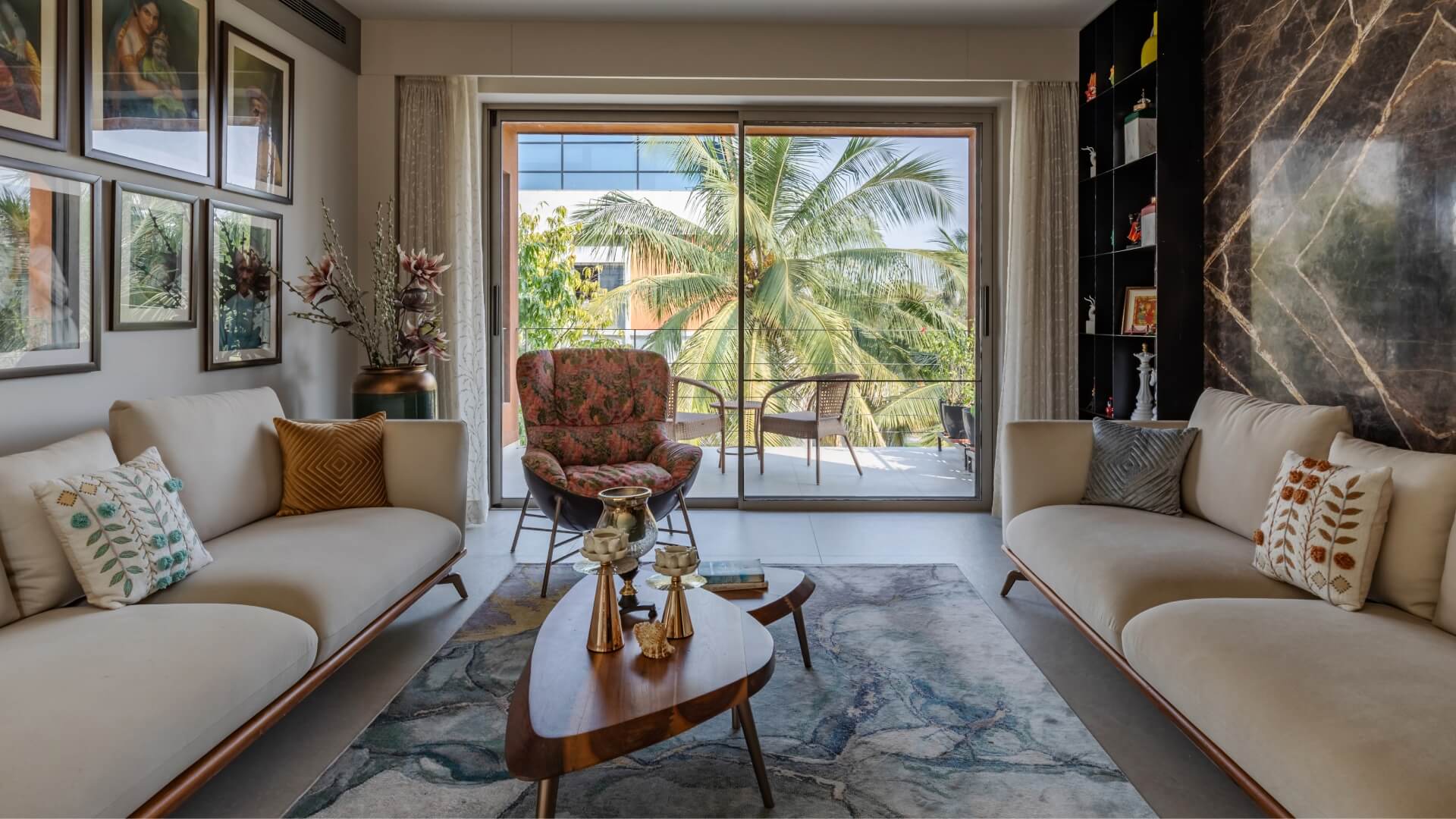
In the residential areas, light and views take on a more experiential role. Windows become instruments of connection with the exterior, reinforcing a sense of calm and continuity between inside and outside. Here, daylight, proportion, and controlled openness work together to create a serene and welcoming domestic atmosphere, where comfort is achieved through spatial balance rather than decorative excess.
A design strategy led by chromatic neutrality and durability
Material selection plays a strategic role in defining both the identity and performance of the Srujan project. Surfaces and finishes are conceived as design tools, supporting spatial clarity, visual continuity, and long-term usability.
In the shared and professional areas, material choices reinforce the project’s sober architectural character. Neutral tones, durable finishes, and restrained textures contribute to an ordered environment that emphasizes continuity and ease of maintenance, aligning with the functional demands of daily work.
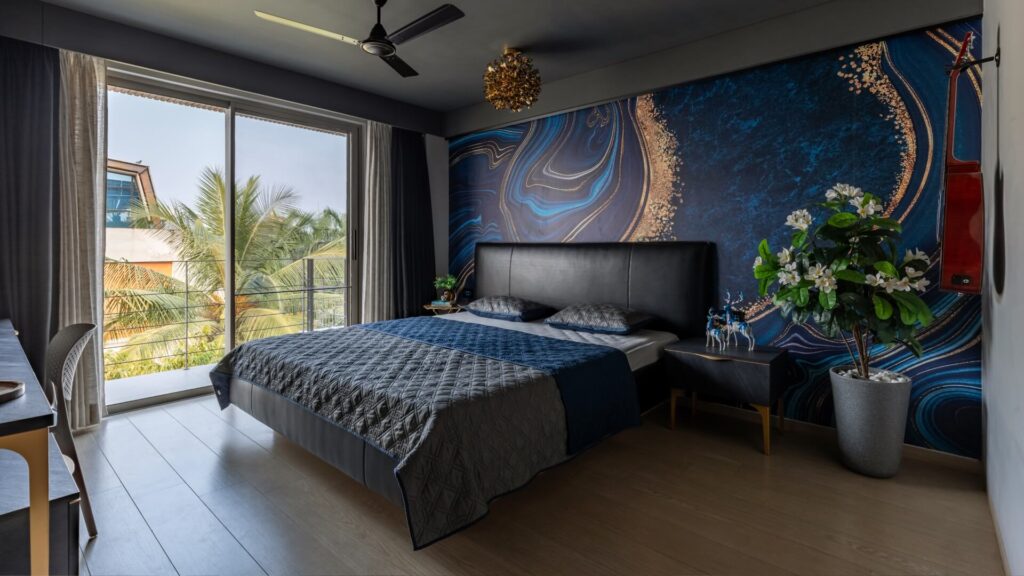
In the private residential zones, the palette becomes more expressive. Texture and color are introduced to reflect the individuality of the inhabitants and to enhance comfort in the most intimate spaces, particularly in the bedrooms. This shift allows the domestic areas to retain the project’s overall coherence while responding to emotional and personal needs.
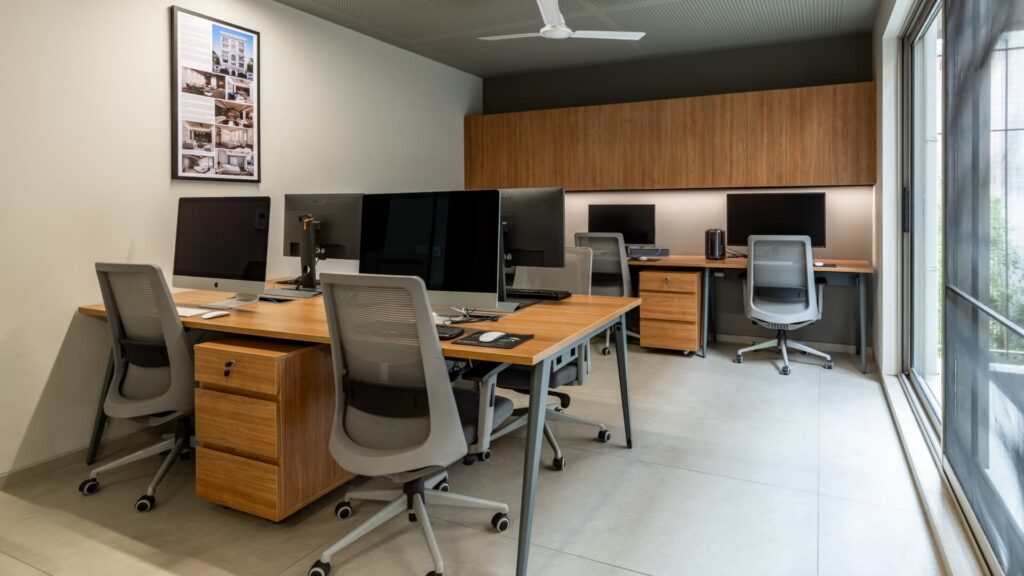
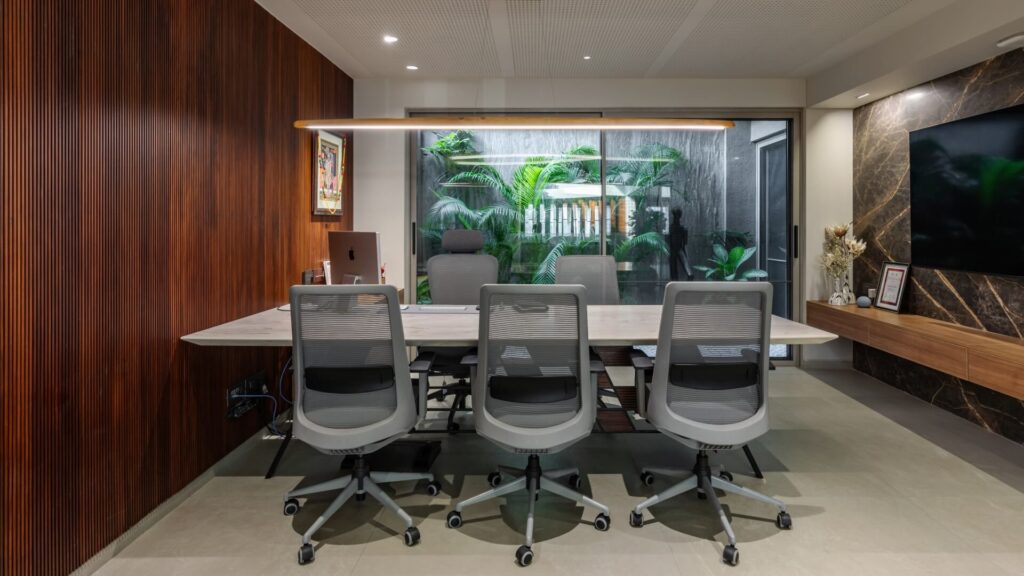
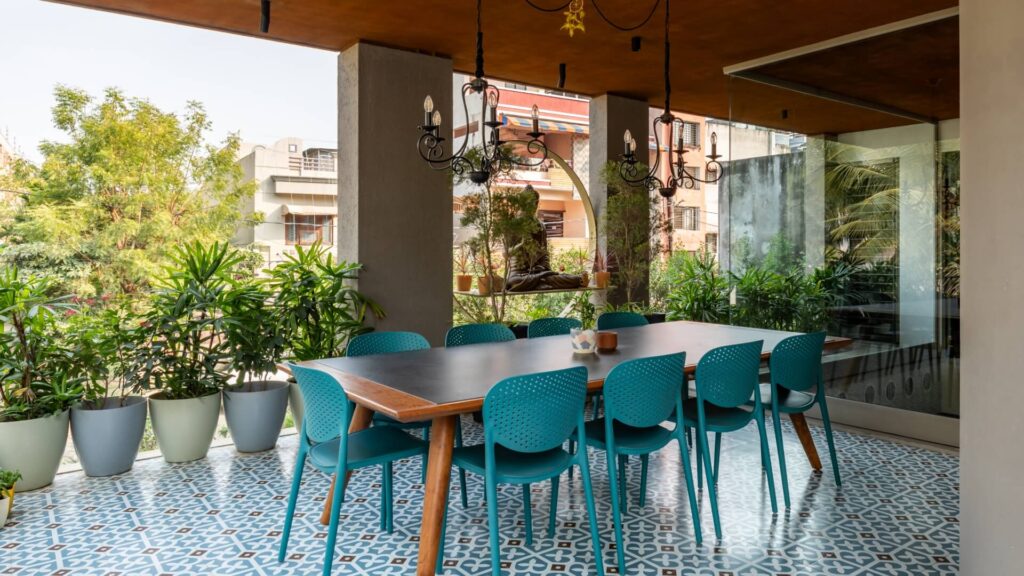
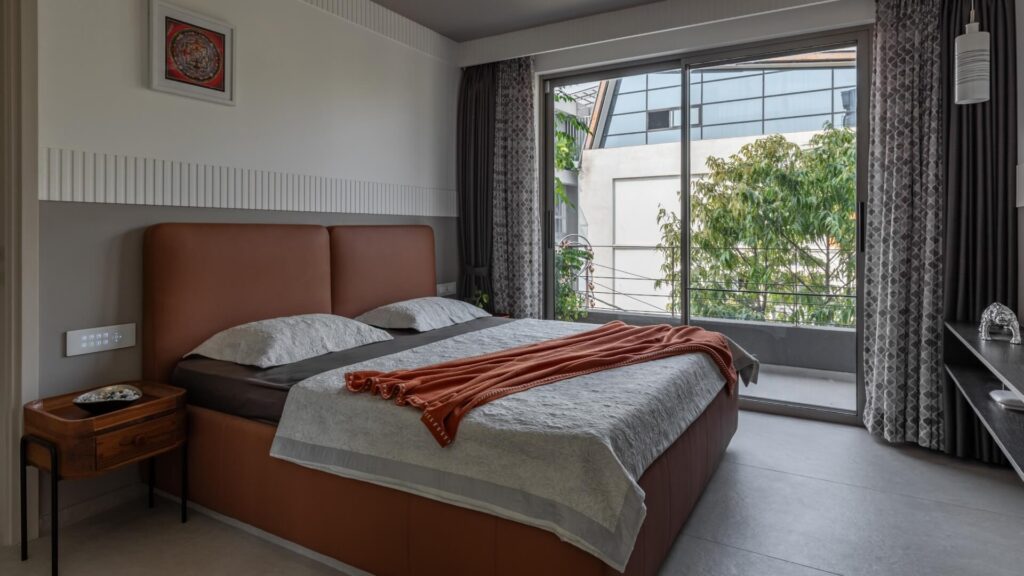
This calibrated approach allows the building to maintain overall coherence while responding to different functional and emotional needs across work and living environments.
Nexion surfaces as material interpretation
In the Srujan home-office project, material selection plays a central role in defining both atmosphere and function. Different Nexion surfaces are used strategically across the building to respond to the specific needs of each area, reinforcing spatial clarity and visual coherence.
In the living, dining, bathroom and working areas, Runa Grigio Chiaro introduces a sober, stone-inspired character that combines visual strength with a soft tactile quality. Its slate-like texture supports a calm architectural backdrop while offering durability for everyday use. In the kitchen and bedrooms,Runa Beige brings a warmer interpretation of the same material language, maintaining continuity while softening the overall perception of the spaces.
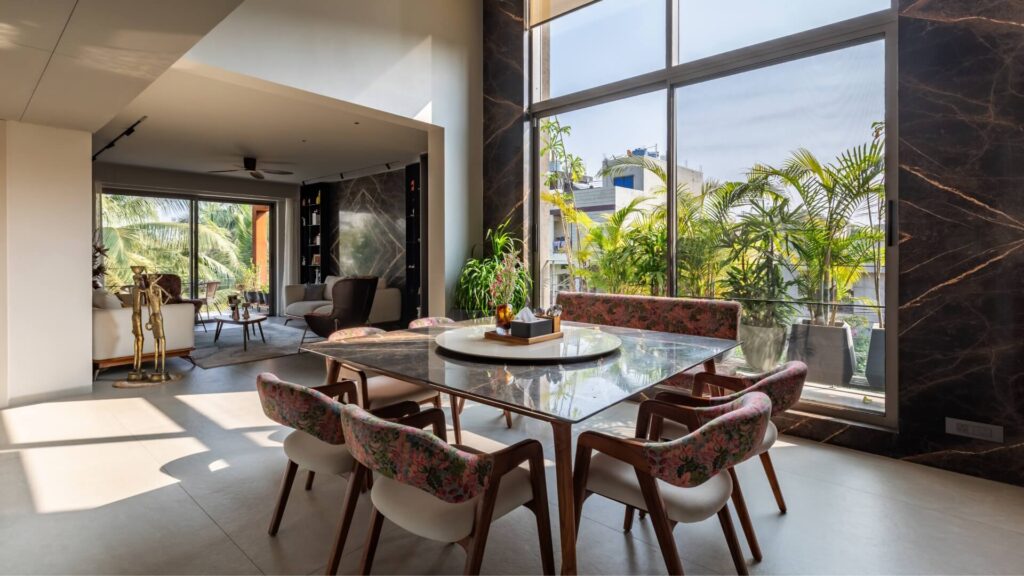
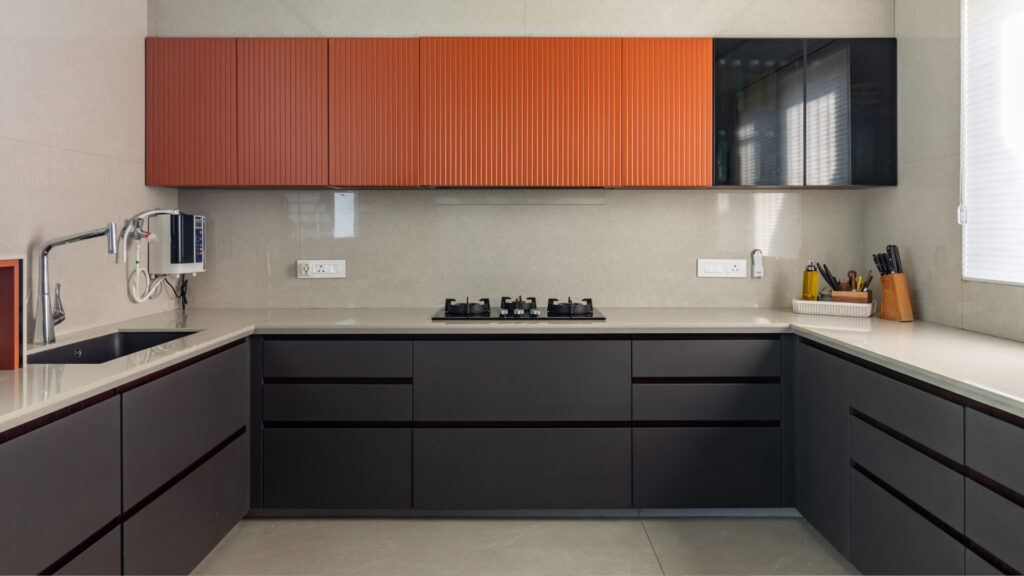
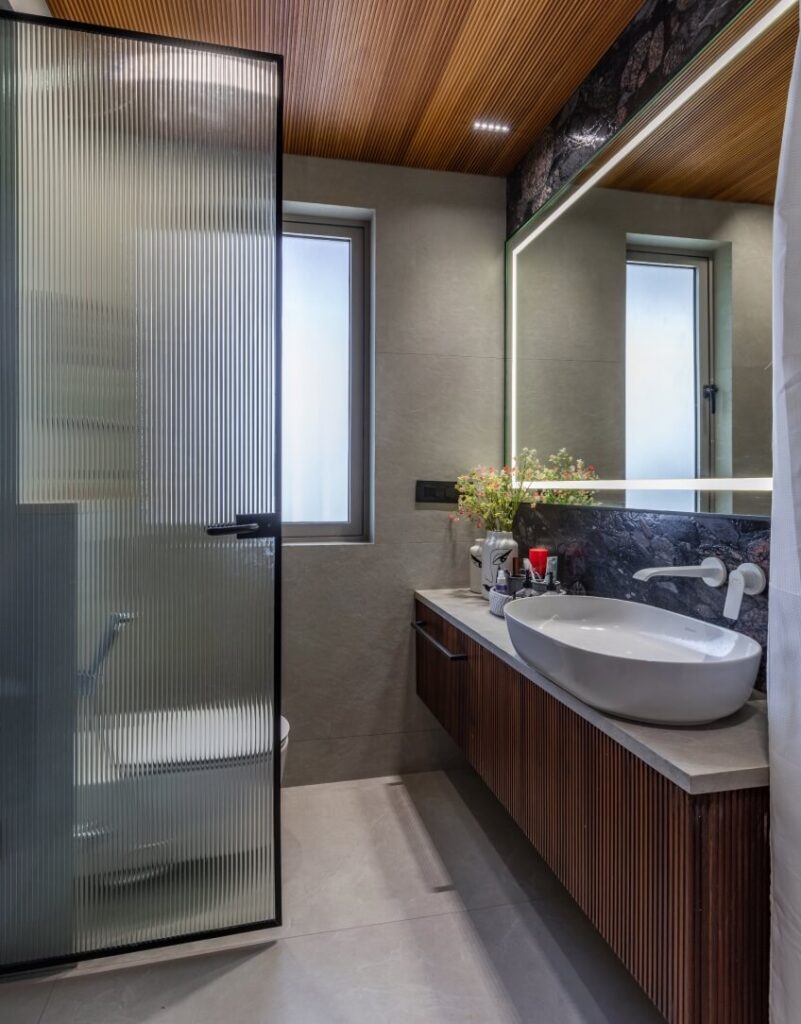
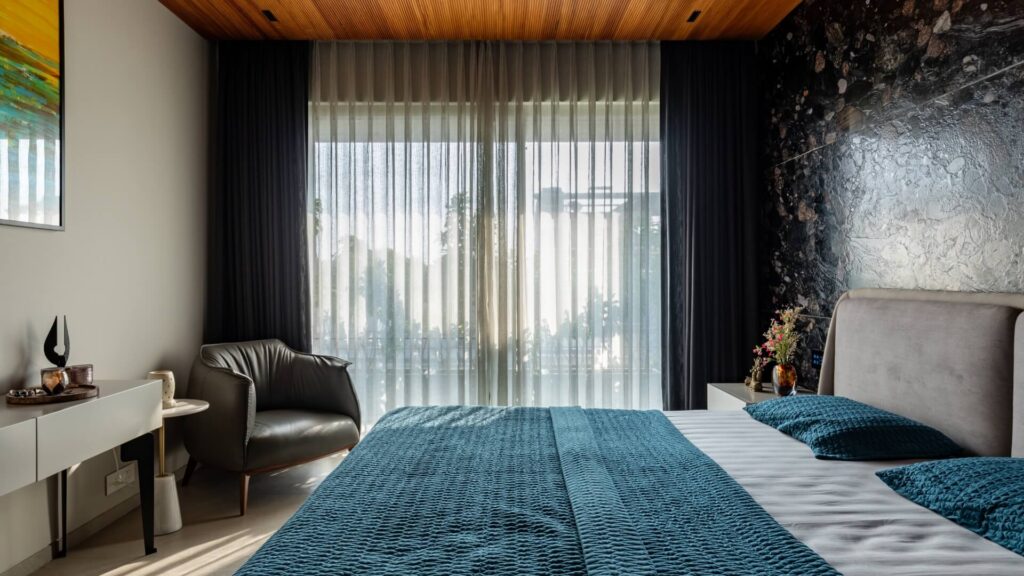
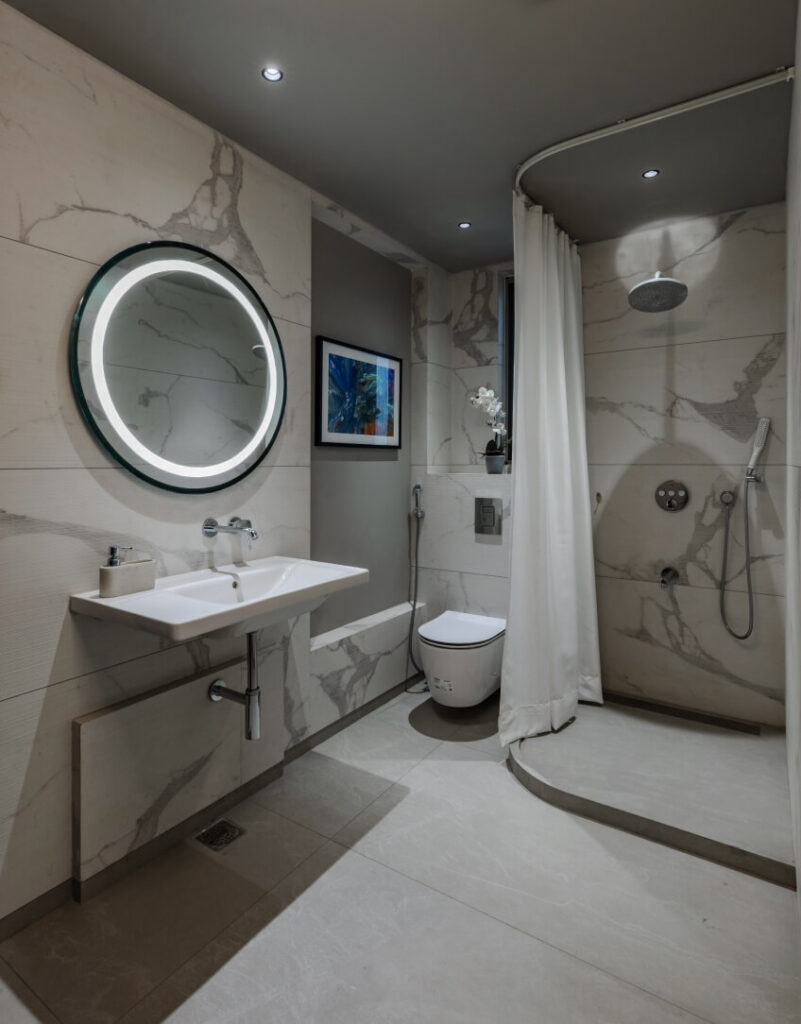
For the more intimate residential areas, Essenze Rovere Chiaro is used to add depth and a natural warmth through its wood-inspired surface. Its refined grain and chromatic richness create a sense of comfort and personalization, while preserving the project’s controlled and contemporary aesthetic. In the bathrooms, Statuario Rigato introduces a strong architectural accent, with its bright background and linear veining enhancing verticality and light reflection, giving these spaces a more expressive yet balanced identity.
The Srujan home–office project demonstrates how architecture can actively support well-being by mediating between professional and private life through clarity of design, spatial balance, and measured material choices. By integrating two functions within a single, coherent system, the project shows how productivity and comfort can coexist, and how domestic life can unfold without losing architectural rigor.
The result is a sober yet expressive composition, where light, space, and surfaces work together to shape everyday experience, transforming work-life balance into a tangible spatial condition that is both durable and deeply human.
Inspired by this project?
Explore more design stories in the Project Section of our Nexion Club and discover how architects and designers use Nexion’s sintered surfaces to create spaces that combine aesthetics, performance, and human connection.