In Sawantwadi, where the Western Ghats meet a town suspended between memory and momentum, this home is conceived as an act of restraint, shaped to follow the land, invite the breeze, and frame the surrounding green without ever overpowering it.
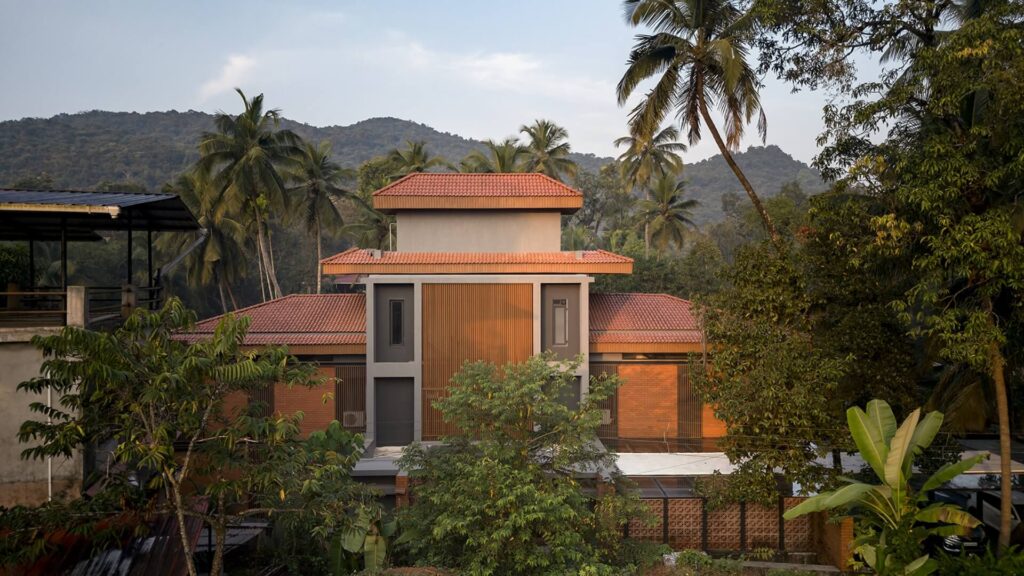
Designed by Studio Massing, the 20,000 sq ft residence translates local cues brick, terracotta tiles, shaded verandahs, and a reinterpreted Tulsi courtyard into a contemporary mode of living defined by spatial generosity, climatic responsiveness, and quiet performance.
A restrained material language shaped by light and landscape
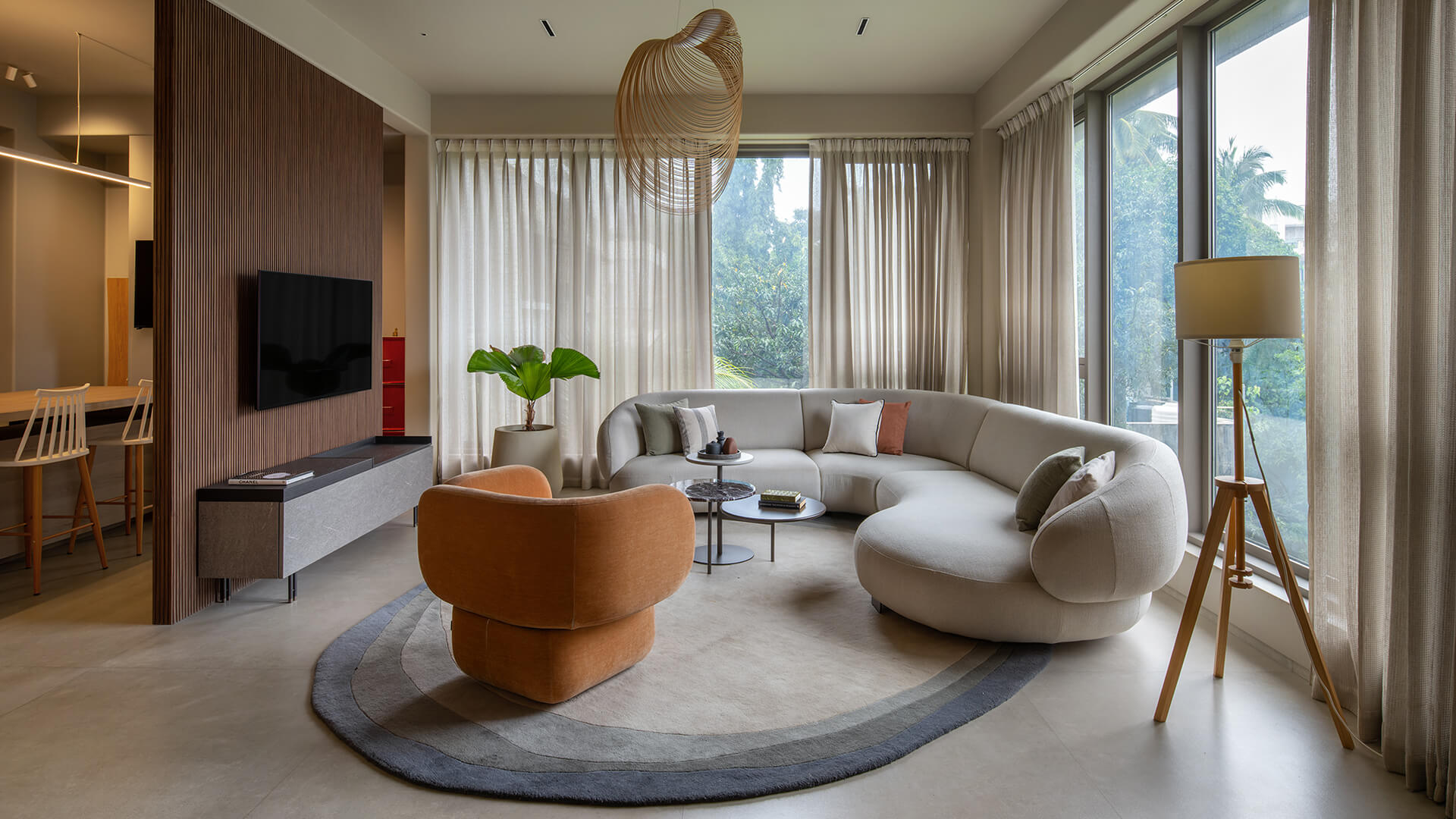
Beyond its spatial composition, the house is defined by a deliberate reduction of visual noise. The material palette remains calm and grounded, allowing interior spaces to resonate with the surrounding landscape without hierarchy. Earth-toned surfaces echo the surrounding soil and vegetation, reinforcing continuity between built form and natural context. Materials are selected to anchor the architecture from within, absorbing light and softening volumes, and enhancing the tactile quality of everyday spaces.
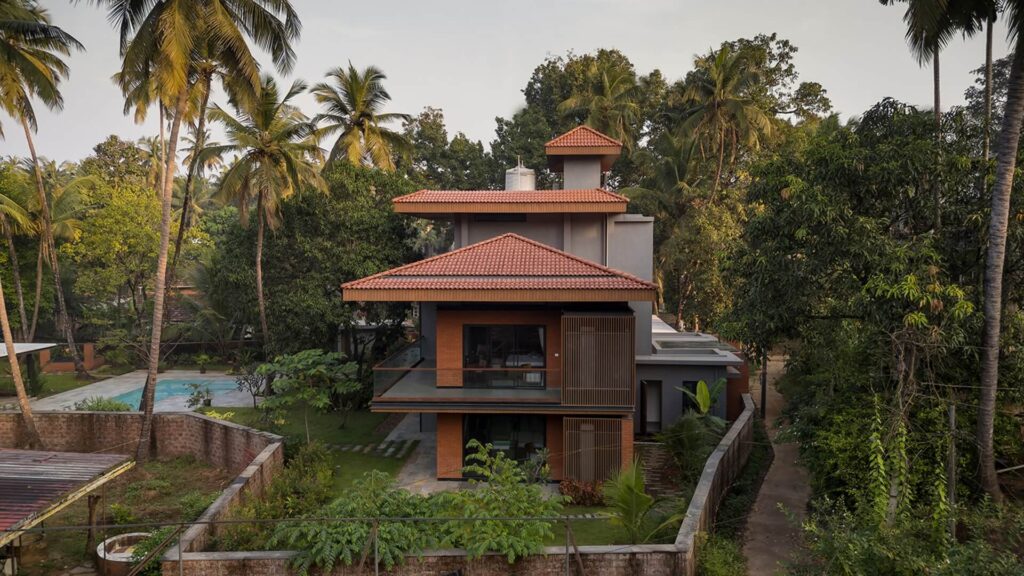
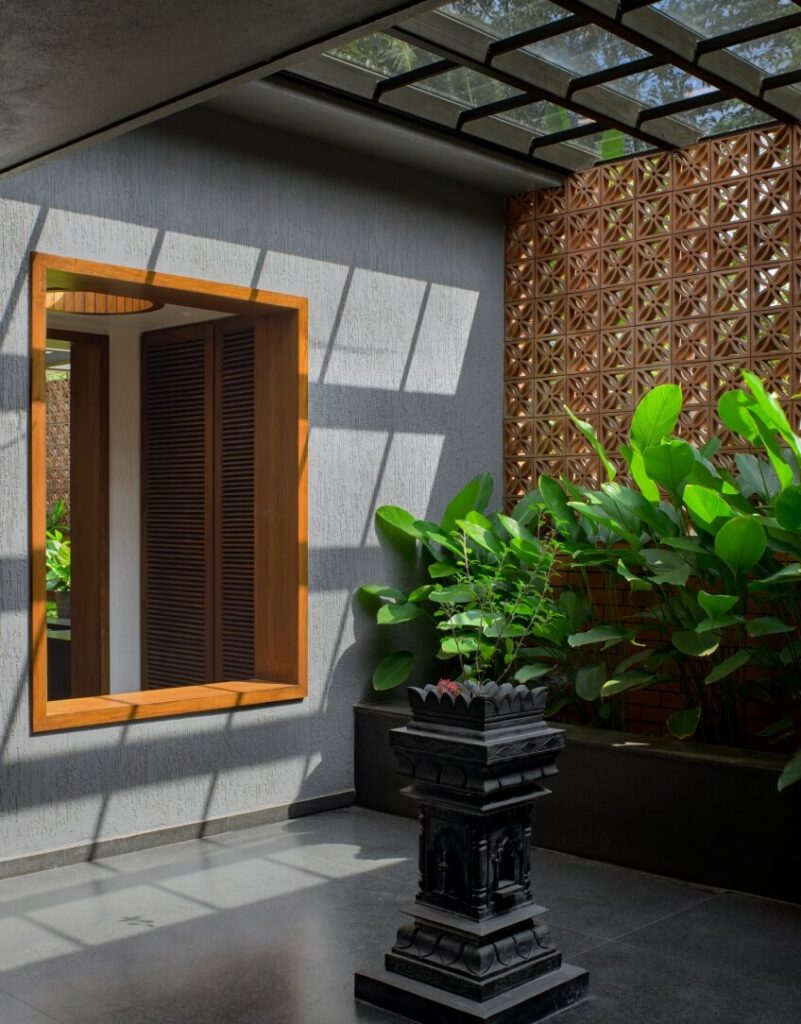
This restraint becomes essential in a home conceived around movement, air, and changing light. As daylight filters through louvers and latticed terracotta, surfaces subtly respond, capturing shifting shadows across circulation paths and shared spaces. Materiality thus becomes an active yet quiet presence, shaping an atmosphere that evolves throughout the day: layered, measured, and deeply connected to its setting, where architectural expression supports both climatic rhythms and contemporary living.
Writing architecture through a landscape framework
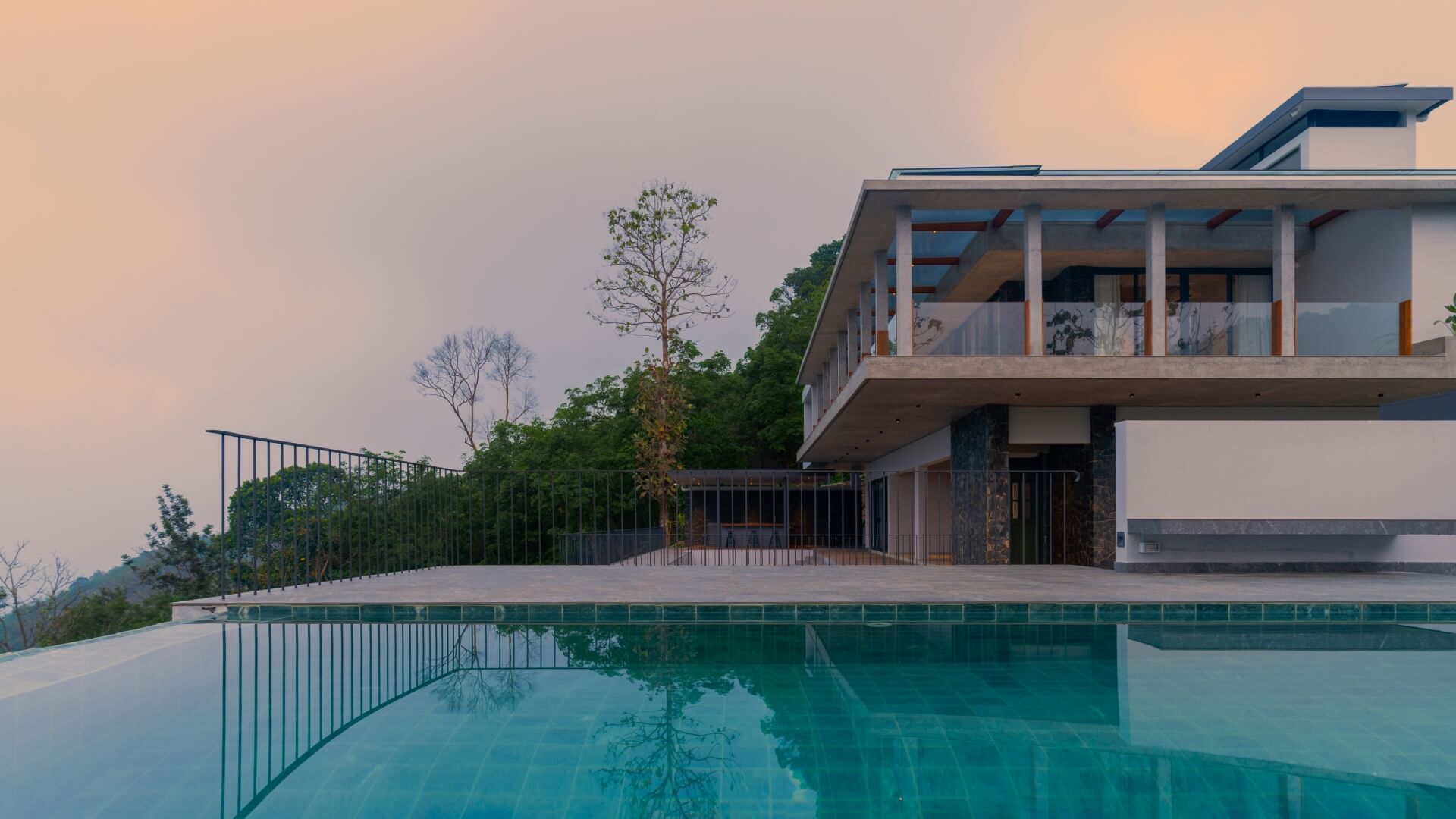
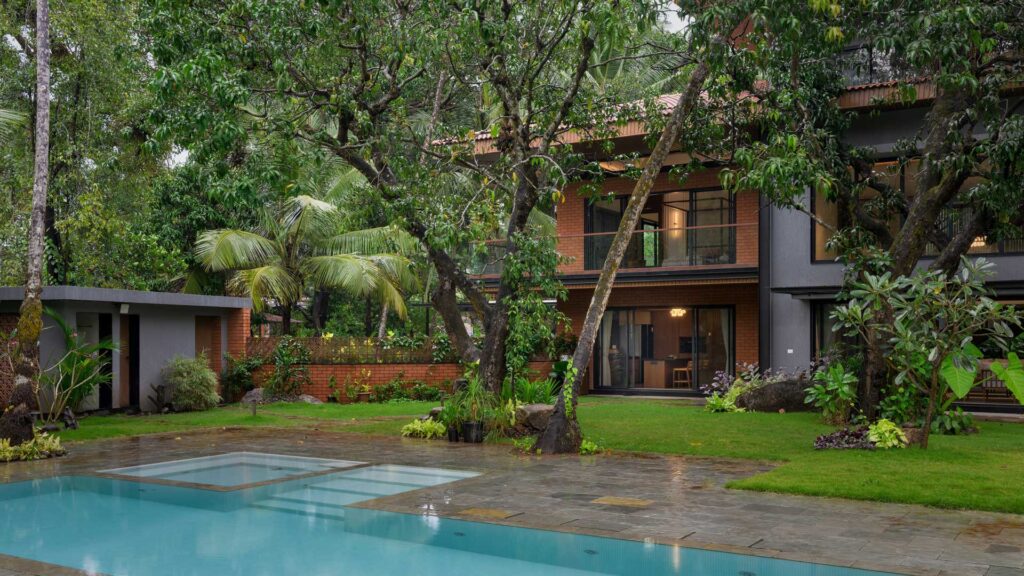
Set within the rolling terrain of Sawantwadi’s hillside landscape, the site presents both an opportunity and a responsibility. Dense vegetation, mature mango trees, and a subtropical climate shaped by heat, monsoon rains, and seasonal humidity call for an architectural response that works with the land. The house is carefully positioned along the natural contours, limiting ground intervention while opening westward toward expansive views across the greenery.
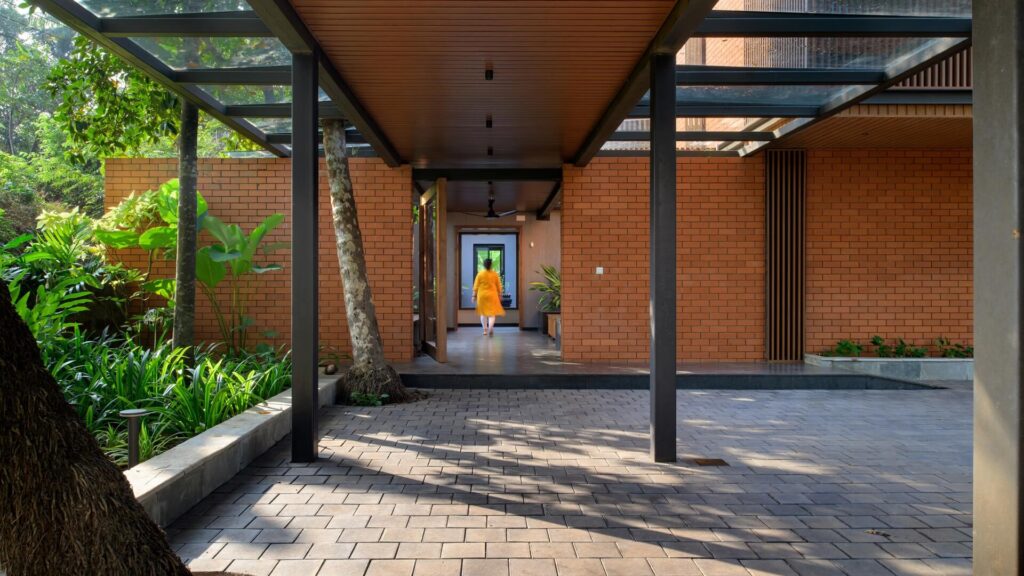
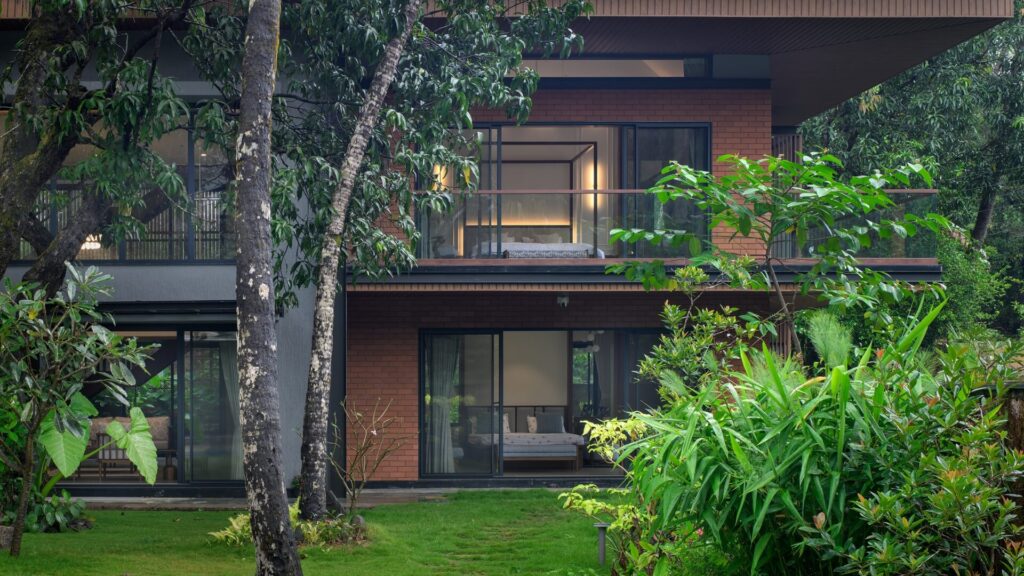
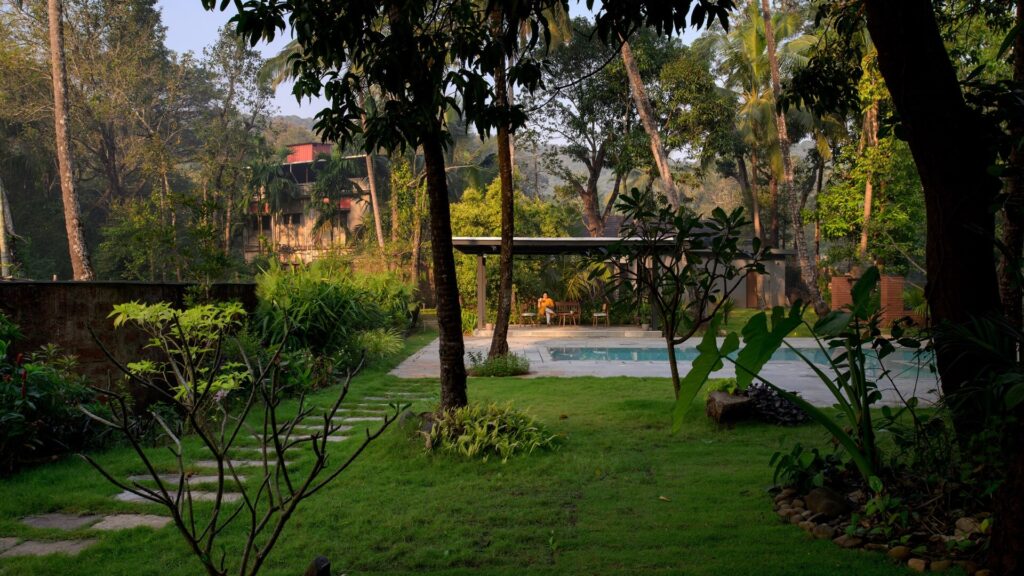
An east-west orientation anchors the home’s environmental strategy, supporting cross-ventilation and balanced daylight while limiting heat gain. Shaded balconies, deep overhangs, verandahs, and latticed terracotta work together to filter light, encourage airflow, and provide privacy, shaping a calibrated response to sun, rain, and climate. Here, landscape operates as an active design force. Climate, topography, and vegetation inform every spatial decision, resulting in an architecture that feels breathable, grounded, and inherently attuned to its environment.
Living with memory, designed for contemporary living
Sloping terracotta-tiled roofs, brick masonry, and the presence of a central courtyard recall familiar domestic typologies, grounding the home in cultural memory.
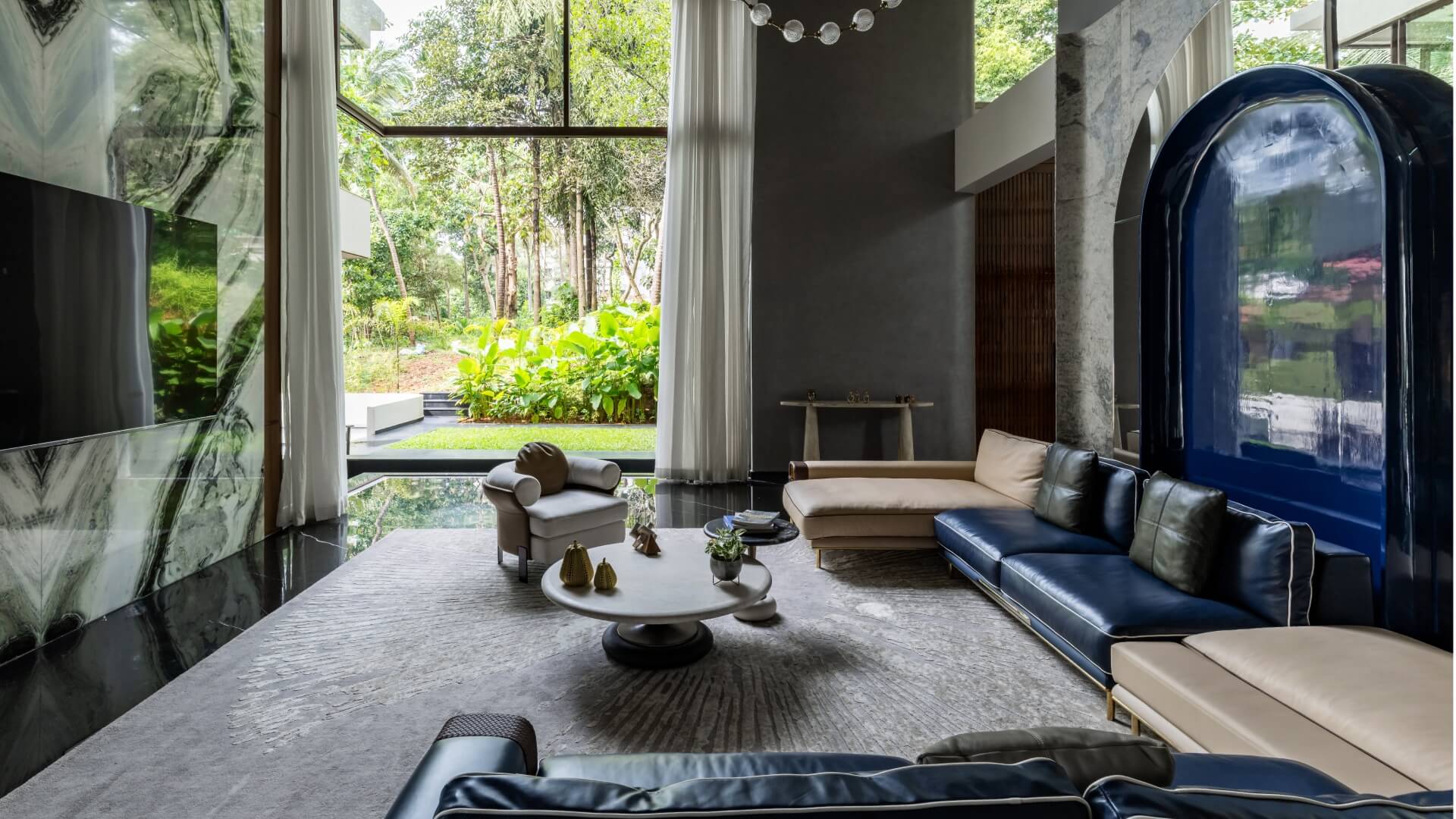
These vernacular cues are reworked through modern spatial strategies. Open-plan living areas, generous proportions, and a double-height central volume introduce light, air, and visual continuity at the heart of the home. The Tulsi courtyard, reimagined as both a climatic device and a spatial anchor, mediates between interior and exterior life. Tradition and modern living coexist seamlessly within a single, evolving architectural language.
Calm surfaces for durability and wellbeing
Within a home shaped by landscape and climate, surfaces are quiet mediators between space, comfort, and experience. Material choices gain clarity and intent, supporting the project’s restrained language while responding precisely to environmental conditions.
In Sawantwadi’s subtropical climate, defined by heat, humidity, and monsoon rains, performance becomes inseparable from wellbeing.
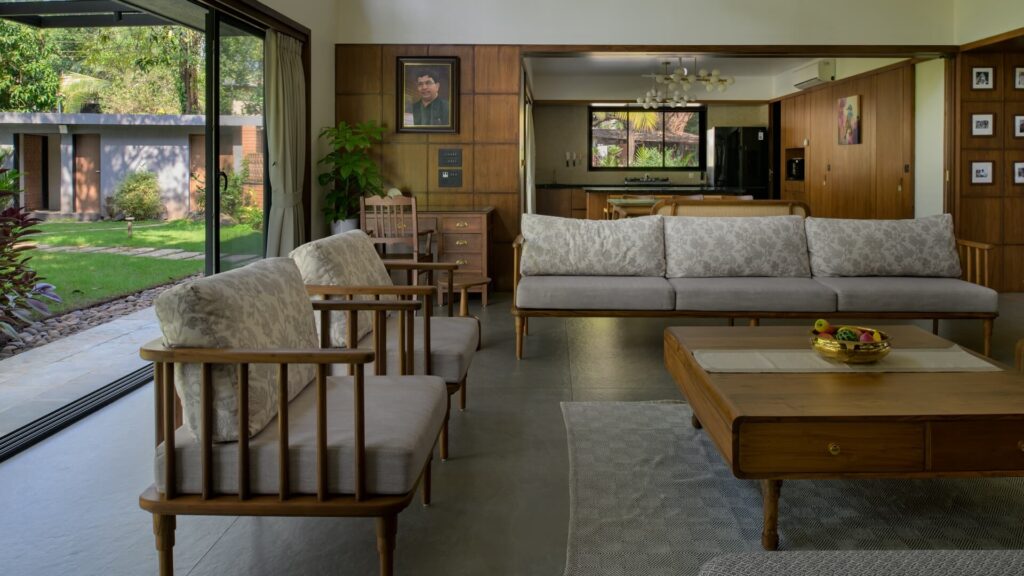
Nexion’s Runa Grigio Chiaro answers this context through its sintered composition, offering durability and ease of maintenance alongside a tactile softness that brings a more intimate, human scale to generous, open volumes.The stone texture and matte quality soften spatial perception, visually cooling interiors and supporting the home’s passive design strategies. Here sintered surfaces temper the light, allowing spaces to remain calm, balanced, and responsive throughout the day, in quiet dialogue with brick, terracotta, and the surrounding landscape.
Light and shadow interplay
Filtered through latticed terracotta and vertical louvers, daylight animates the interiors with a slow, shifting play of shadow. Surfaces respond subtly, capturing variations of light that add depth and nuance without visual excess.Runa Grigio Chiaro enhances this temporal rhythm with restraint, acting as a quiet backdrop against which architecture and natural cycles can unfold. The resulting spatial atmosphere evolves gently with the passing hours and changing seasons.
A quiet dialogue between inside and outside
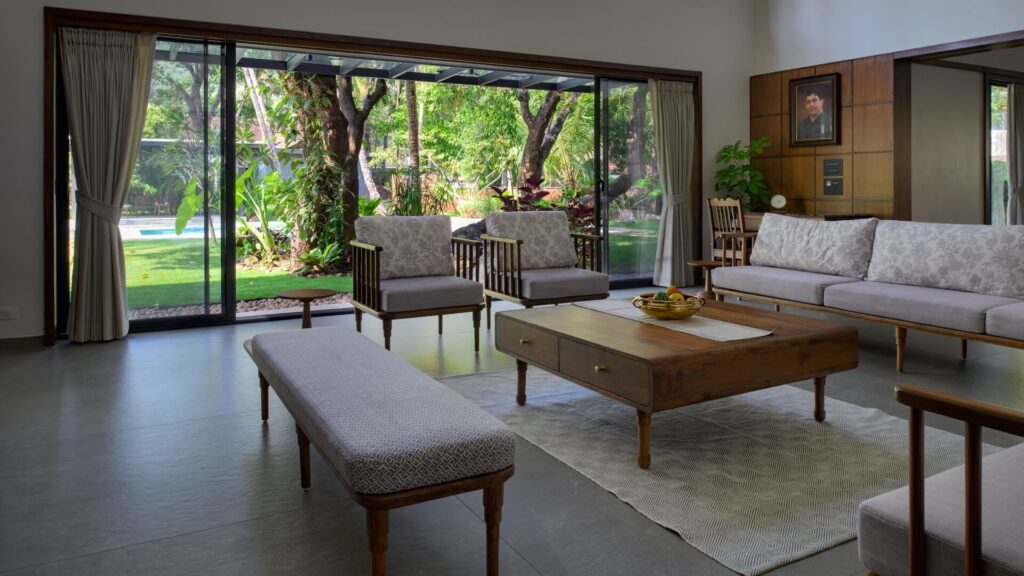
Visual axes, shaded transitions, and carefully framed openings extend daily life toward verandahs, balconies, and the greenery beyond, allowing the house to breathe with its setting. The pool and gazebo complete this outward sequence, gently dissolving the boundary between built space and nature through spatial flow rather than material overlap.
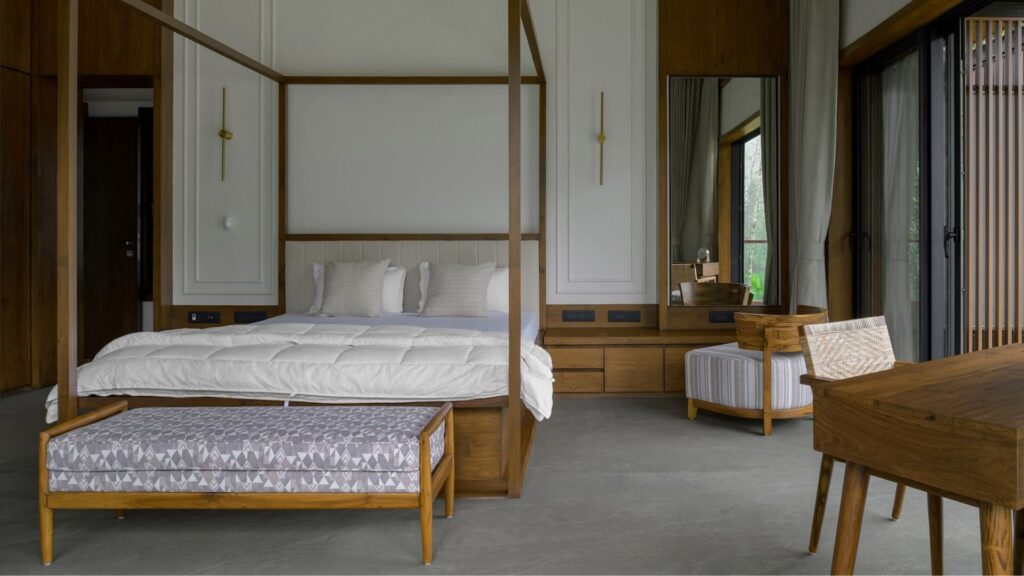
Within the interiors, Runa Grigio Chiaro reinforces this sense of continuity. Its restrained tone and natural character support seamless transitions between rooms, maintaining cohesion and calm across the living spaces. The resulting experience feels intuitive and grounded, guided by visual and spatial continuity rather than overt gestures.

Belonging as a design principle
This project is a compelling example of how material choice can emerge naturally from context, honoring land, climate, and memory. Here, surfaces serve space, performance, and atmosphere with equal restraint, enhancing contemporary living through durability, balance, and quiet material intelligence.